Wednesday, January 1, 2020

2019-2020 Christmas Cruise - Andalusia: Day 5 Malta

Today we’re docked in Valletta, Malta. The city has a large natural harbor extending 4 km in from the sea. It’s naturally protected, made even more secure with the construction of massive forts on both sides of the narrow entrance. 
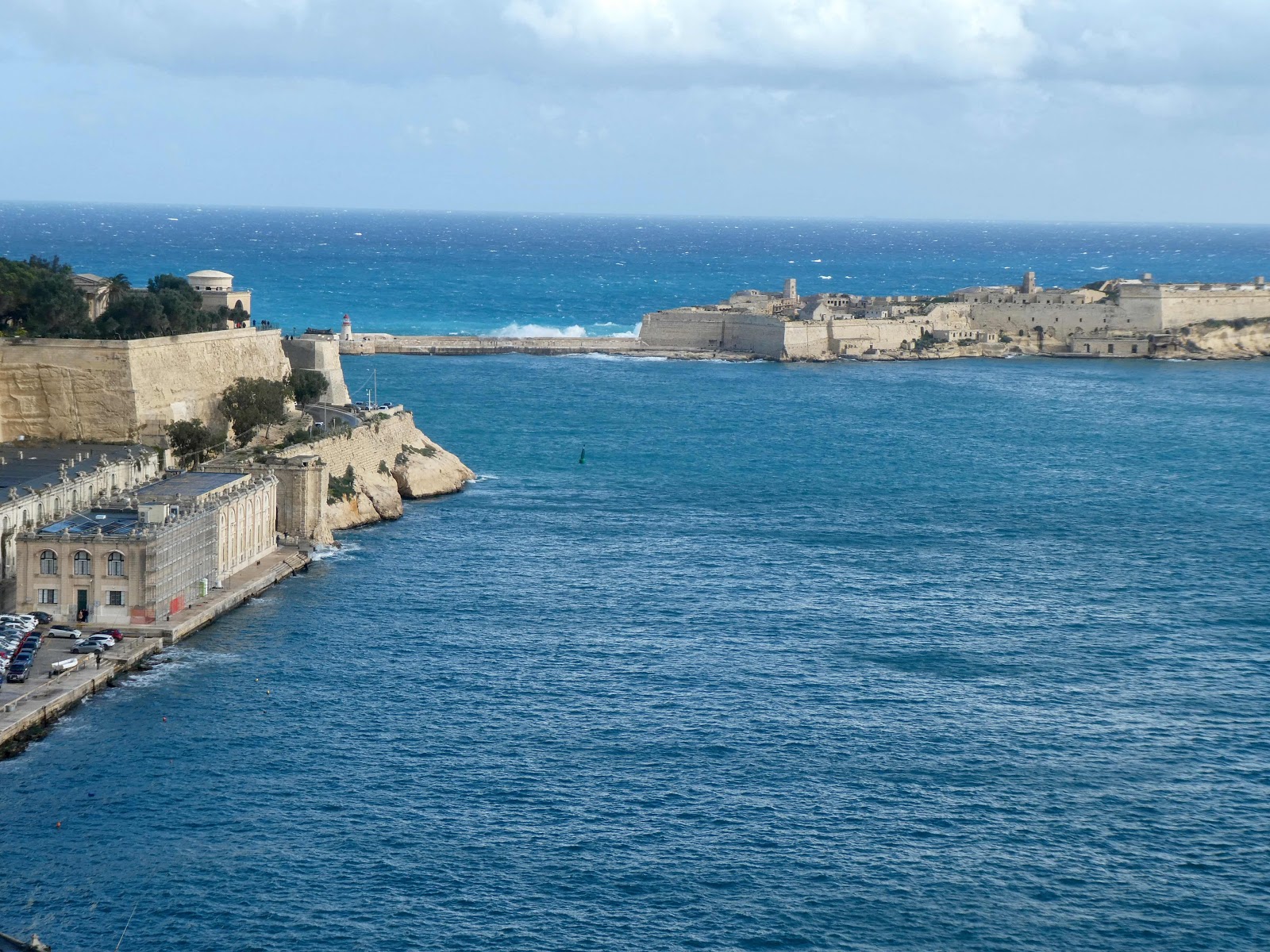


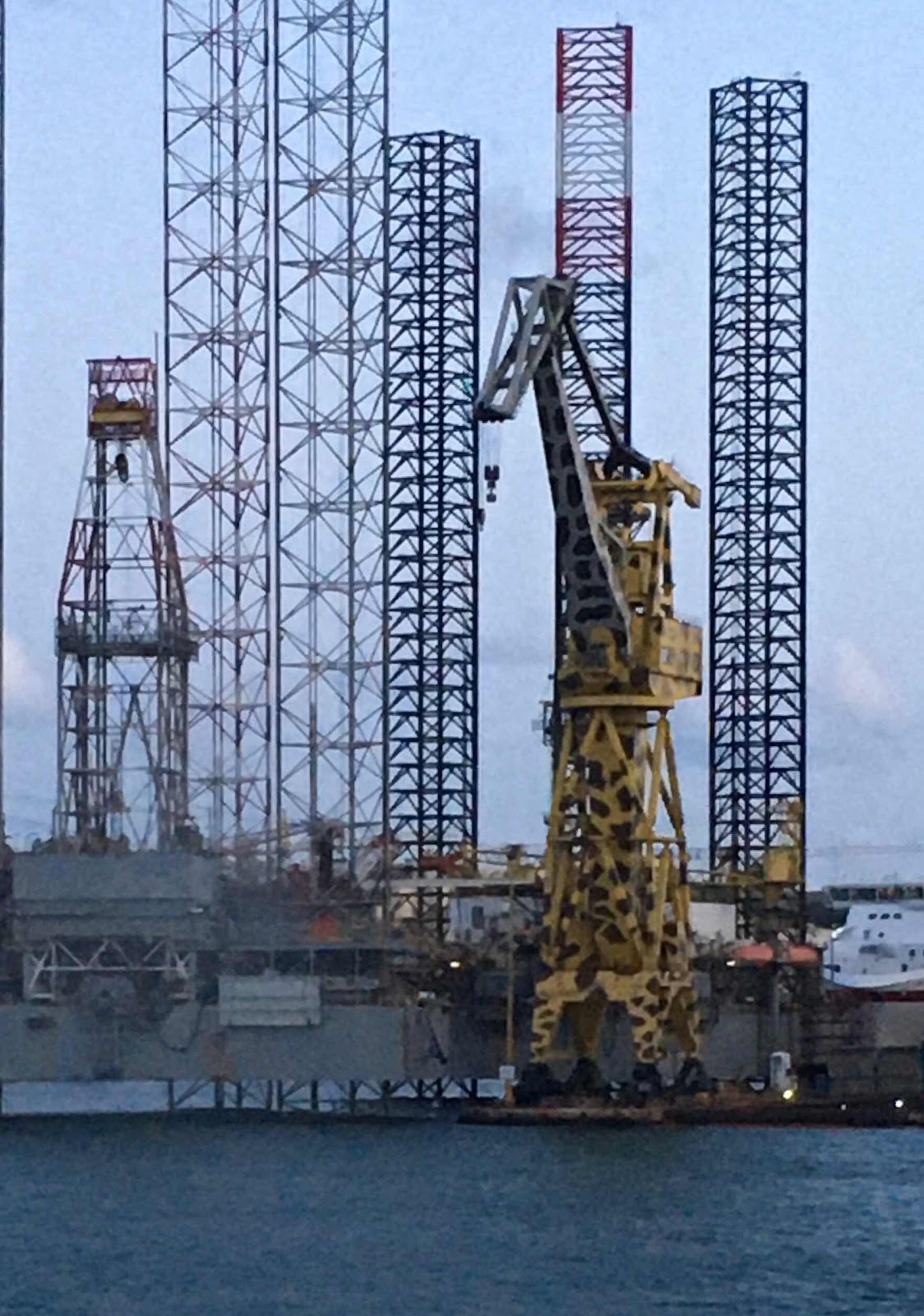
(A giraffe crane also watches over the harbor)

Flanking the cruiseport are similar huge walls with portals, former warehouses of the Knights of Malta. 

The small (120 sq miles) island nation of Malta was originally settled by Phoenicians from what is now Lebanon. Like many countries in the Mediterranean, it was subsequently governed by a long list of rulers. The Maltese language is unique and reflects this history. Word origins are 75% Arabic and 25% Latin in origin, and is written using the Latin alphabet. 

Malta’s population has grown over the past decade or so from 380,000 to about 500,000. The increase is due to an expanding economy, peaceful status and the government policy (not endorsed by all Maltese) of recruiting immigrants to maintain the growth. 

For centuries, it was safer and thus more desirable (and expensive) to live inland. Today, most people prefer the coast. 

We had booked a tour of Mdina and Valetta, the current and former capitals of Malta. 


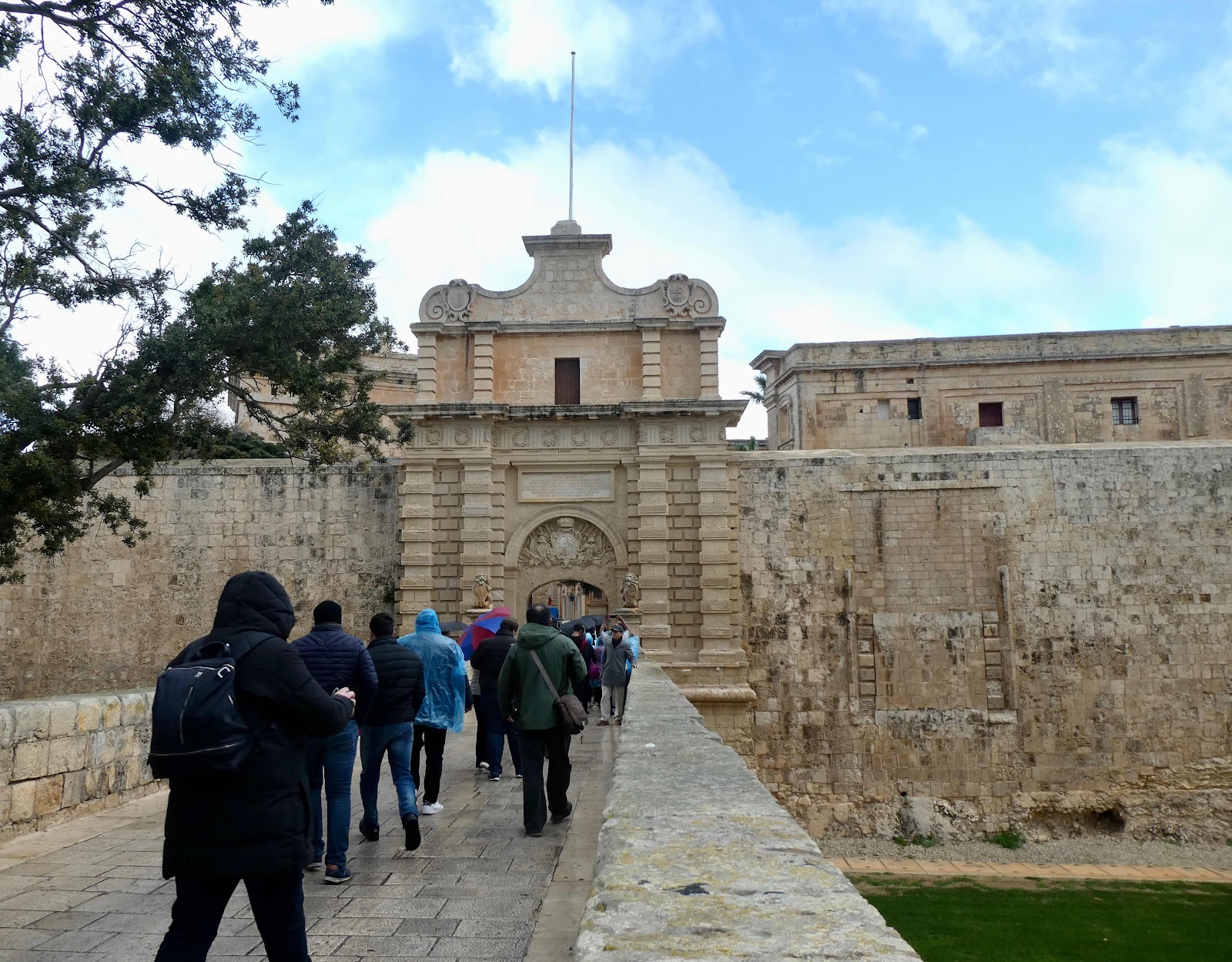
Mdina is a planned small city only 1 square kilometer in size. It was designed to be defendable, and is enclosed by a dry moat and incredibly impenetrable high stone walls. Picture Kings Landing in Game of Thrones. In fact, that’s just what the producers of the show did. Malta was used extensively for location spots in the first season. 


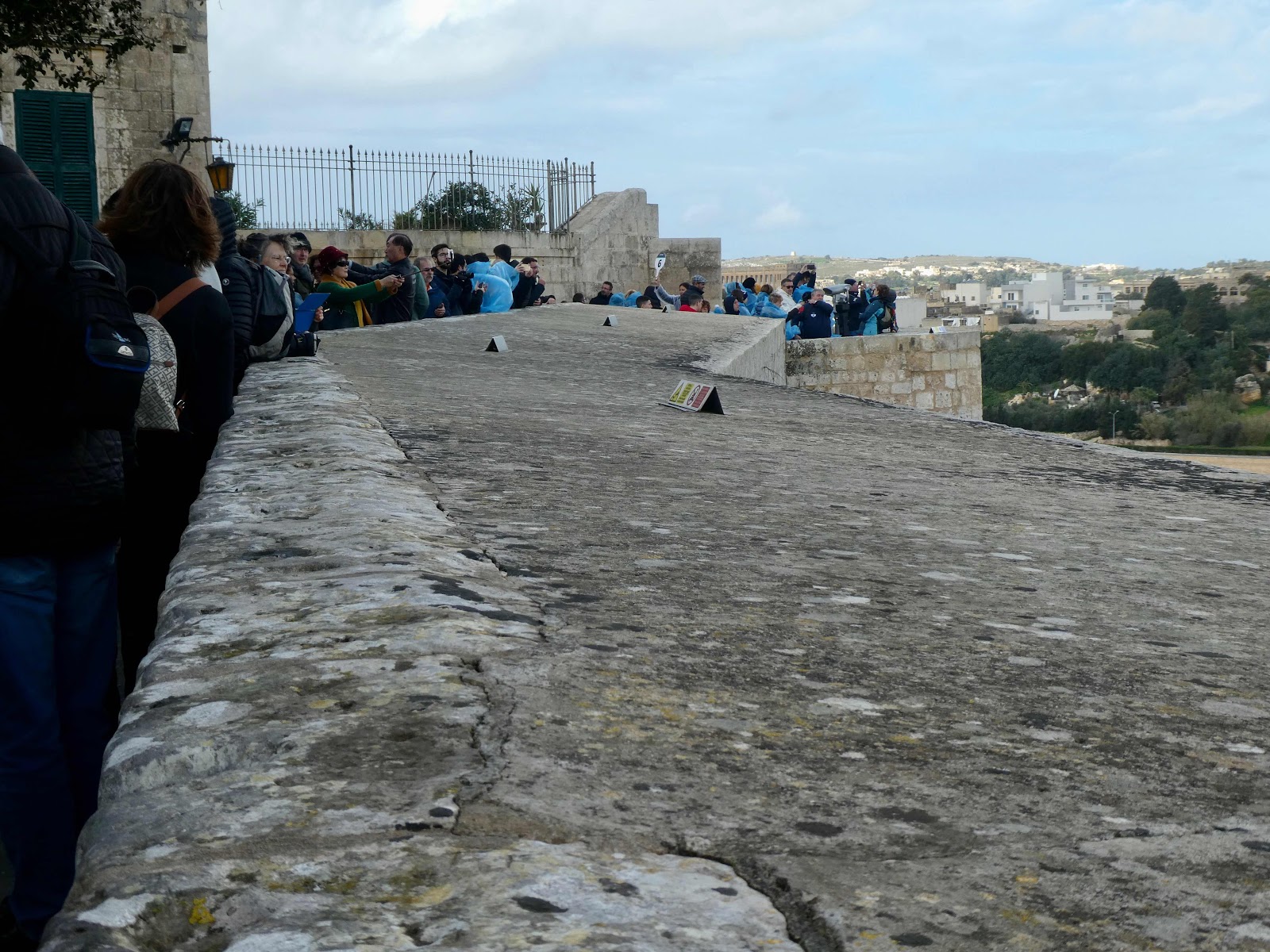
At the top of the city wall...


... looking over the countryside

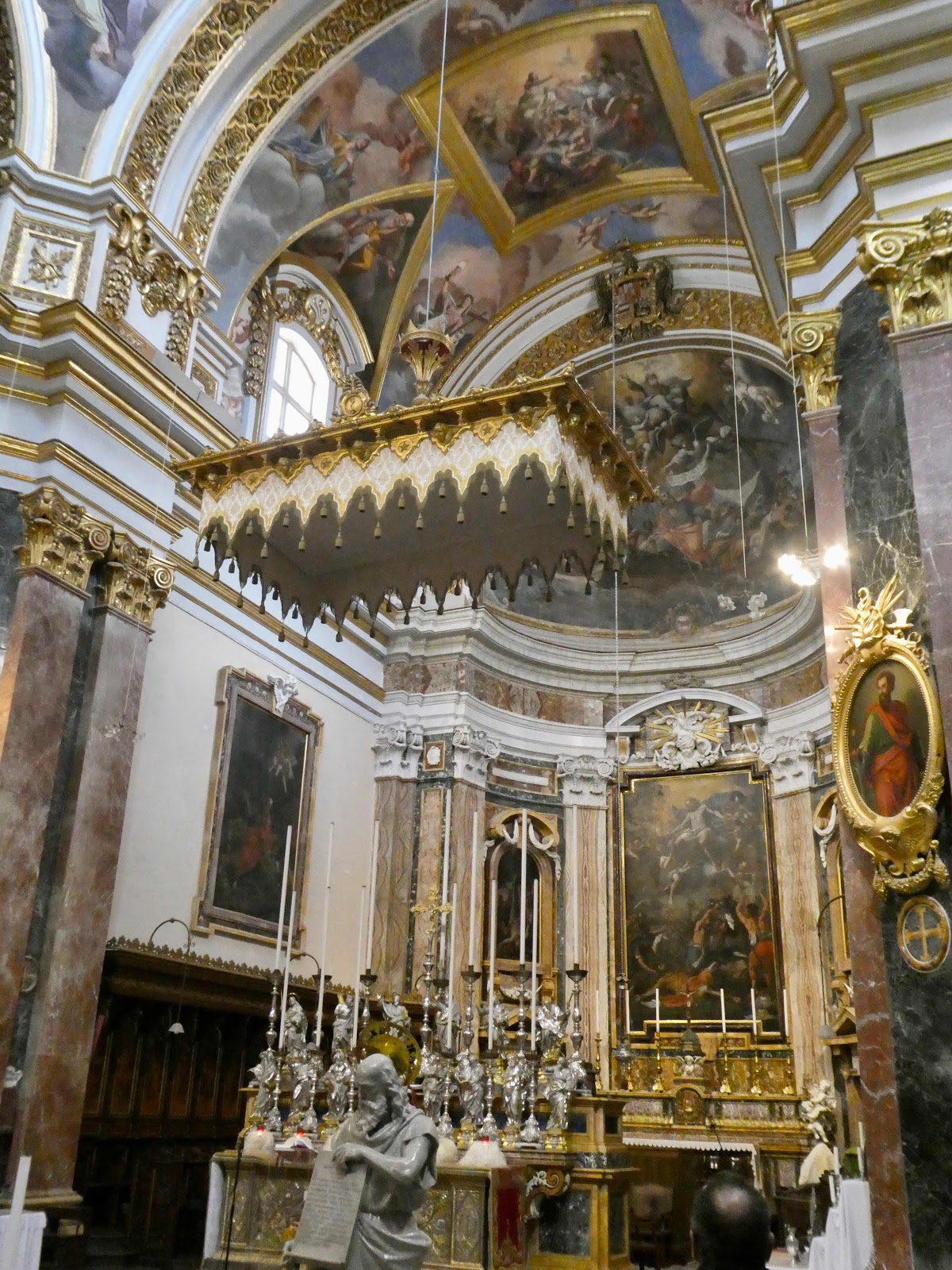
The Cathedral in Mdina is dedicated to St. Paul (who shipwrecked on Malta in 60 AD) and St. Peter. It’s in Mdina’s main square. 


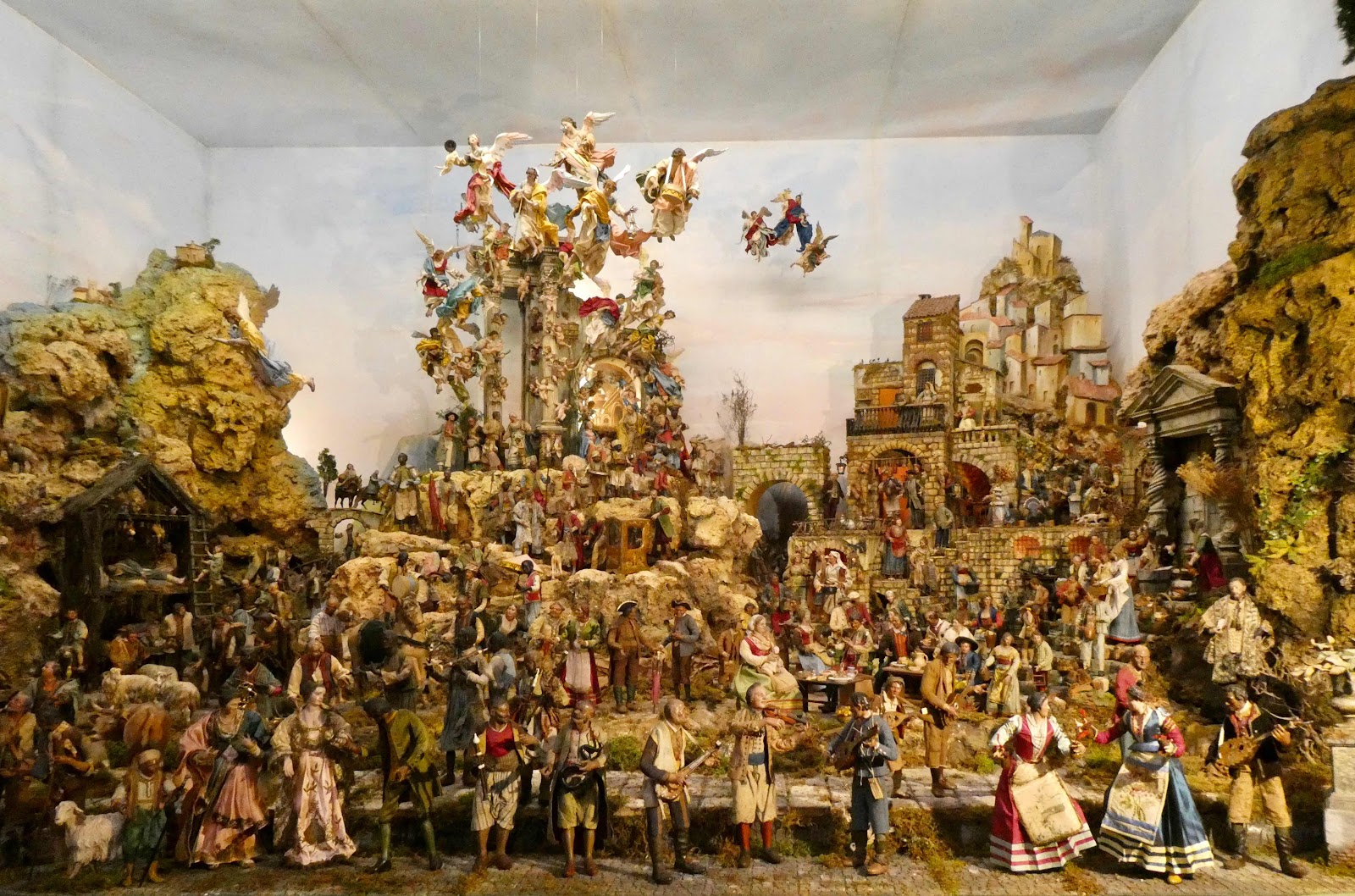
Very busy Christmas village
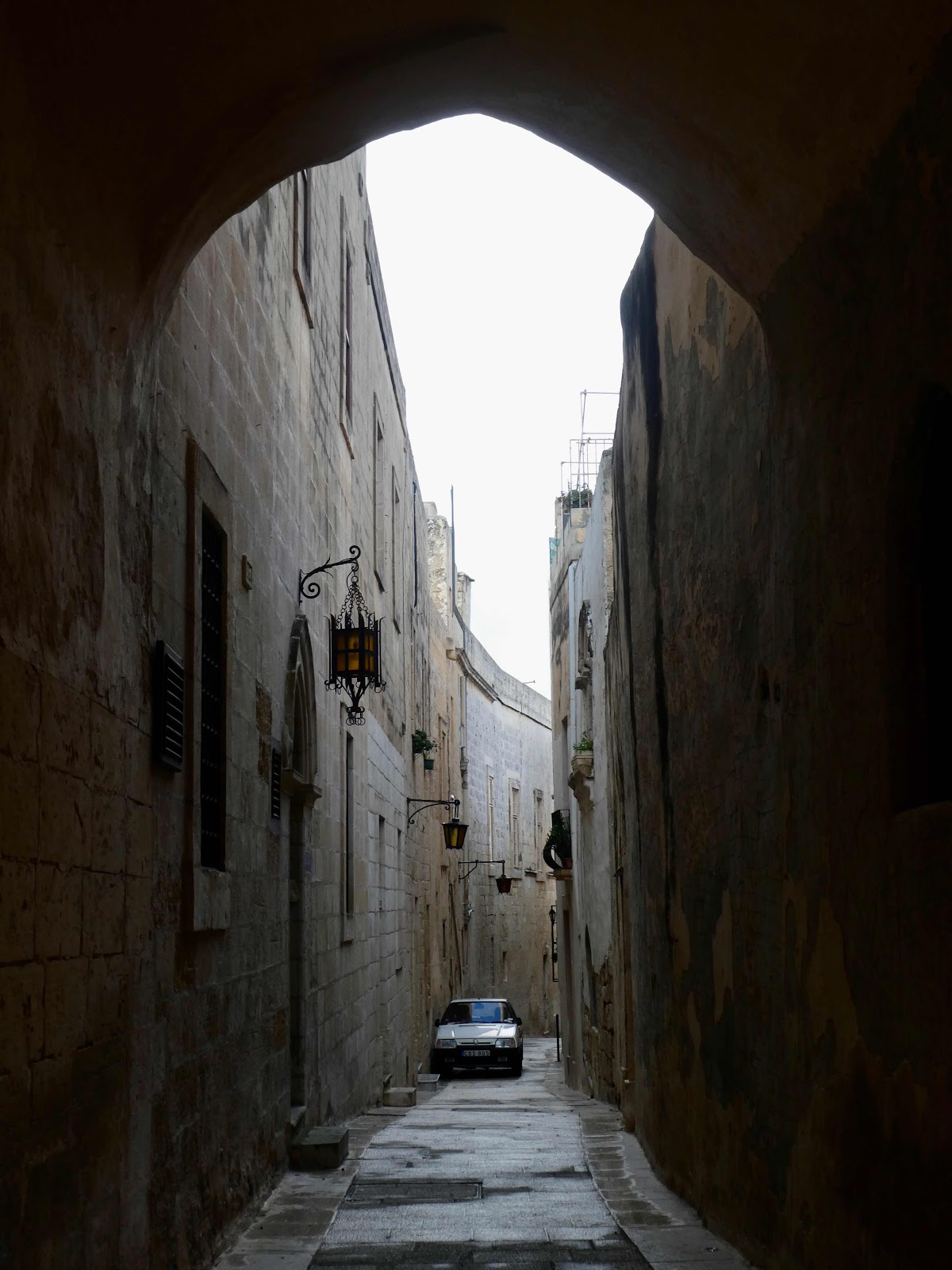
The town is a warren of narrow deserted streets. Although the official population has dwindled to around 400, in reality about half that many people live there full time. 


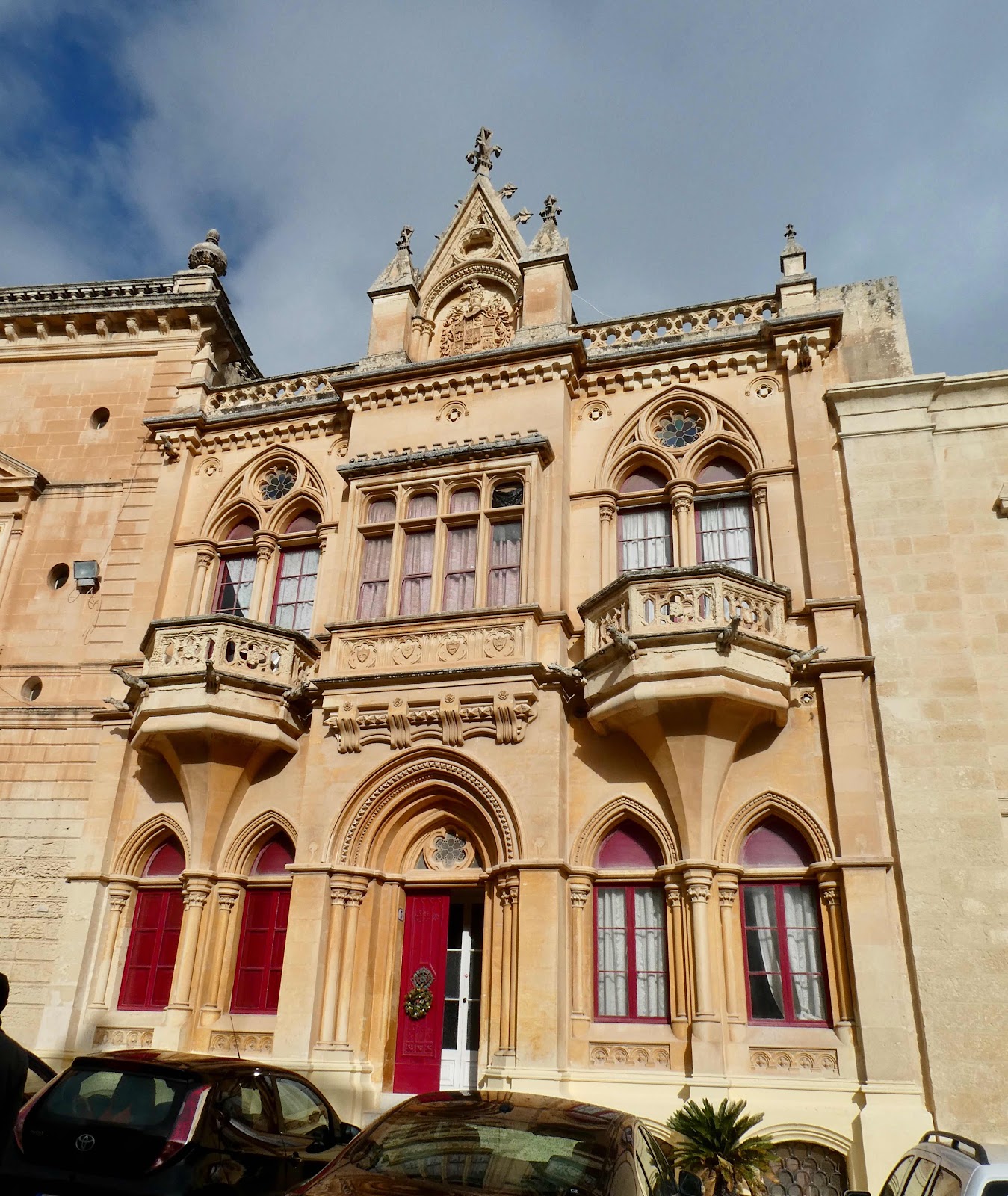
Grand house on the cathedral square

We were bussed back to Valletta and walked to some gardens with a fine overlook (and public restrooms). 


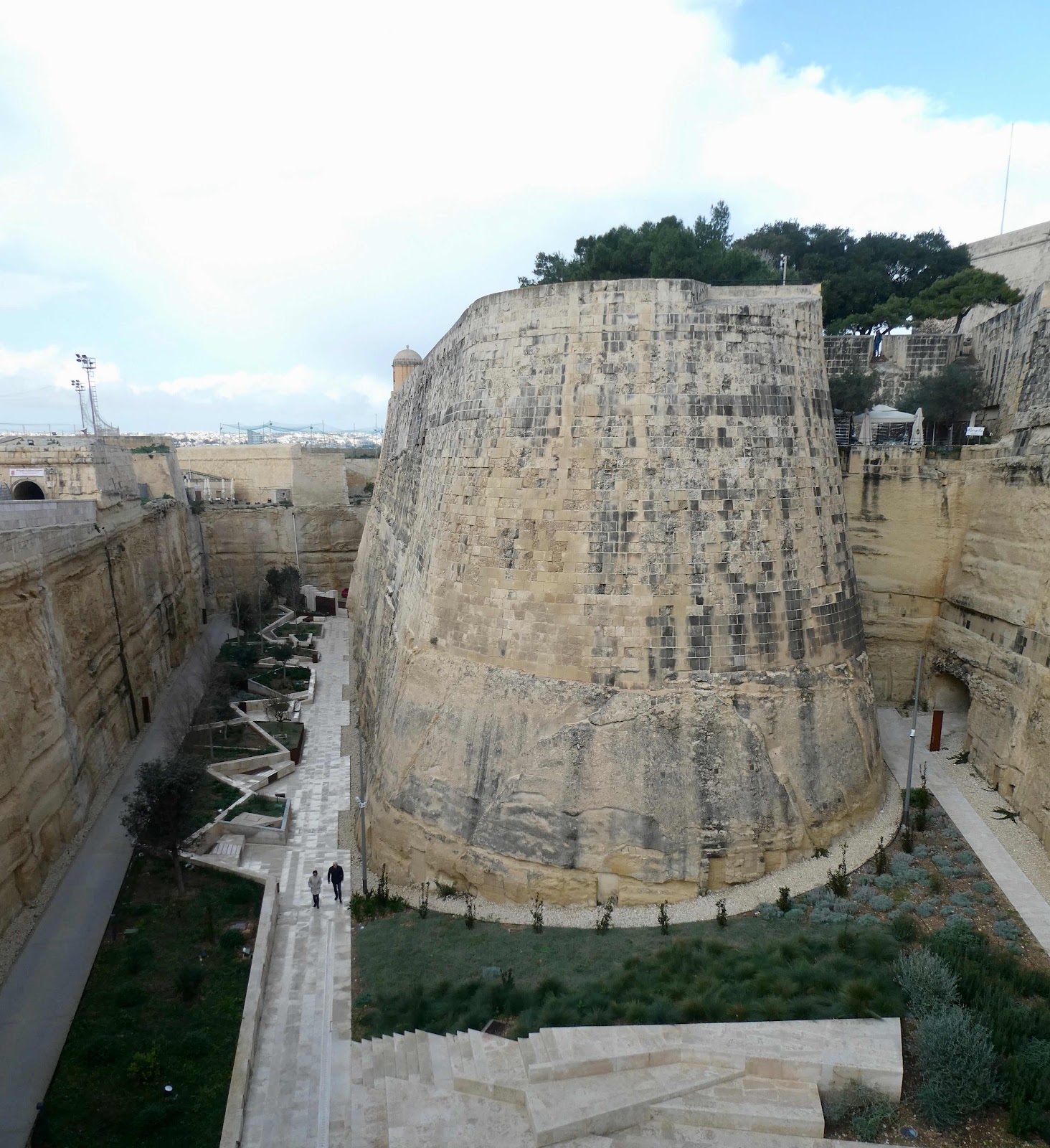
Valletta is also surrounded by a moat and massive walls enclosing mostly narrow streets.


Note the tiny couple walking by the tower. 


But there are also broader boulevards and open spaces surrounded by public and government buildings. Many incorporate Arabic designs like enclosed balconies.
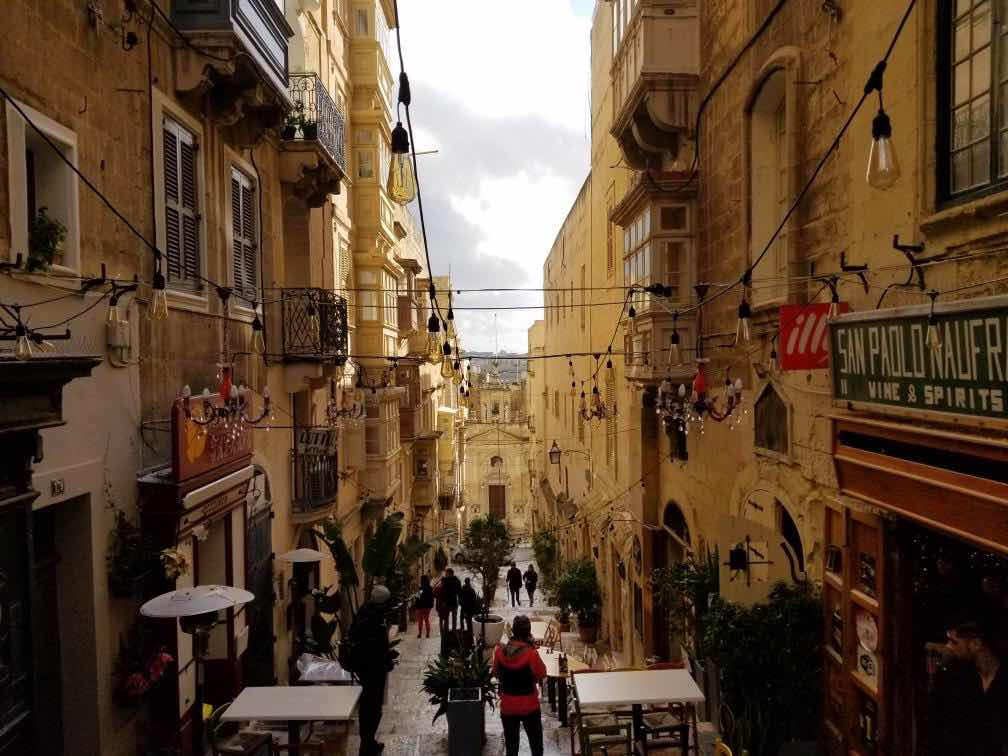


The main street was incredibly crowded. 


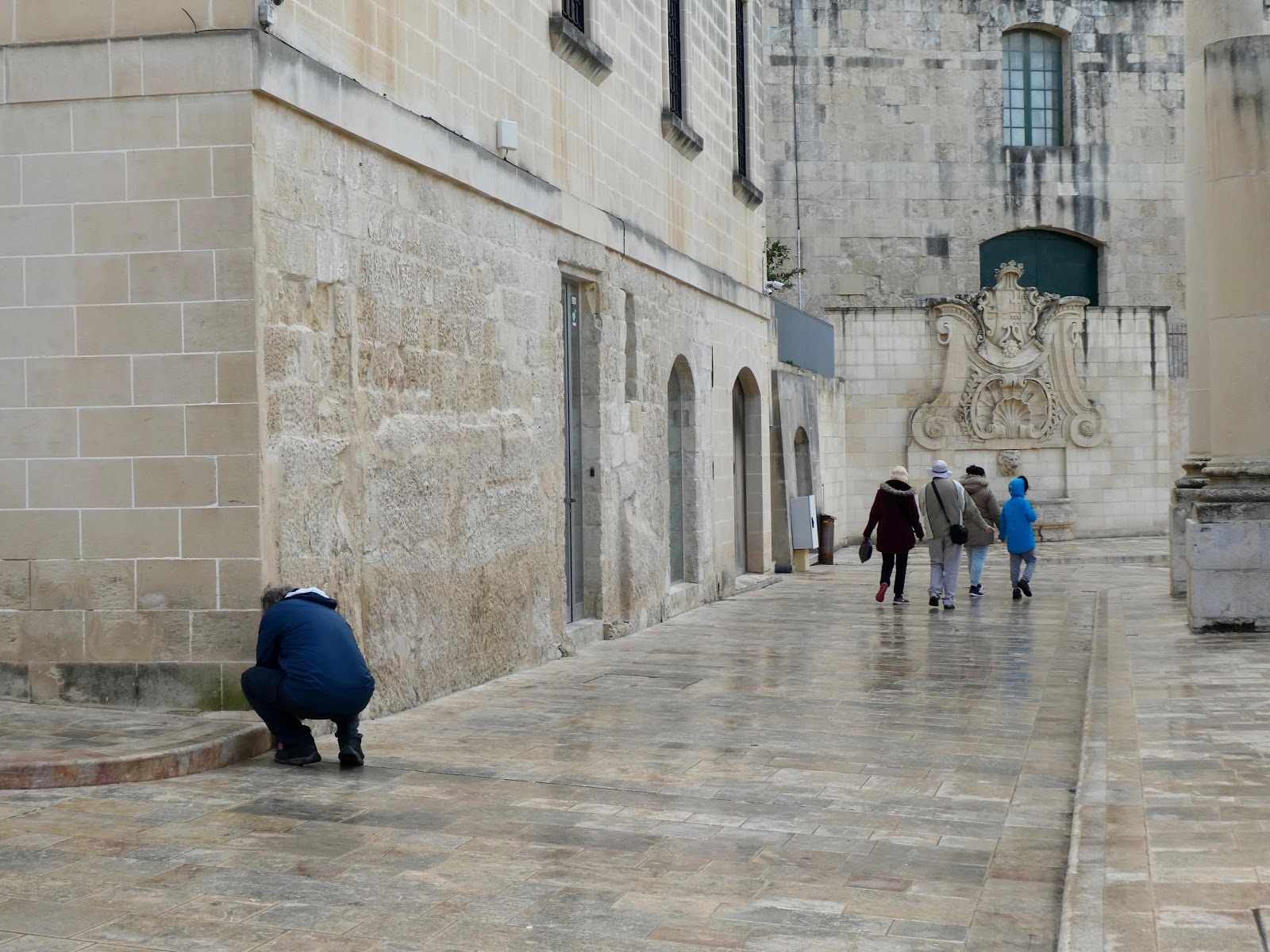
But Greg found a deserted place to search for a geocache. 
We were back on the ship in time for a late lunch. Erin and I hit the spa thermal area before we all gathered for New Year’s Eve dinner. 


Most of us managed to stay up until midnight, when we watched the exuberant party in the ship’s main gathering area. It was crazy crowded. We were happy to be above the fray!




Tuesday, December 31, 2019

2019-2020 Christmas Cruise - Andalusia: Day 4 Palermo

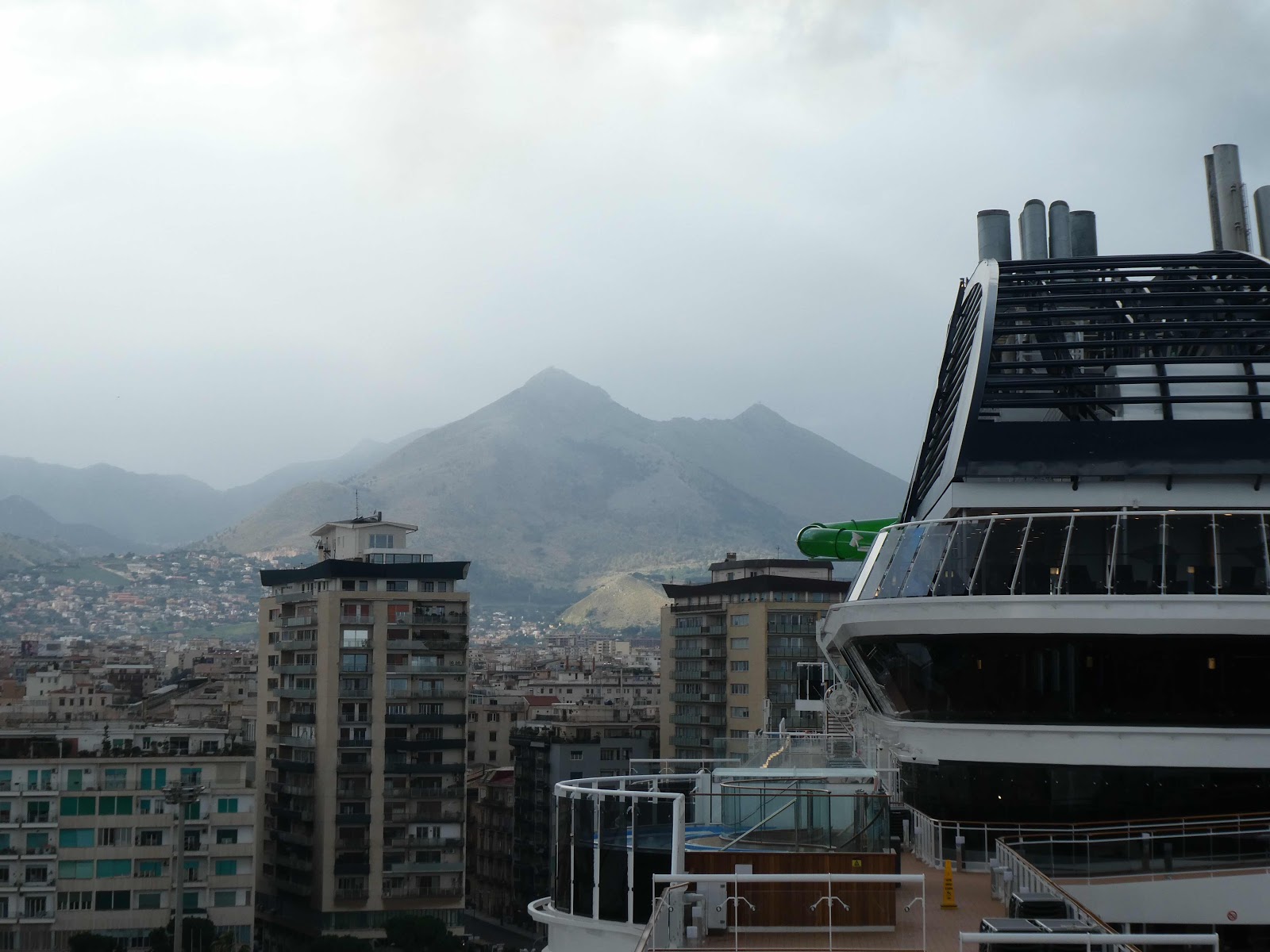
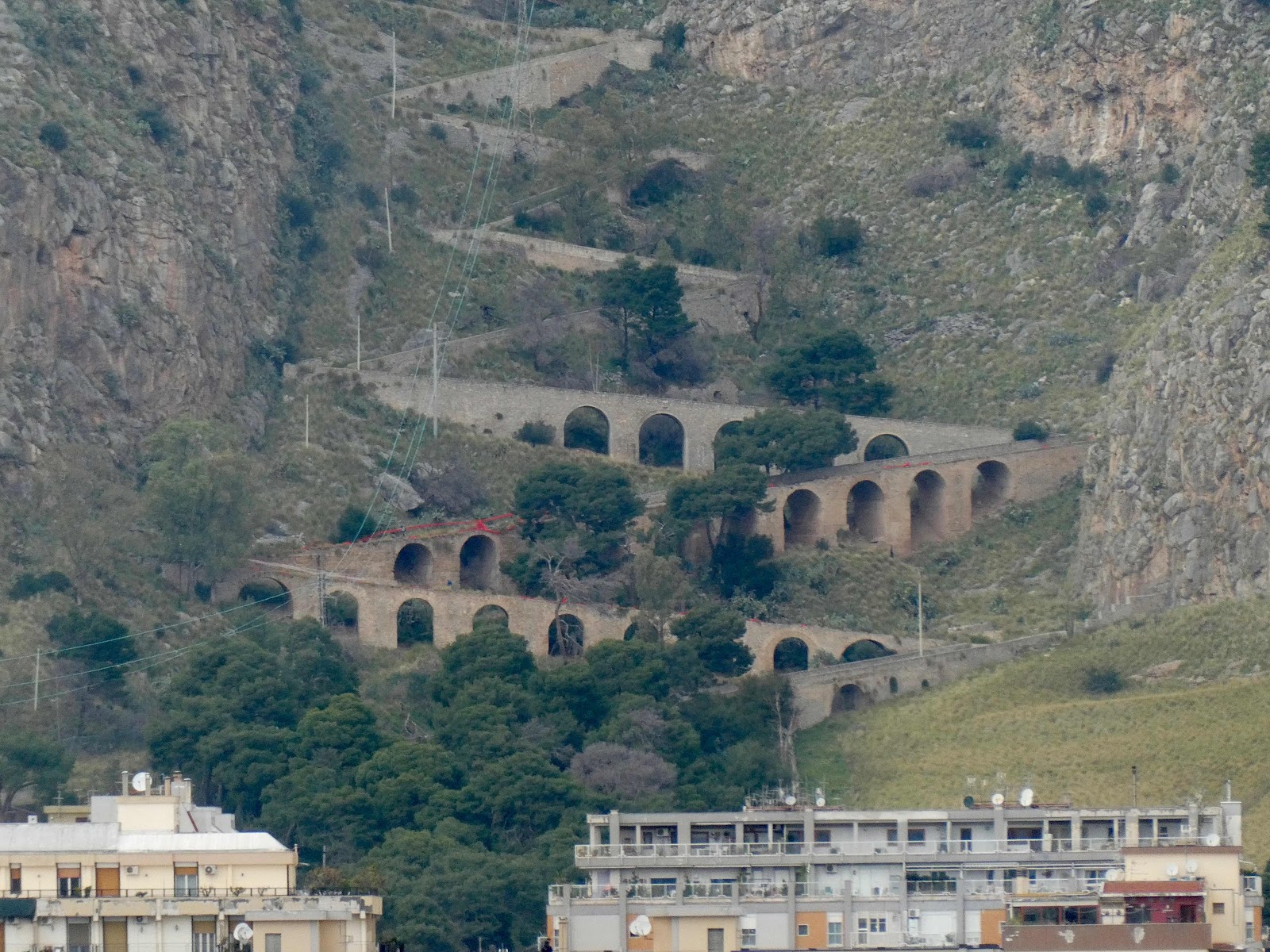
Our planned ship-sponsored excursion to the small medieval town of Cefalù was cancelled, so we explored Palermo on our own instead. From the ship, the city was surrounded by old volcanic mountains and a steep promontory. 


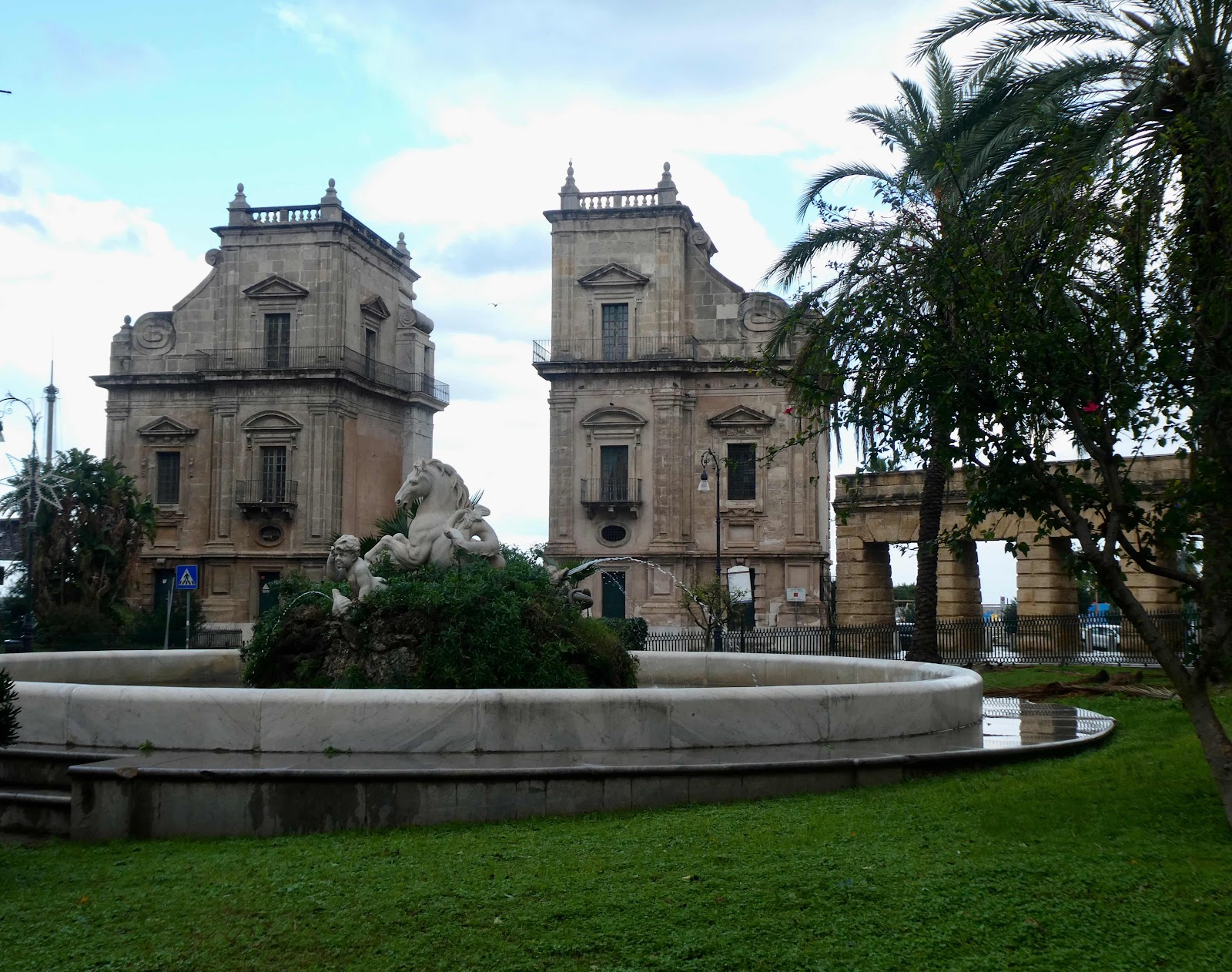
We disembarked to chilly drizzle and walked along the harbor to Porto Felice. The city gate was built between 1582 and 1637 in the Renaissance and Baroque styles. 


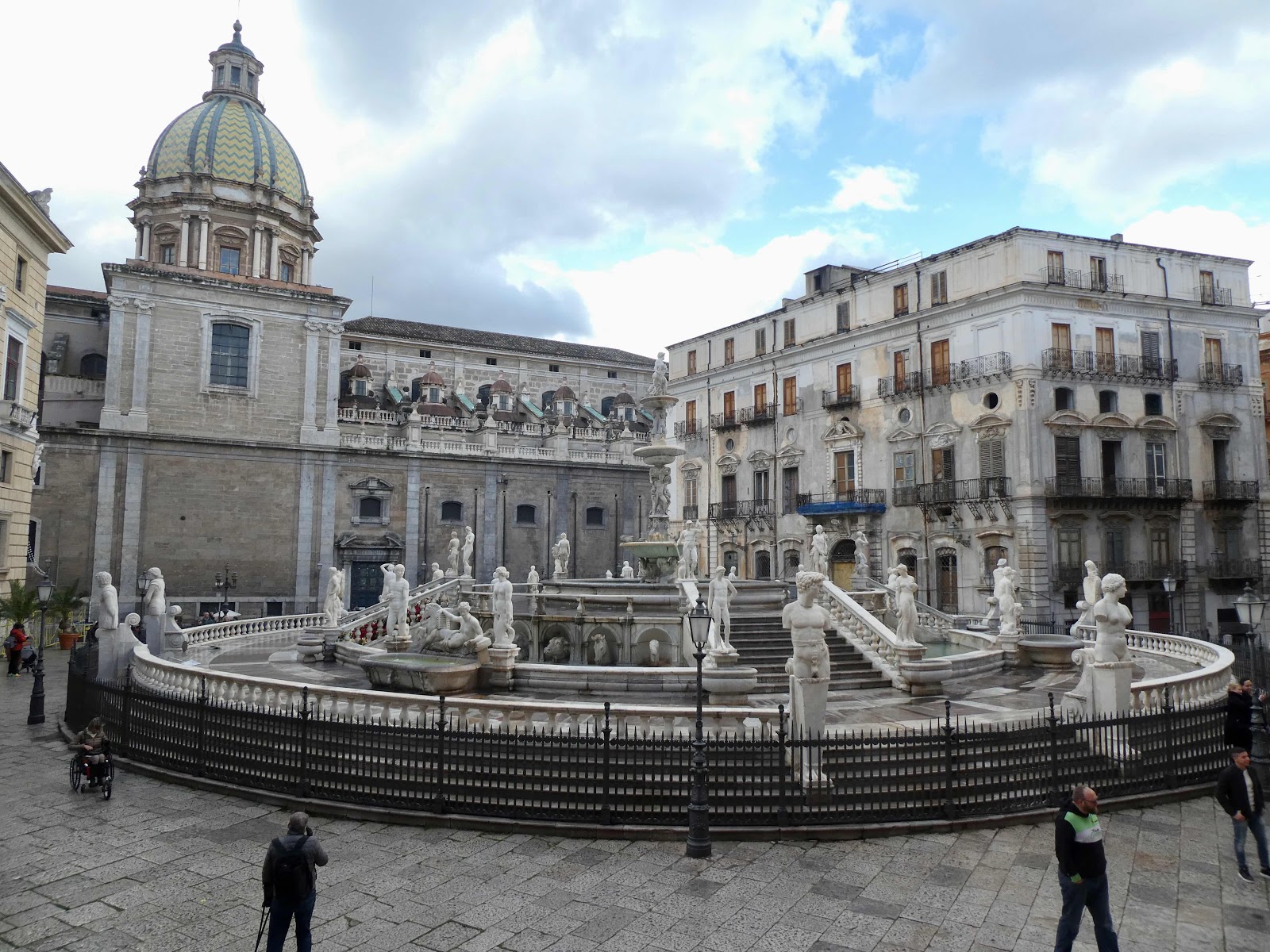
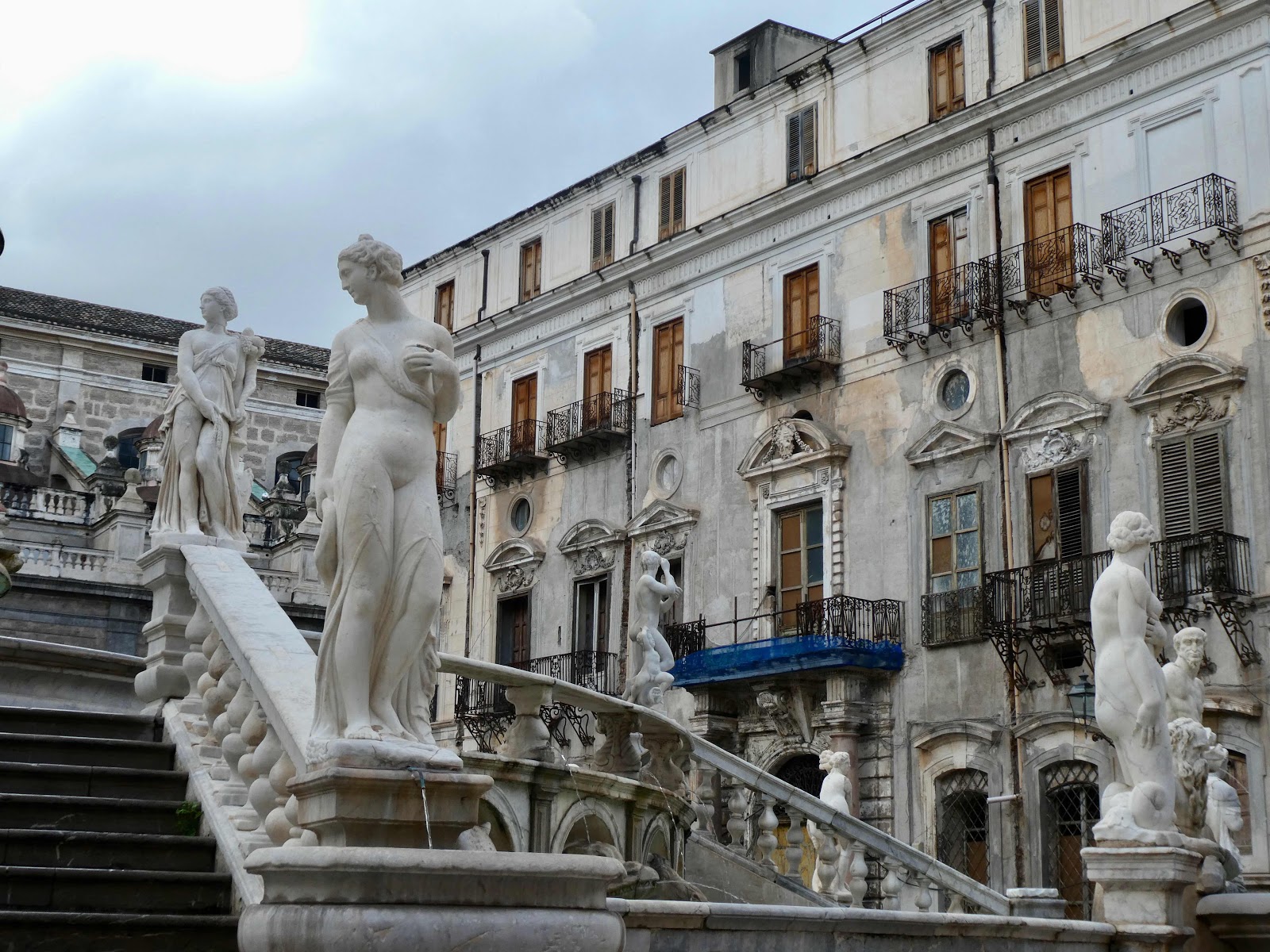
From there, we headed down the street it straddles, the Corso Vittoruo Emanuele, towards the beautiful Praetorian Fountain.  Also known as the Fontana della Vergogna, the fountain was built in Florence in 1554 and moved 20 years later (with a few mishaps) when its indebted owner sold it to Palermo. The fountain originally included 48 statues and received its nickname (“vergogna” means shame) due to the nudity of the statues. 


Near the fountain we visited two churches which are, collectively with seven other structures in Palermo and nearby towns, a UNESCO world heritage site. The first, the Church of Santa Maria dell’Ammiraguo was covered in dazzling mosaics from the Byzantine era. The church was dedicated in 1143 with later additions.  It retains both its original wooden door decorated with Islamic carvings, and well-preserved inlaid marble floor. 


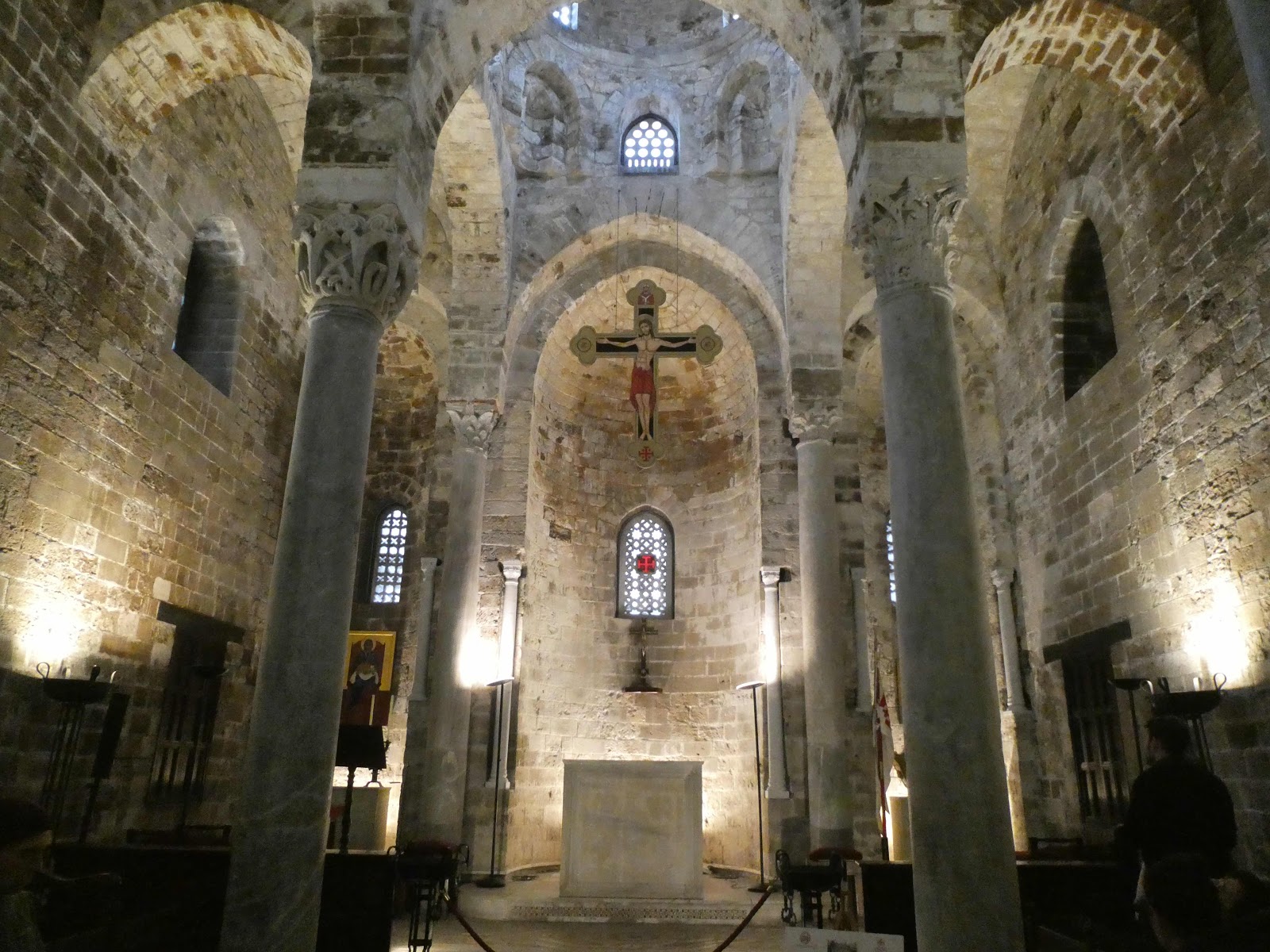
The adjacent Church of San Cataldo was small and austere. Built around 1160, it is considered an architectural masterpiece. The central nave was comprised of three brick domes, showing its Moorish architectural influence. The church was built by Islamic artisans following Romanesque criteria. 


We continued down the Corso. Jeff found an excellent and elegant way to eat a whole potato. 


Parts of this main thoroughfare remind me of Havana. Many structures which have clearly seen better days are juxtaposed with beautifully preserved or restored monuments.


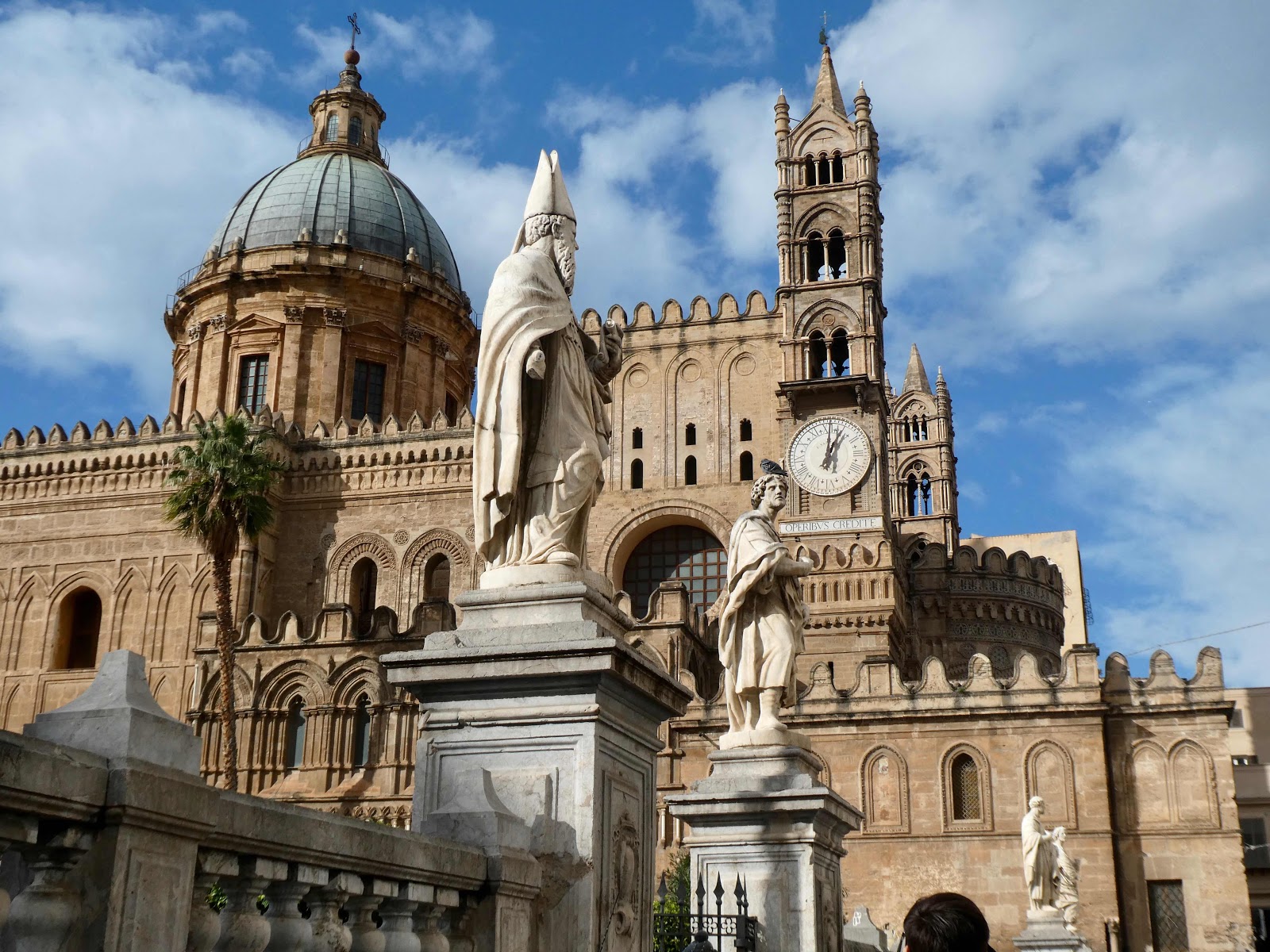
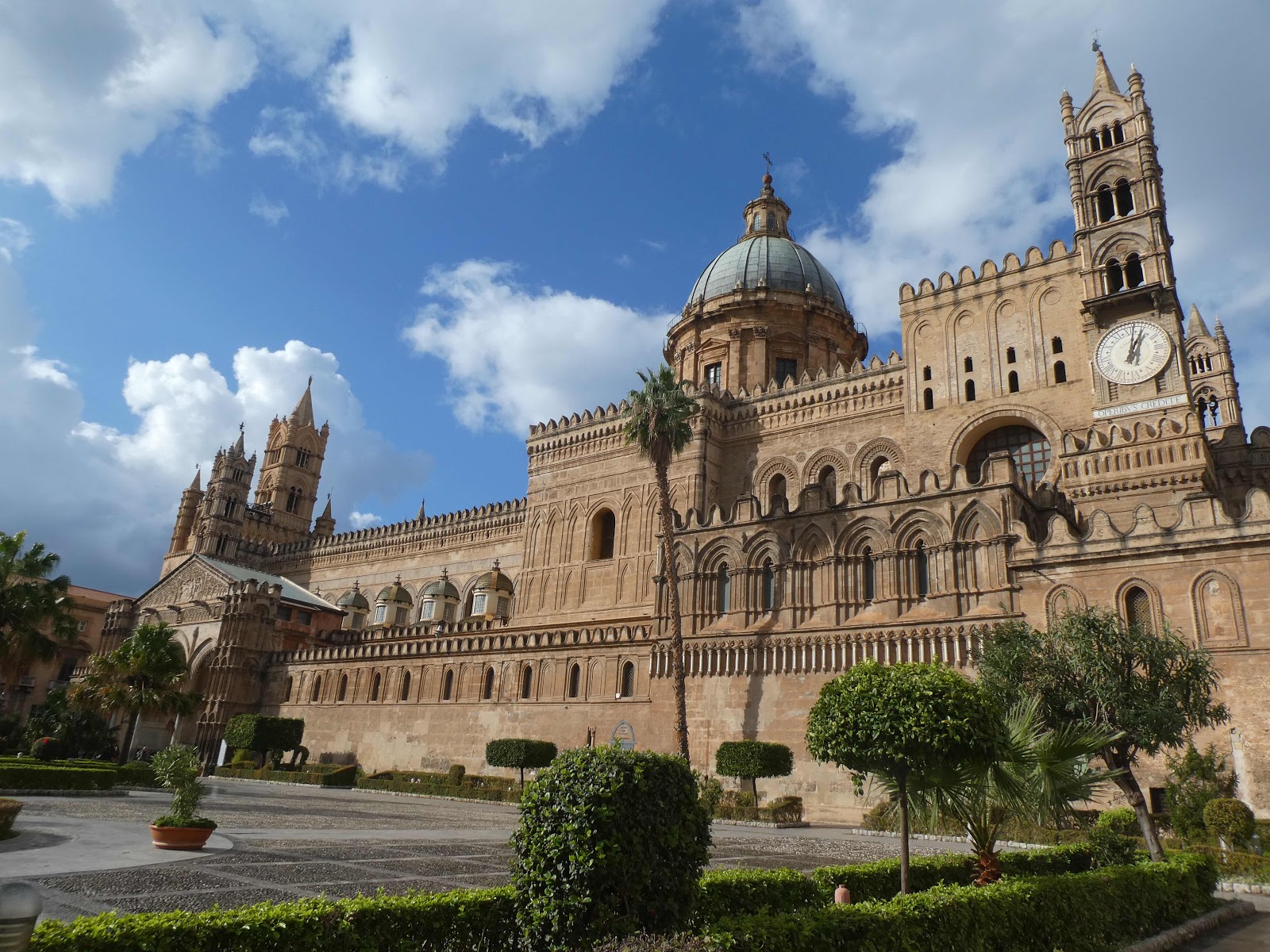
The three above photos were shot on the Corso. A few blocks later we reached the Palermo Cathedral, which is too long to fit in a single photo. 


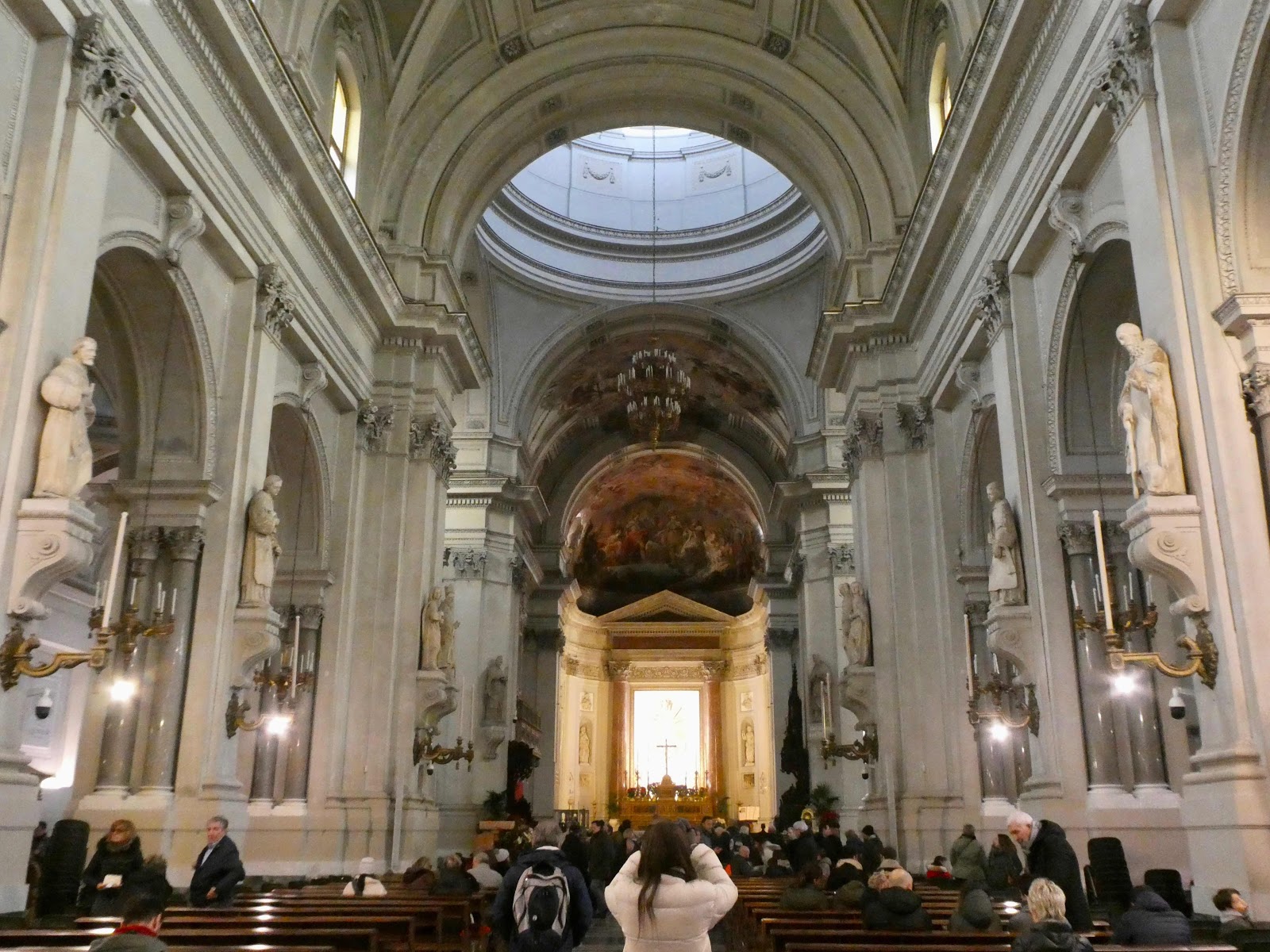
There was a basilica on this site in the 4th century and another in the 6th. It was transformed into a mosque during the Islamic period, then returned to the Christians in 1072. The foundation of the current building dates from the late 12th century. The cathedral has undergone a long history of restoration and additions. With Norman, Moorish, Gothic and Baroque elements, the last alterations were in the 18th century. 


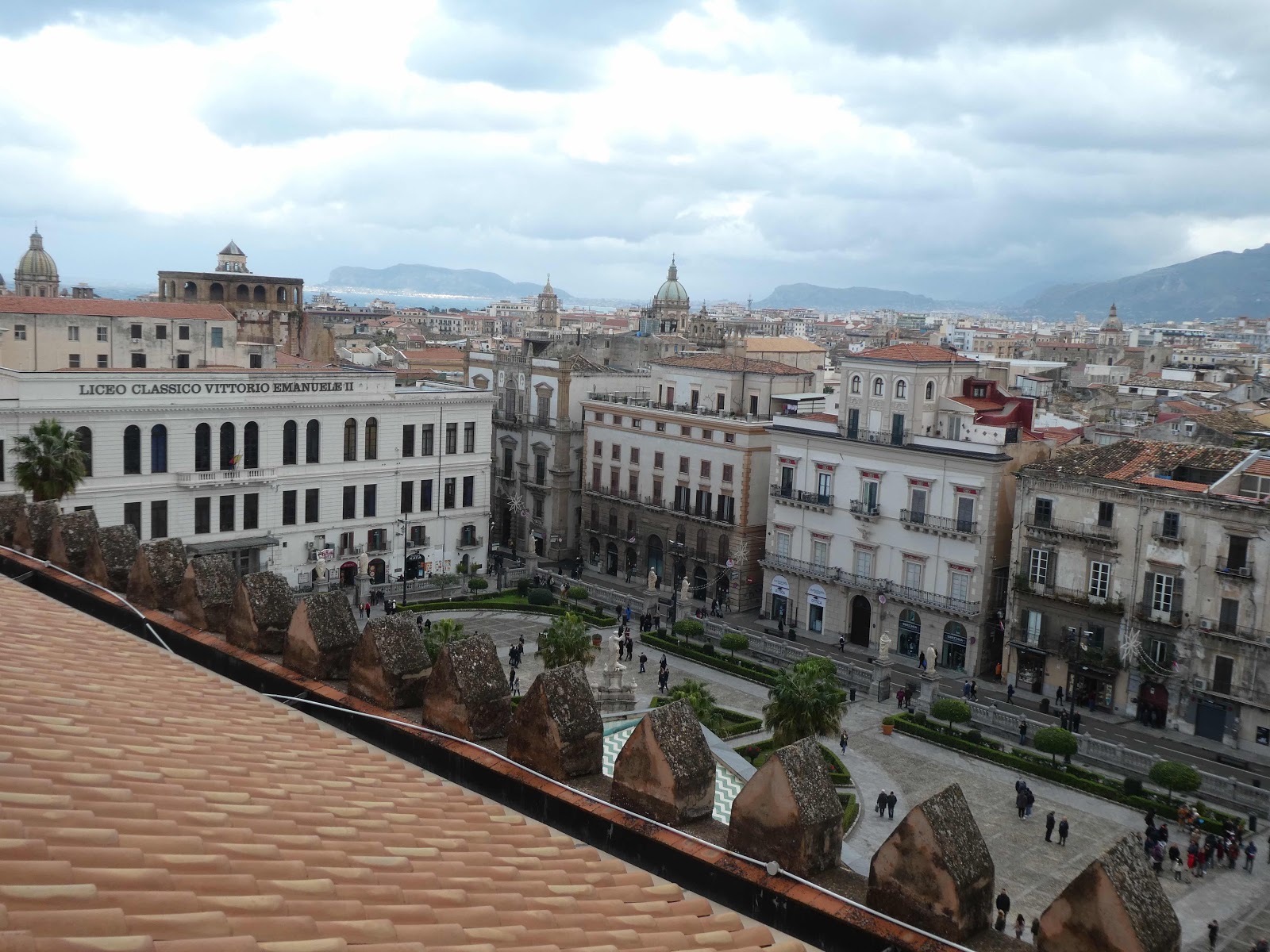
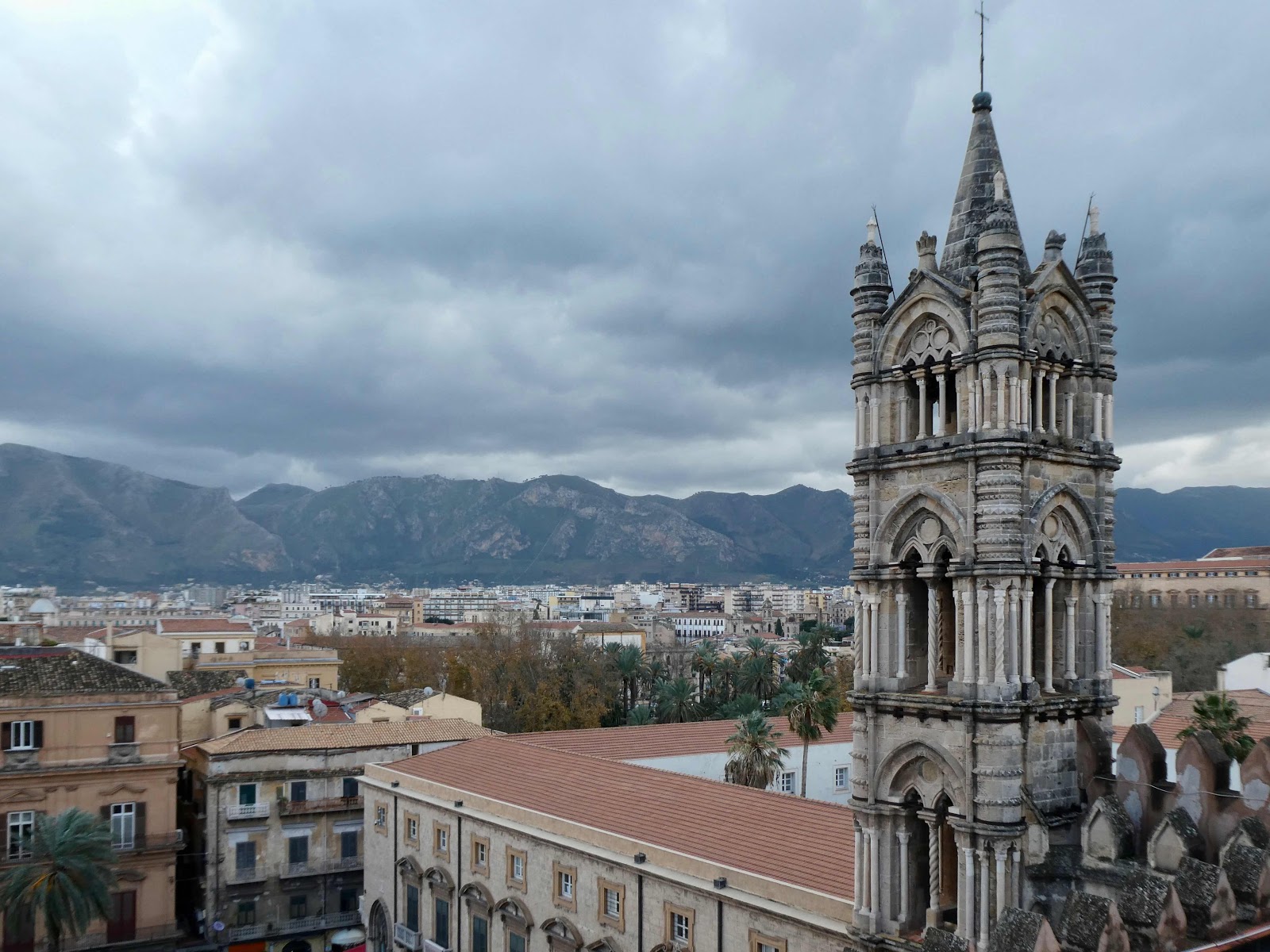
We climbed up the spiral stone staircase to inspect the roof and enjoy the views. 


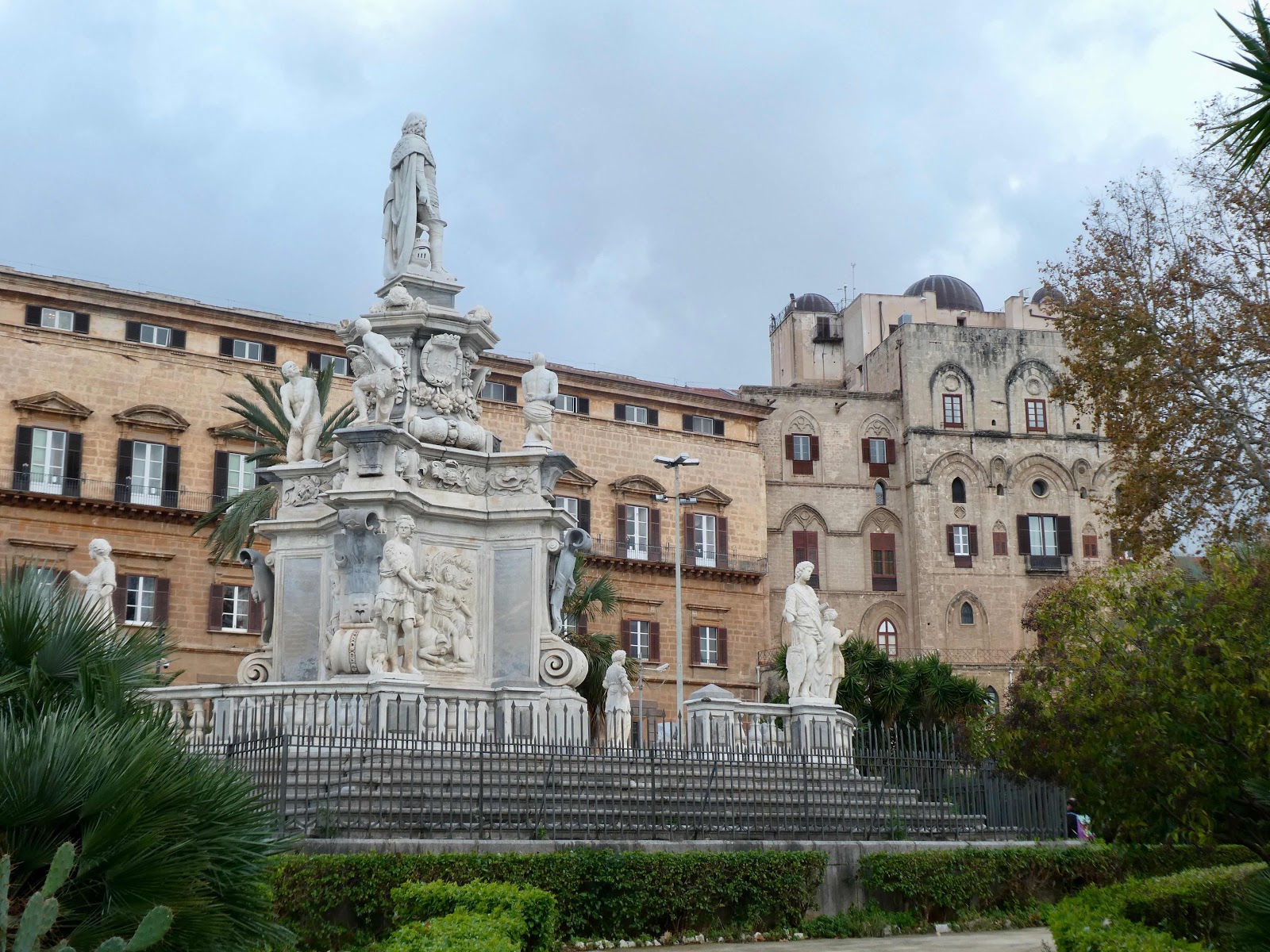
And then further down the Corso to our last stop, the Norman Royal Palace. 


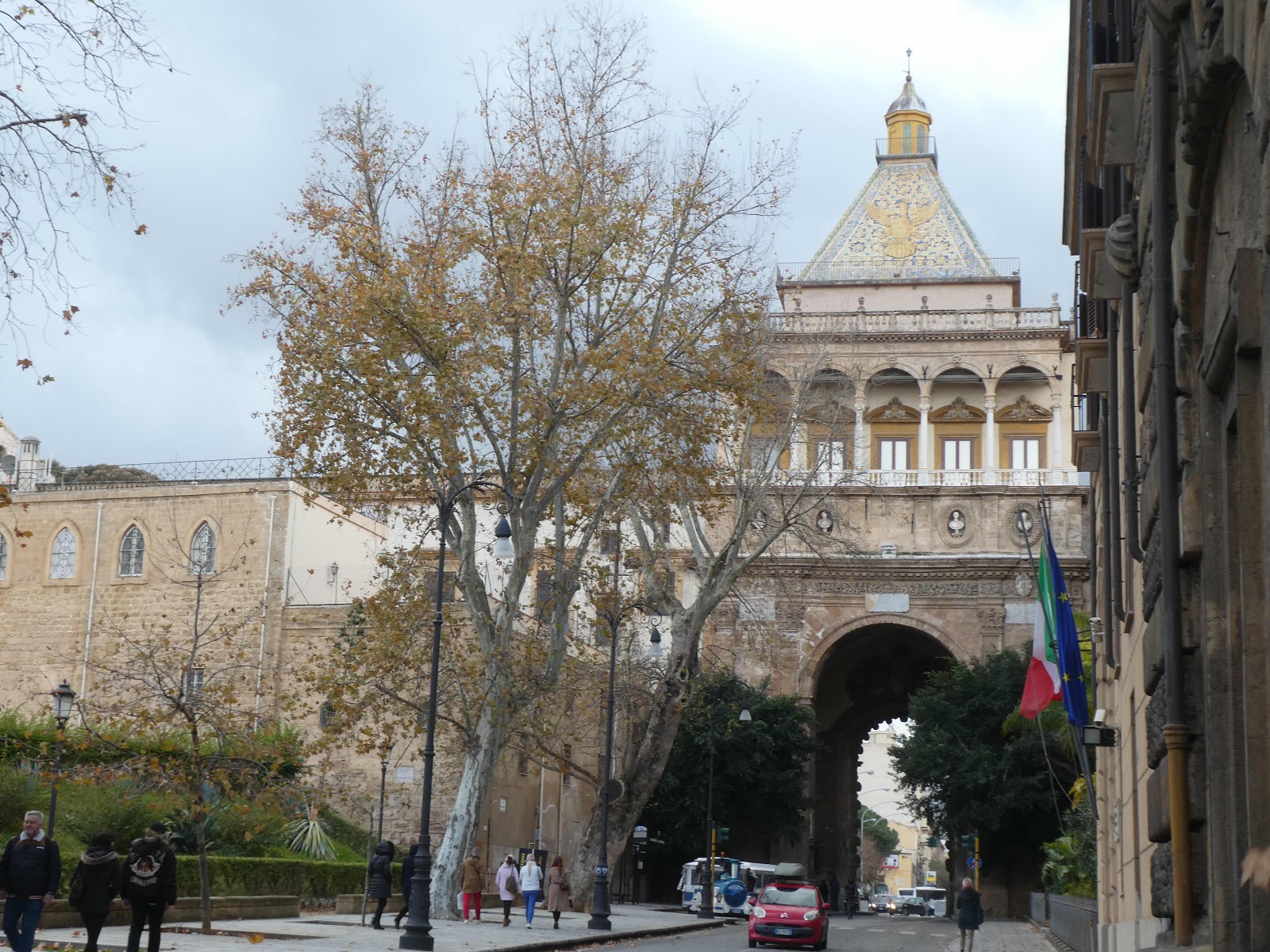
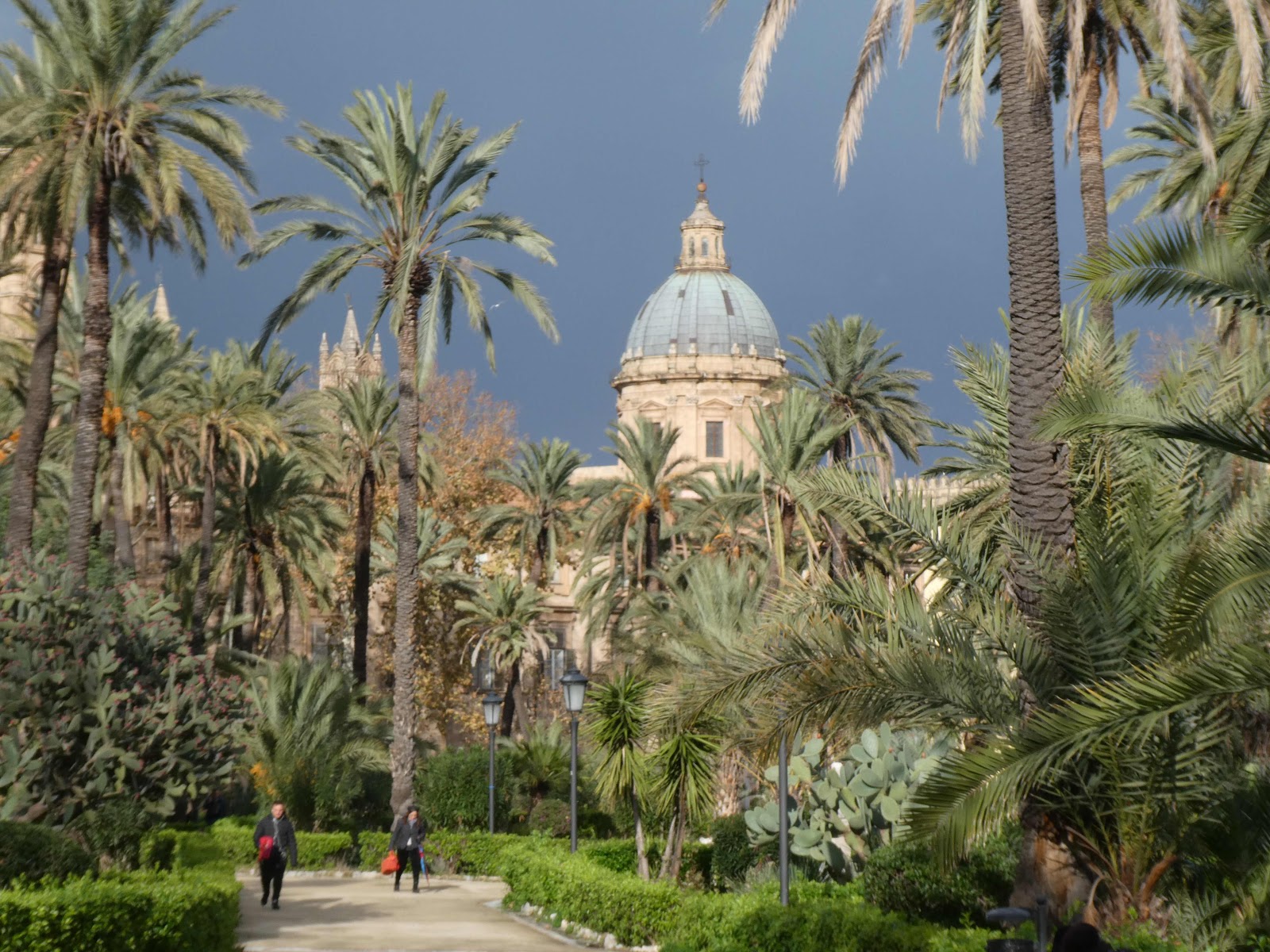
The palm trees in the garden between the the Norman Palace and the cathedral seemed a little anachronistic. We were so cold today, with brisk winds and rain. We hustled back towards the harbor, stopping for a snack in a warm place near the Teatro Massimo (Palermo’s opera house).  Greg found a geocache there, capping a successful day of exploration.