Oslo is the capital of Norway and its largest city. With a population of over one million, about one in 5 Norwegians live here. We had an ambitious plan for today, mapped out several weeks ago. Despite good intentions, it turned out we bit off more than we could chew.
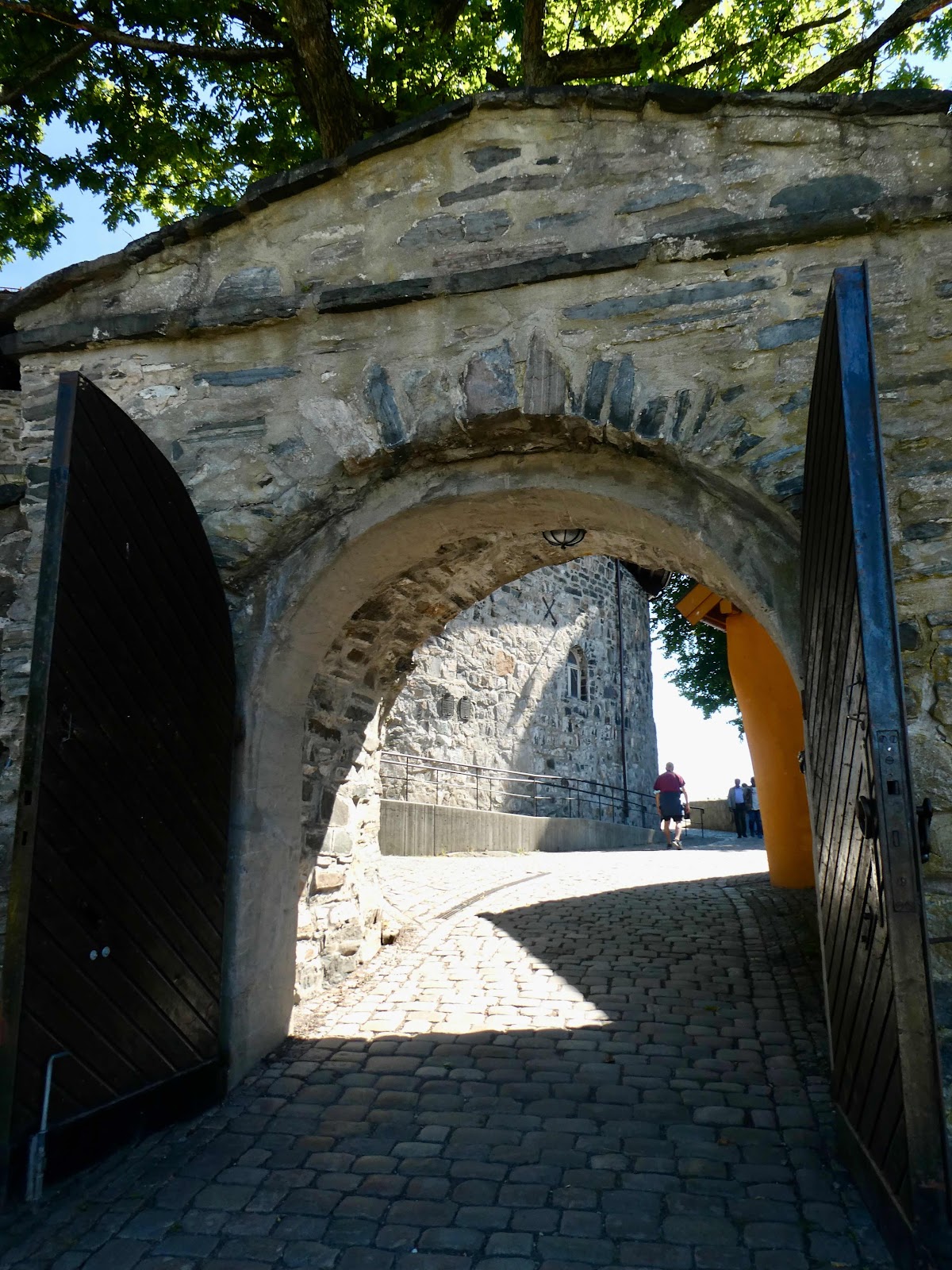
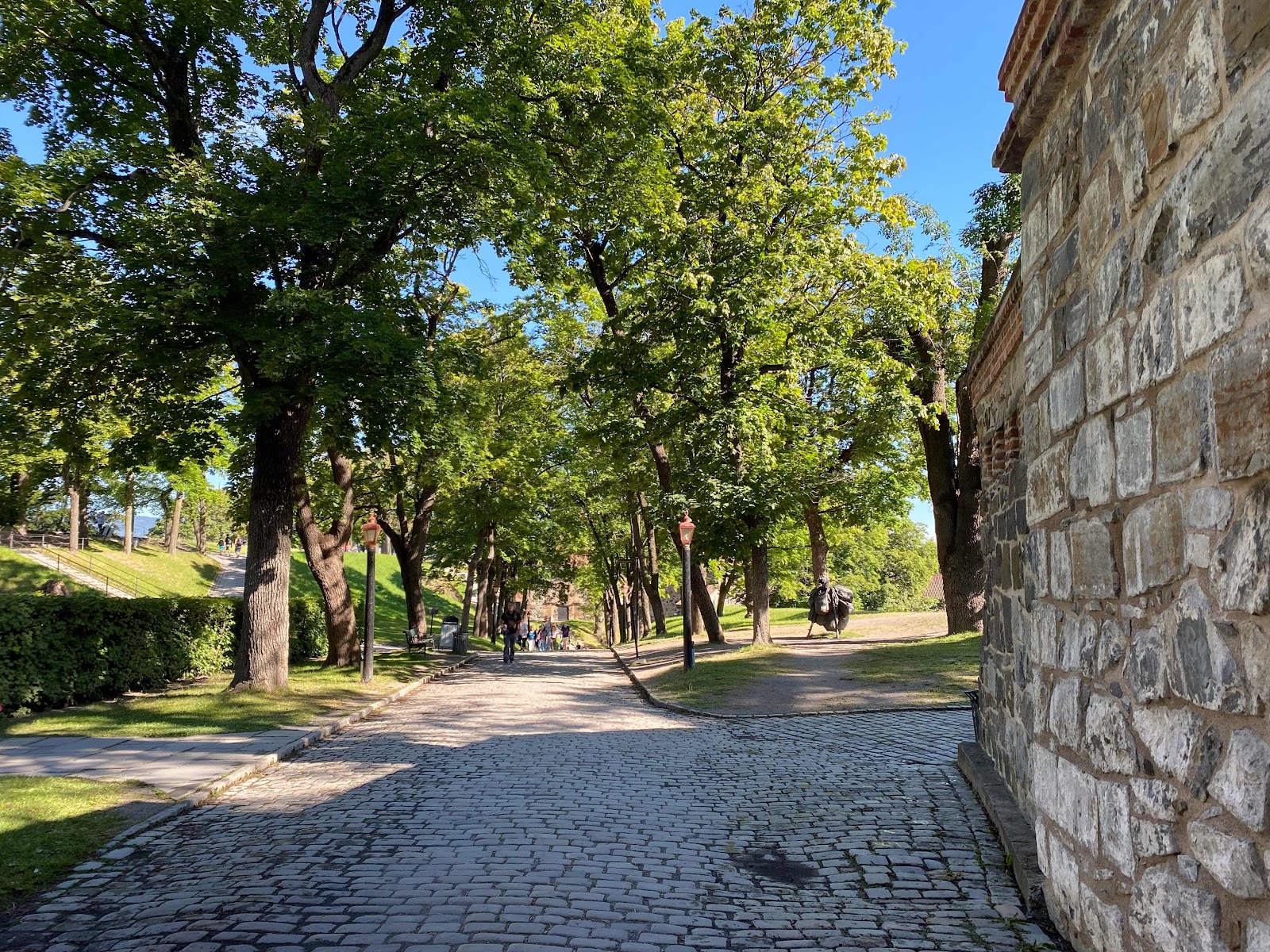
Looming over the cruise port (but not our ship) is a 723 year old fortress. Construction of Akershus Castle began after the burning of Oslo in 1287. It was to serve as a medieval fortress and to provide a royal residence for the city. The castle complex was probably completed by the early 14th century. Over the centuries, it was expanded, strengthened and renovated following sieges, burnings and development of new weapons and fortifications. The complex is immense, with forested walks, stables, fortifications, residences and barracks. The photo below shows about 1/3 of the grounds.

Admission is free to the grounds, with several entrances scattered around the complex. An optional admission fee gets you into a castle museum and an audio guide. Greg picked up some interesting facts from geocaching. The tower to the left in the photo above, for example, is known as the Knut Tower. Mom, this is named not to commemorate Mr. Rockne but a knight who was killed therein and left unburied for 12 years.

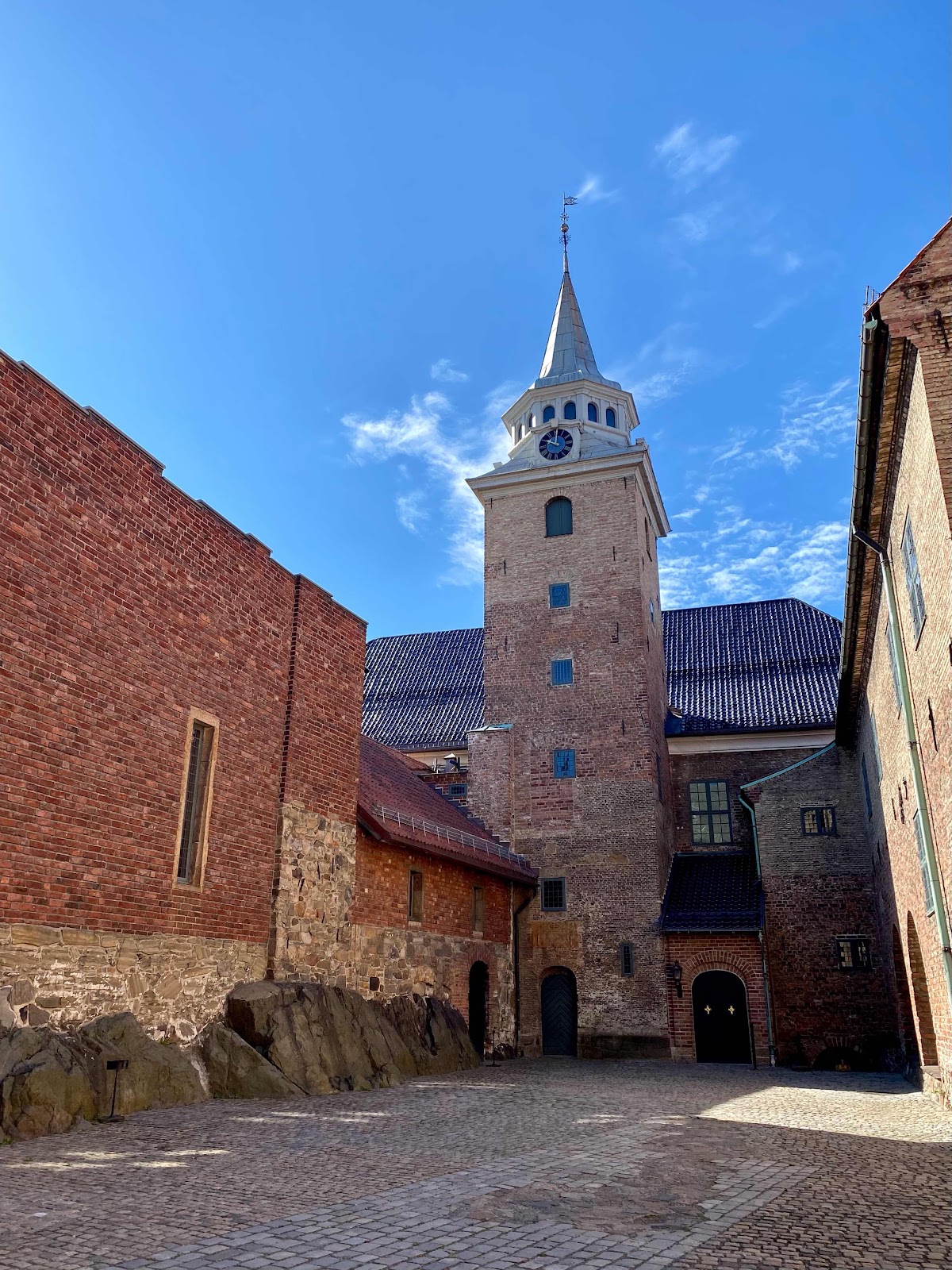
Several fortress walls incorporate the natural rock upon which it is built.
In the second half of the 16th century (between additional burnings of Oslo in 1523 and 1624), Akershus was converted to a Renaissance castle, the fortress was closed as a palace by 1900, though it continued to see use as a national prison and military post. It was never successfully conquered in battle.
It was occupied by the Germans during World War II, after the Norwegian government evacuated the city following Germany’s unprovoked attack on Denmark and Sweden. The Germans used the fortress as a prison for Norwegian resistance members, deserters and other Germans opposed to the Nazi regime. Although the archives were burned during the German surrender, it’s known that at least 42 members of the Norwegian resistance died in imprisonment.
And on to our next stop.
The Oslo Opera house opened in 2008. All are welcome to walk here - even (and especially) on the roof. The Carrara marble surface offers a cool seat on warm days. There are lovely views of the harbor and the iceberg art installation which rotates with the tides. It also serves as an amphitheater for outdoor performances.


the iceberg installation
The novelty and views can make one forget that underneath are 1,100 rooms covering over half a million square feet. Three performance halls host the Norwegian National Opera and Ballet, and the national opera theatre in Norway. There are art installations, meeting rooms and offices. Unfortunately, with only 8 hours in port and an ambitious list of things we want to see, we didn’t have time to take the guided tour.
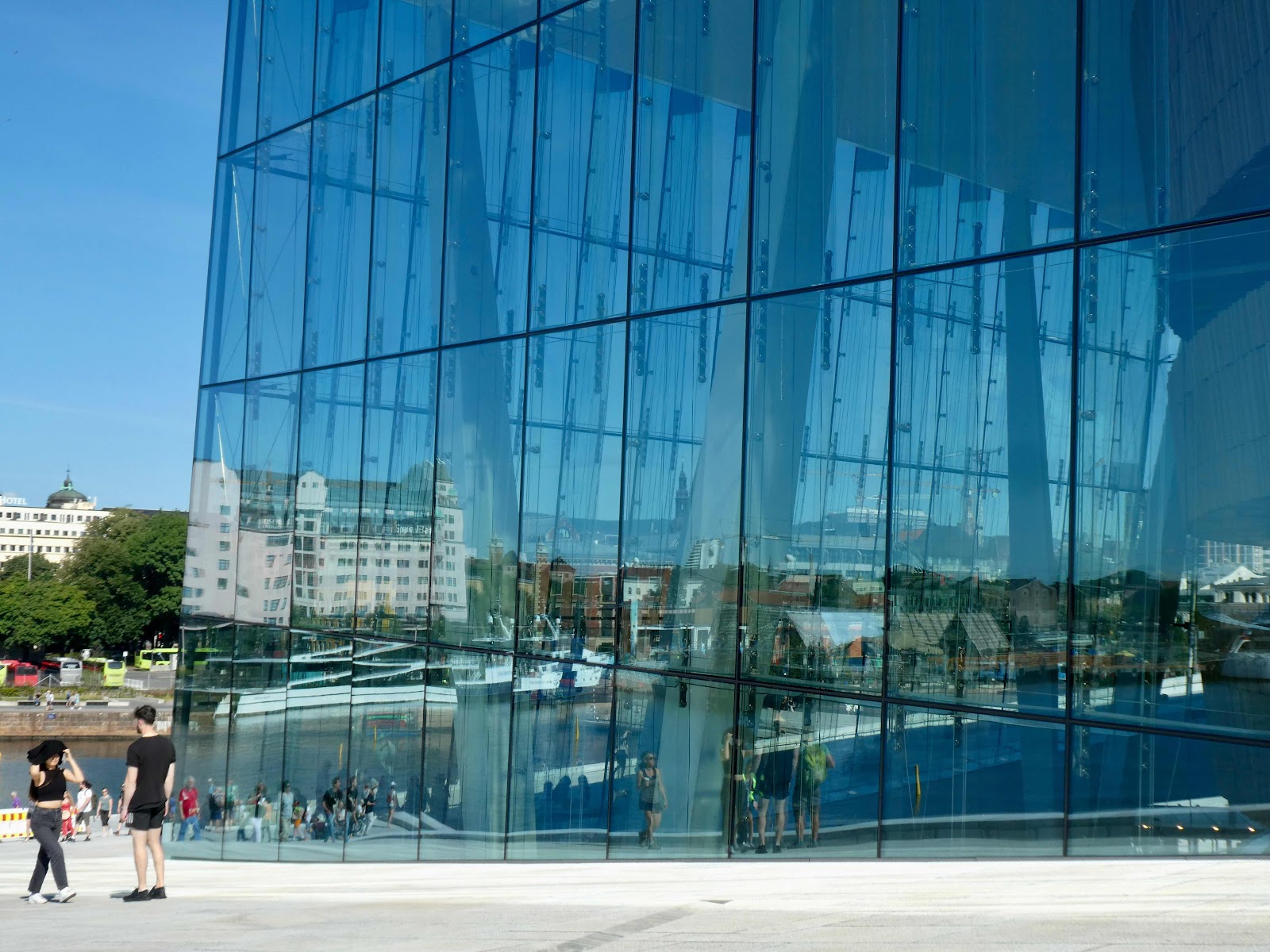
Looking through the glass walls of the Opera House.

The little houses are floating saunas. The wood stacked on the top decks provide the heat.
A 4 minute walk took us to the Munchmuseet, the newest museum on Oslo’s waterfront. Opened in October 2021 and custom-designed to house the largest collection of art by native son Edward Munch, the new Munchmusee was built to replace the chock-full 1963 iteration. There is some controversy about the new building, but I found it visually stunning. There are 13 floors dedicated to art and cultural experiences, including 11 galleries, performance spaces, rotating exhibits and a green roof.

We ducked in, courtesy of our Oslo Pass, to catch a quick glimpse of The Scream. (It is just as unsettling in person.) The museum has eight versions of The Scream. Munch created all versions of The Scream on cardboard or paper, so they are more fragile than oil paintings on canvas. To preserve them, the museum rotates which version (of one painting of tempura and oil, one drawing of crayon on cardboard, and six lithographs) is on display. We saw the tempura and oil.

And then we stayed a bit longer.
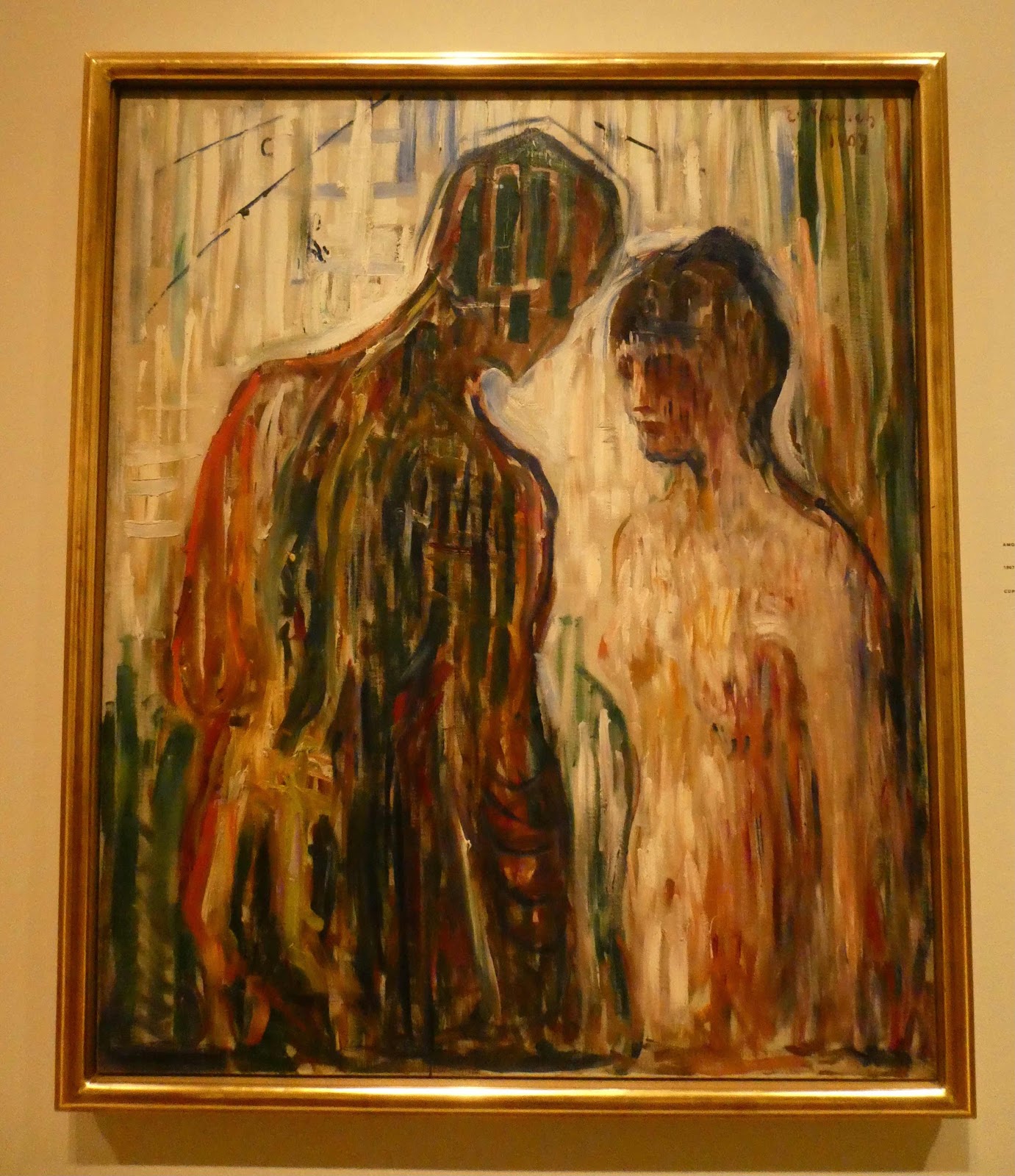 Cupid and Psyche

Munch liked to explore a motif over and over, trying different settings and materials.
We would have liked to stay longer, but the streets beckoned. It was another stellar day.
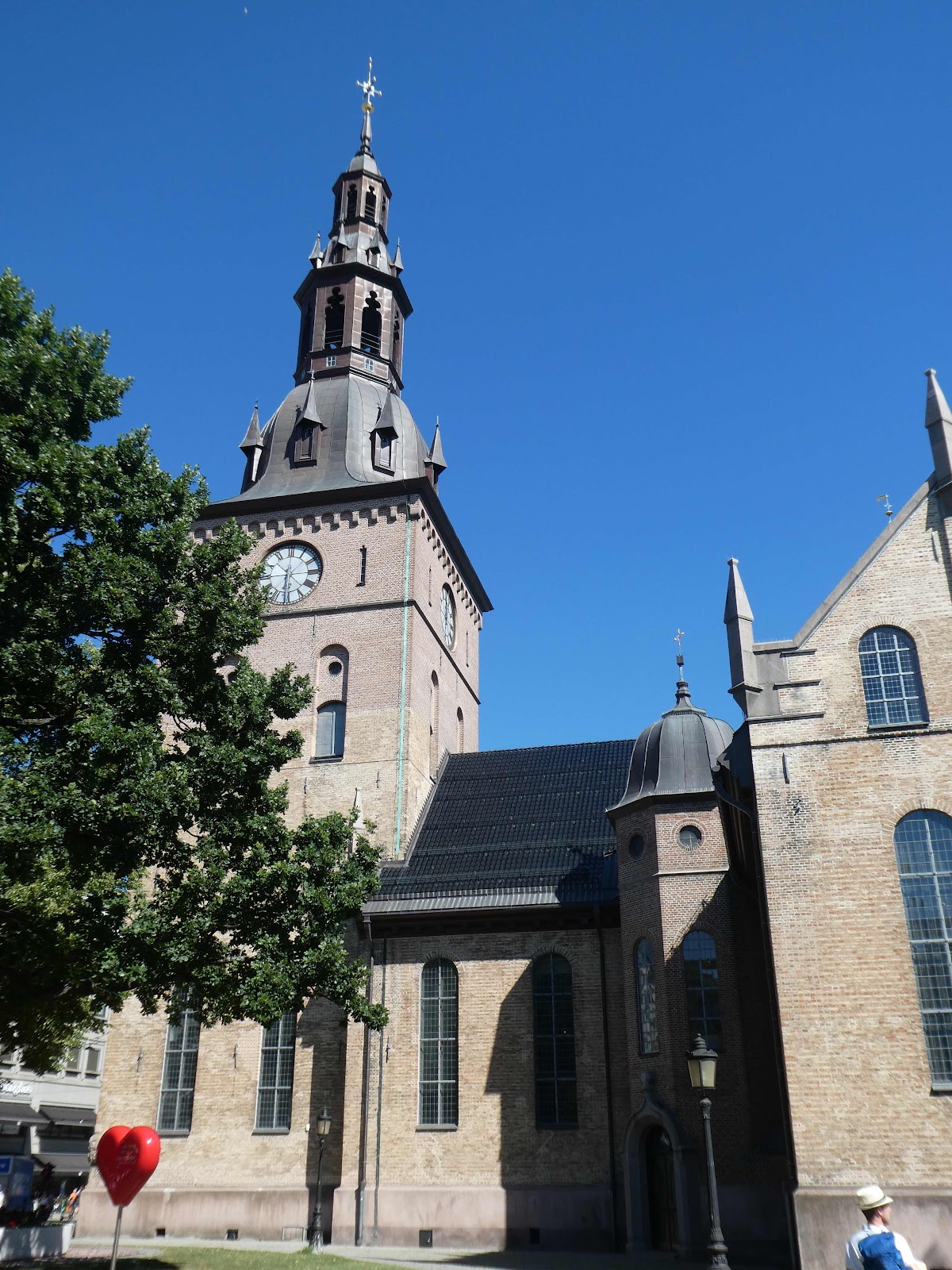
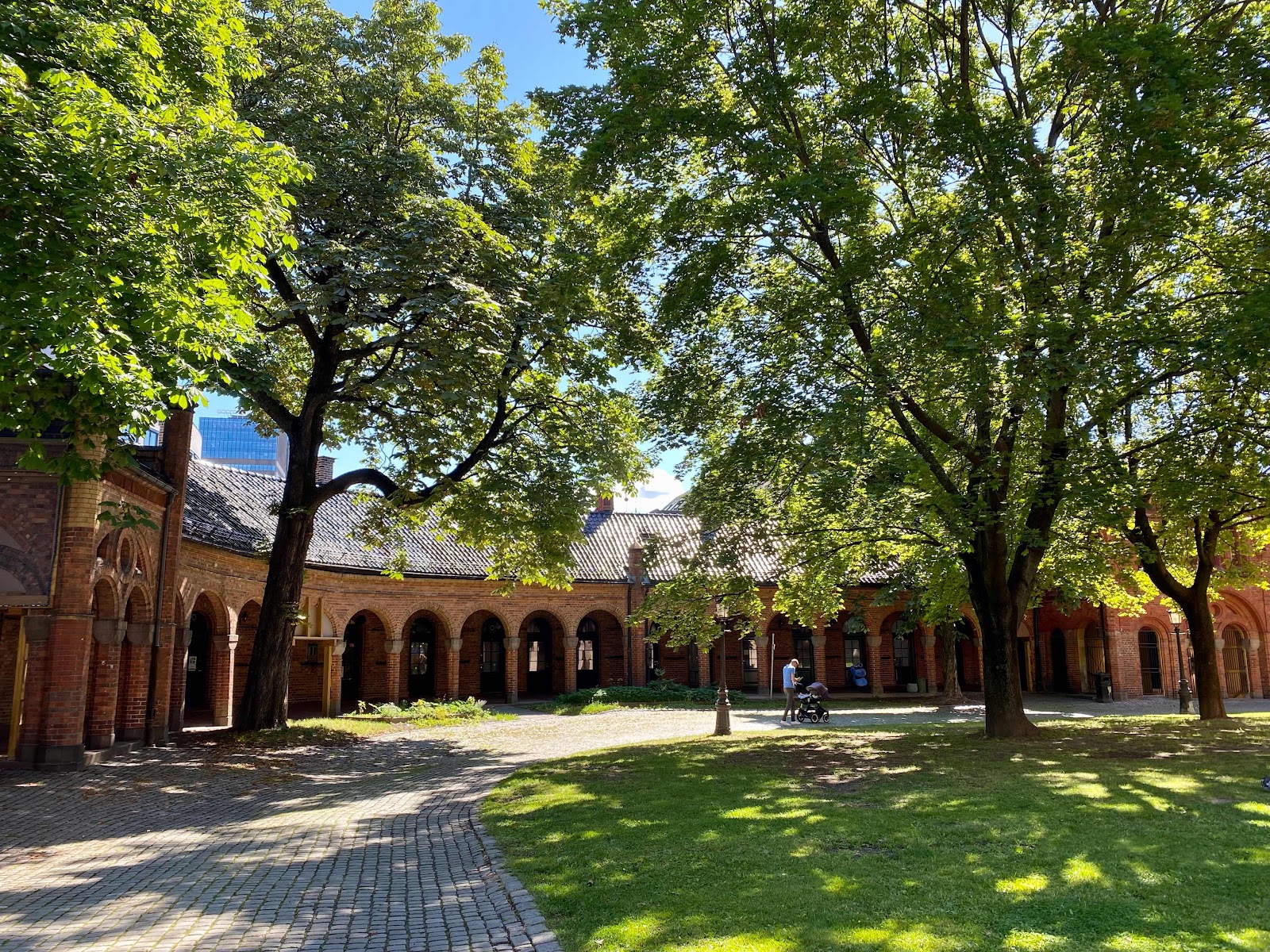
Oslo Cathedral, previously Our Savior’s Church, is the largest Christian church in Norway. It serves as both the parish church for downtown Oslo and the Oslo diocesan seat for the Church of Norway, an evangelical Lutheran denomination. The cathedral is the third built in Oslo, after the first two were destroyed by fire (sound familiar?). The Baroque church was consecrated as a parish church in 1697. Some changes were made over the centuries, including adding neo-Gothic interior in the mid-1800s. Restoration of the original Baroque interior was undertaken in the 1940s, when the neo-Gothic interior was removed and original furnishings were brought back. The restoration was completed in 1950 for Oslo’s 900th anniversary. Unfortunately we could not get into the church so settled for the exterior and cloisters.
Karl Johans gate is the main road leading from the Central Train Station to the Royal Palace. Today it’s a bustling pedestrian street. Made by combining several existing streets, the thoroughfare was dedicated in 1852 in honor of the recently deceased King Charles III John (who was also King Charles XIV of Sweden). There was no gate to be seen, as gate in Norwegian means “street”.

After some difficulty figuring out the app (which should not have been that challenging for us, but somehow was) we caught a tram to go see the Vigeland sculptures. Frogner Park is a large public park in Oslo’s West End suburbs. The park is named for the Frogner Estate and 1750 manor house (now the Oslo Museum) which comprised part of the original park. After the city of Oslo acquired the estate in 1896, it was converted to a public park along with much of the surrounding agricultural land.
Today tourists flock to Frogner Park to see the Vigeland Installation. Gustav Vigeland (1869-1943) was a Norwegian sculptor best known for his mammoth sculptures exploring death and the relationship between men and women. He also designed the Nobel Peace Price medal. In 1906 he designed a spectacular fountain to be placed in front of the Norwegian Parliament building. The fountain was not built due to location disputes. Fifteen years later (and unrelated to the fountain controversy), the city announced they were going to destroy the house in which the sculptor lived. After long negotiations, the City of Oslo agreed to provide Vigeland with a new residence/studio near Frogner Park. In return, Vigeland agreed to donate all of his subsequent work to the city.
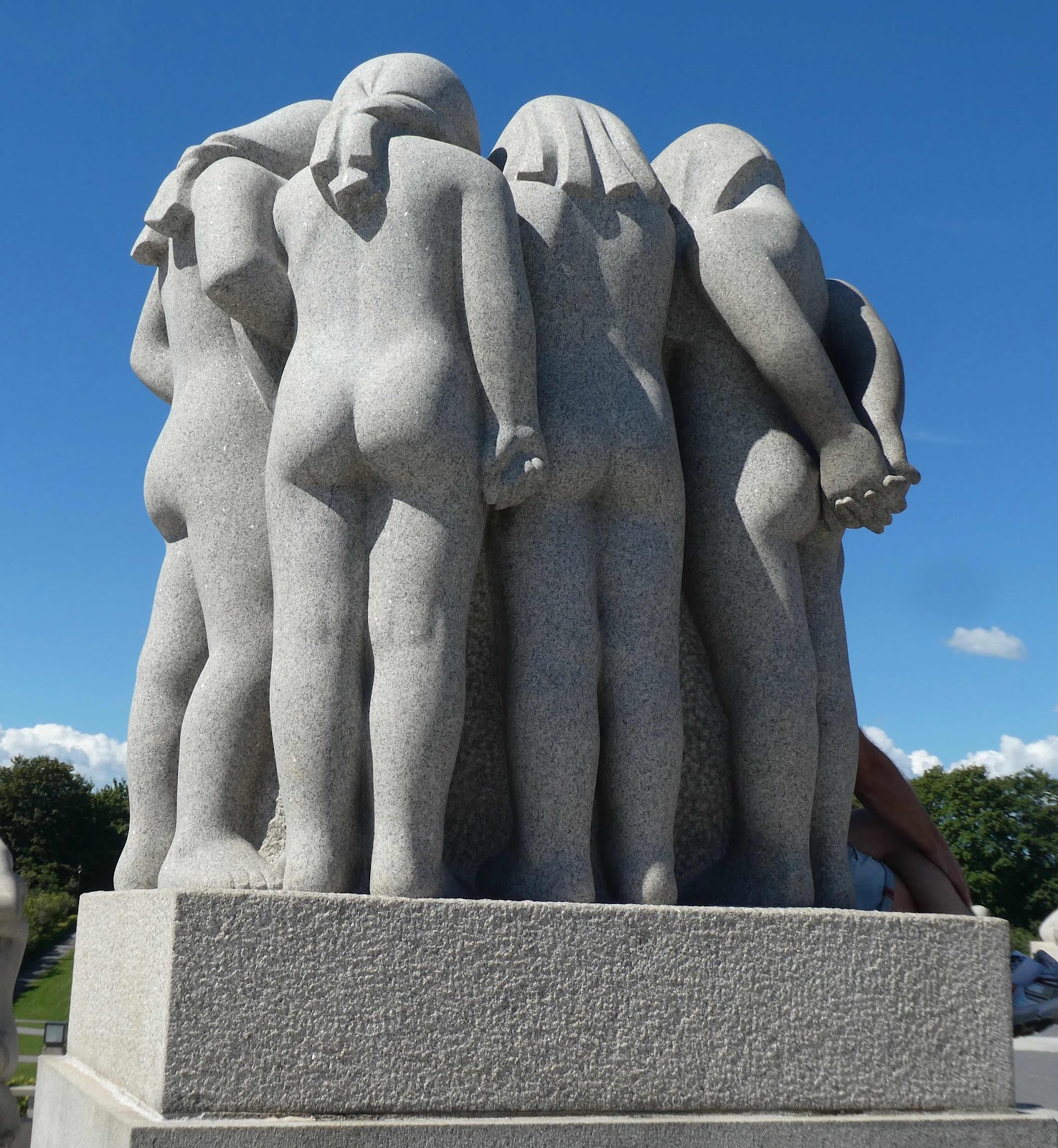
Today, 212 bronze, cast iron and granite sculptures are concentrated in the Vigeland Sculpture Installation. The sculptures are nude but not erotic in the least. They depict children and adults in activities of daily life and various emotion. The most famous sculpture is the 46 foot Monolith (Monolitten), comprised of 121 entwined figures struggling towards the top of the column. The Monolith is positioned on the Monolith Plateau, which contains 36 figure groups depicting the Circle of Life. The controversial fountain conceived in 1906 is also in Frogner Park.
Visitors cross a bridge lined with sculptures, pass the fountain and arrive at the Circle of Live surrounding the Monolithl. Excuse the number of following photos, but I really loved this place.

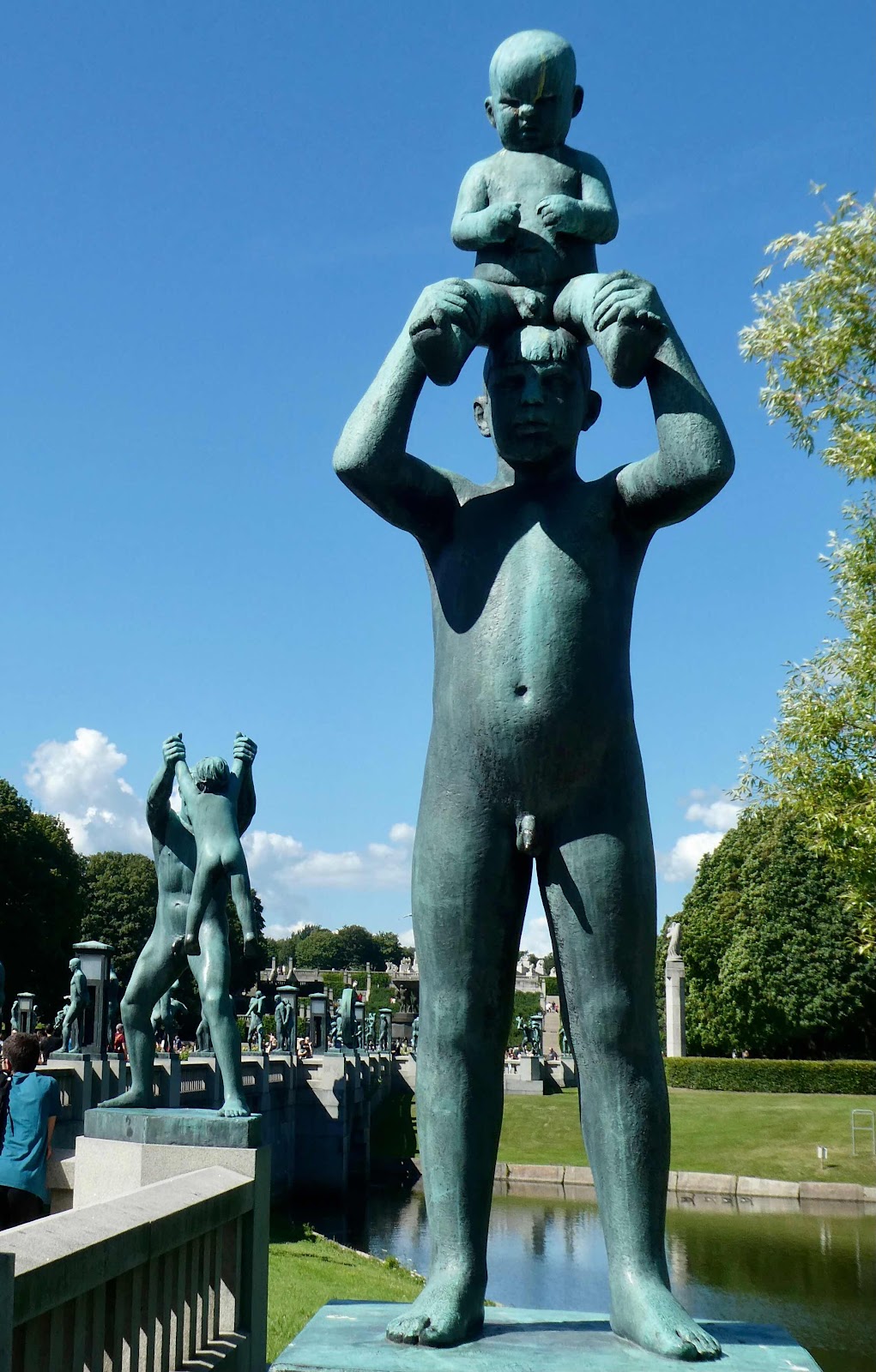

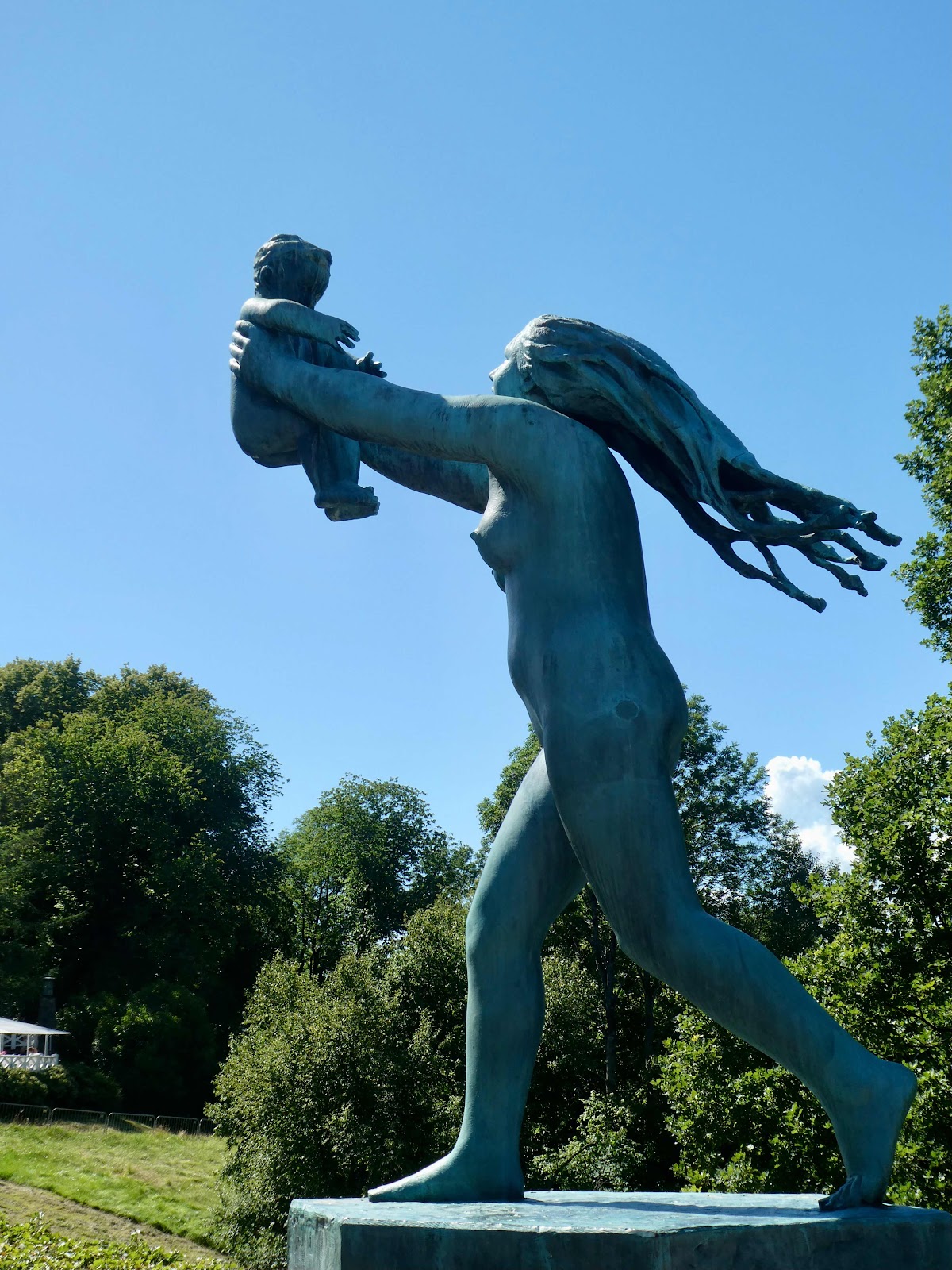

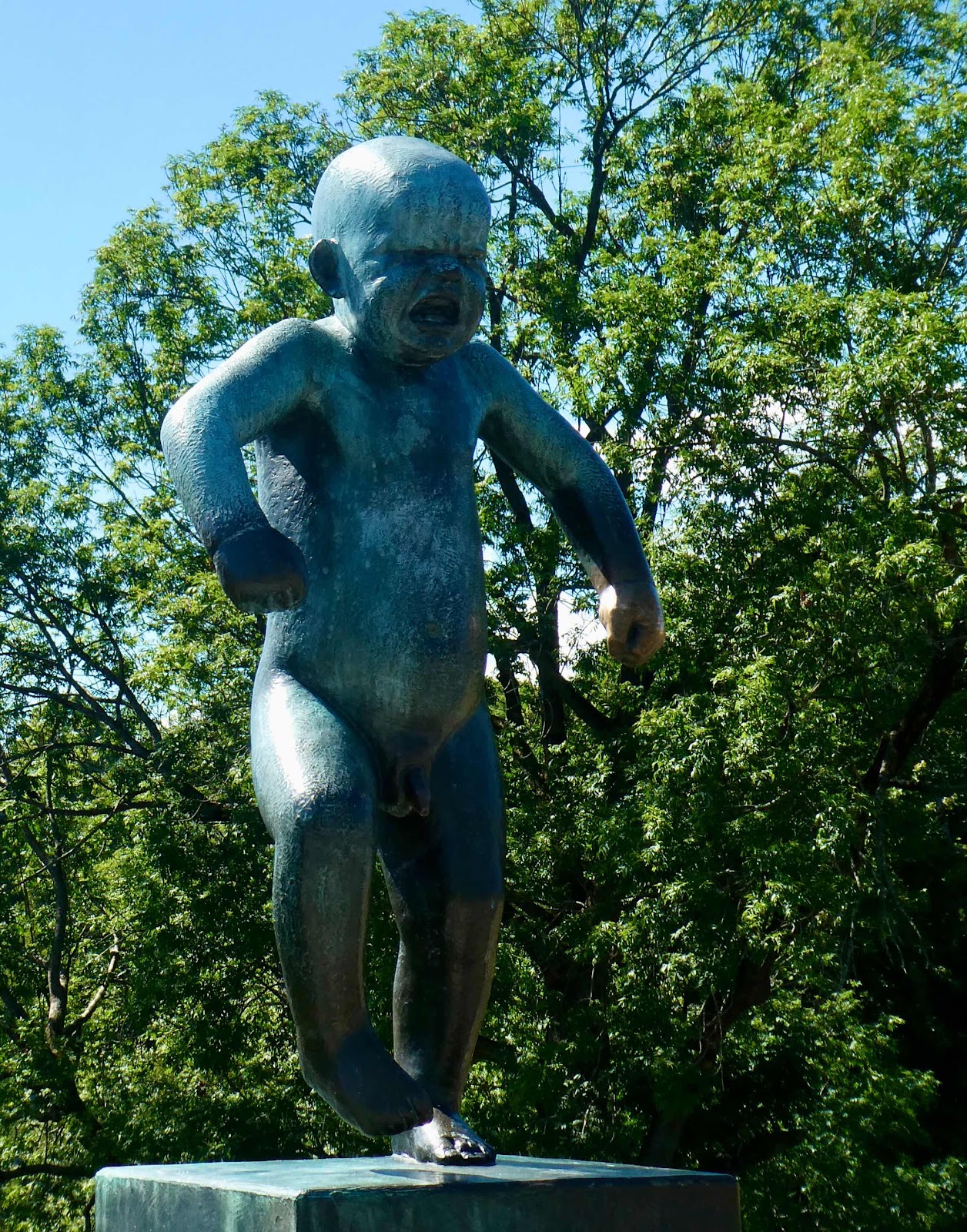
The figures along the bridge are largely exuberant: parents with children, children playing, people dancing. One little boy, known as the Angry Baby, has his tantrum off to the side behind a pillar.
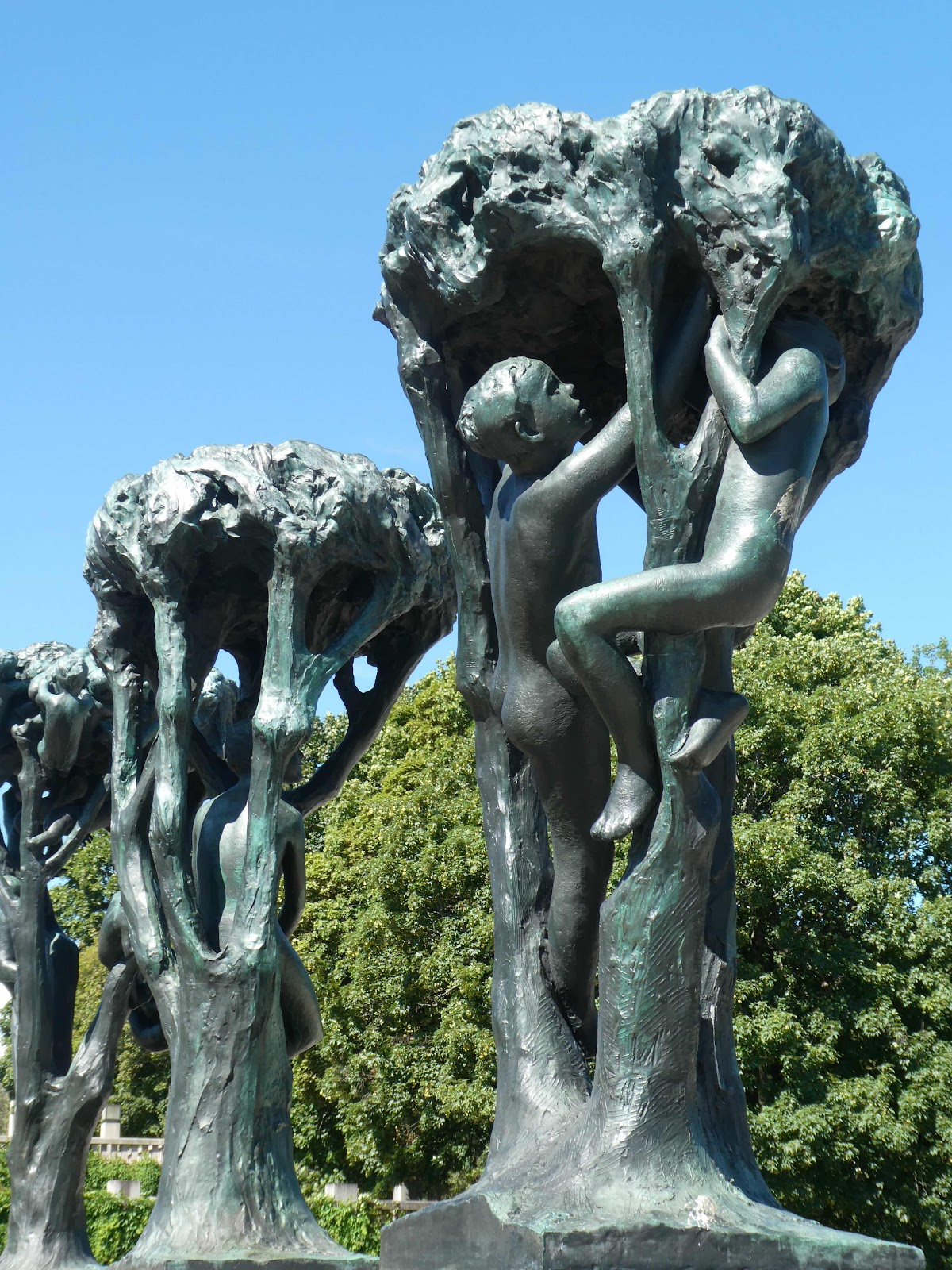
The fountain is surrounded by trees filled with climbing children.
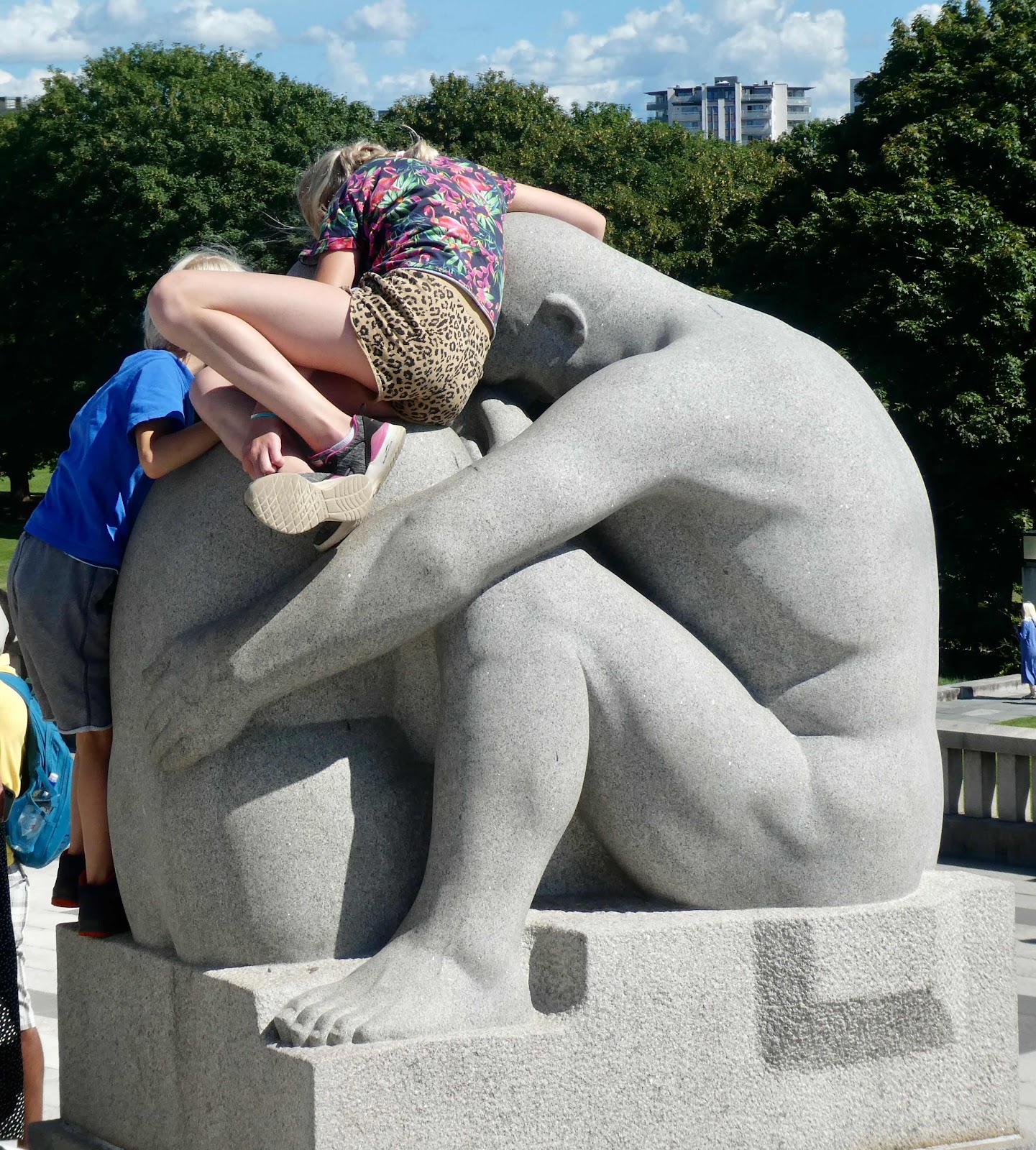
The Circle of Life groupings around the Monolith are larger than life and quite moving. There are couples musing, arguing and grief-stricken. There is a man cradling an older man who has just died. There are parents playing with children, and children listening to their parents. People are free to scramble upon the sculptures.
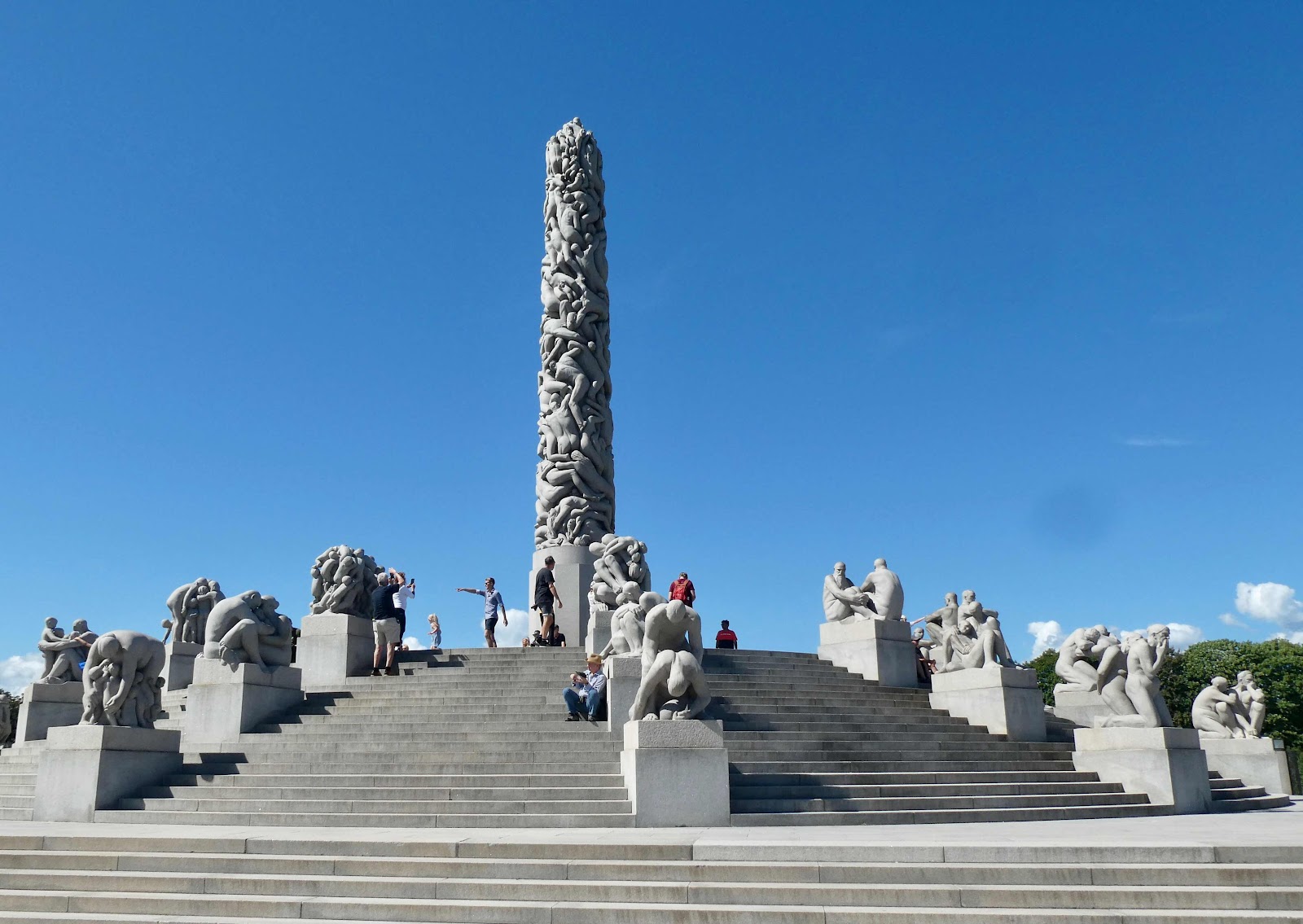


The 46 feet tall Monolith is carved out of one stone block which was brought from a quarry in Ideefjord, Norway in the 1920s. Vigeland designed the column over 10 months, and a team of three masons executed the carving behind a wooden shed over 14 years. There are 121 figures climbing and clinging together. There are men and women of different ages; children crown the top. The Vigeland Museum interprets the Monolith as a “kind of vision of resurrection, and our longing and striking for spirituality.” But the Monolith makes me uncomfortable. I suspect the clambering bodies remind me of the Holocaust.
We had planned next to catch a bus to the Folkmuseet, a living history museum, and then a ferry back to the pier. We’d wanted to see a Stave Church at the museum, which houses a collection of traditional buildings from across Norway. However, we were out of time.
I had somehow lost my mask between arriving at Frogner Park, so rather than board a crowded tram, we walked the 3 miles back to the ship. Turned out we were in the diplomatic area, so we passed many embassies along the route. I wish I’d taken a picture of this, but the street next to the Russian Embassy had a new sign that read Ukrainewege (Ukraine Way) and the buildings along the street, facing the embassy, were bedecked with Ukrainian flags. I loved that. The French embassy across the street from the Russian embassy also had a large Ukrainian flag hanging from a building next to their main building.
We passed the Nobel Peace Center and the Rathaus (city hall) as we neared the ship. The Peace Prize is the only Nobel Prise presented in Oslo. The others are presented in Stockholm. There is a museum in the Peace Center, commemorating previous winners and the ideals for which the prize is awarded. The Center sponsors events and exhibitions inspired by the work and ideas of the Peace Prize laureates.

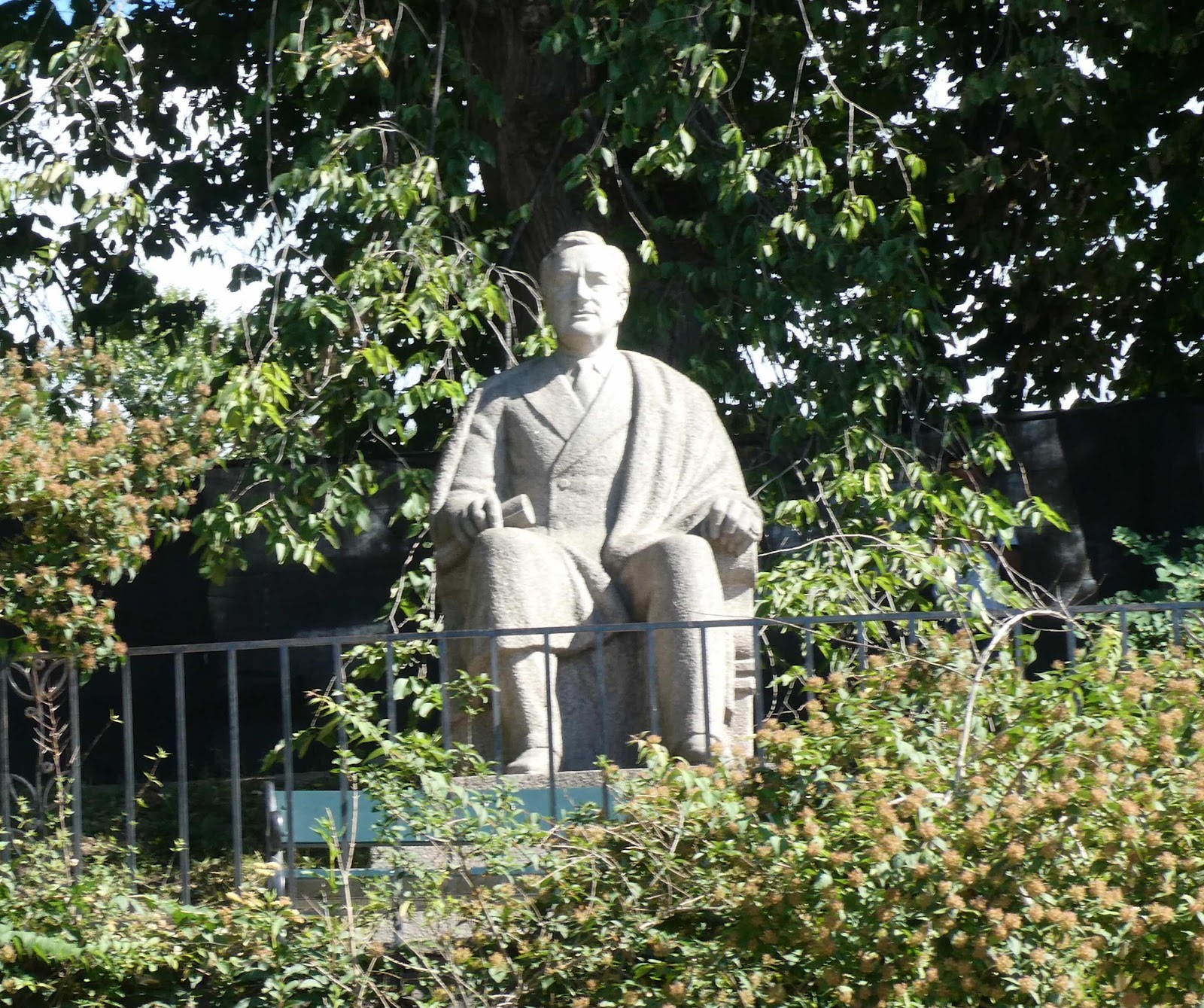
Across a large plaza from the Peace Center is a statue of FDR. He faces the Nobel Peace Center, is near the Norwegian parliament building and backs up to the Akershus Fortress where the Resistance fighters were imprisoned and killed. The location is no coincidence. FDR is revered in Norway for publicly praising the courage of Norwegian Resistance Fighters and for challenging world opinion regarding possible Norwegian complacency in the invasion by Germany during World War II.