Sunday, October 6, 2019

2019 Cyprus - Day 3 Kyrenia, Belkapais, Olive Festival, St Hilarion

First things first. Mom, we're safely back in the EU now.


Our little hotel (9 rooms) in the heart of Kyrenia's old city is charming. The desk clerk/bartender/breakfast cook (small hotel = small staff) told us last night that we were the first Americans he's seen at the hotel. We've had many comments like this in the 48 hours we spent in North Cyprus.


We had choices for breakfast today. I opted for the Turkish breakfast (no such thing as too many olives), while Greg had the English breakfast. 
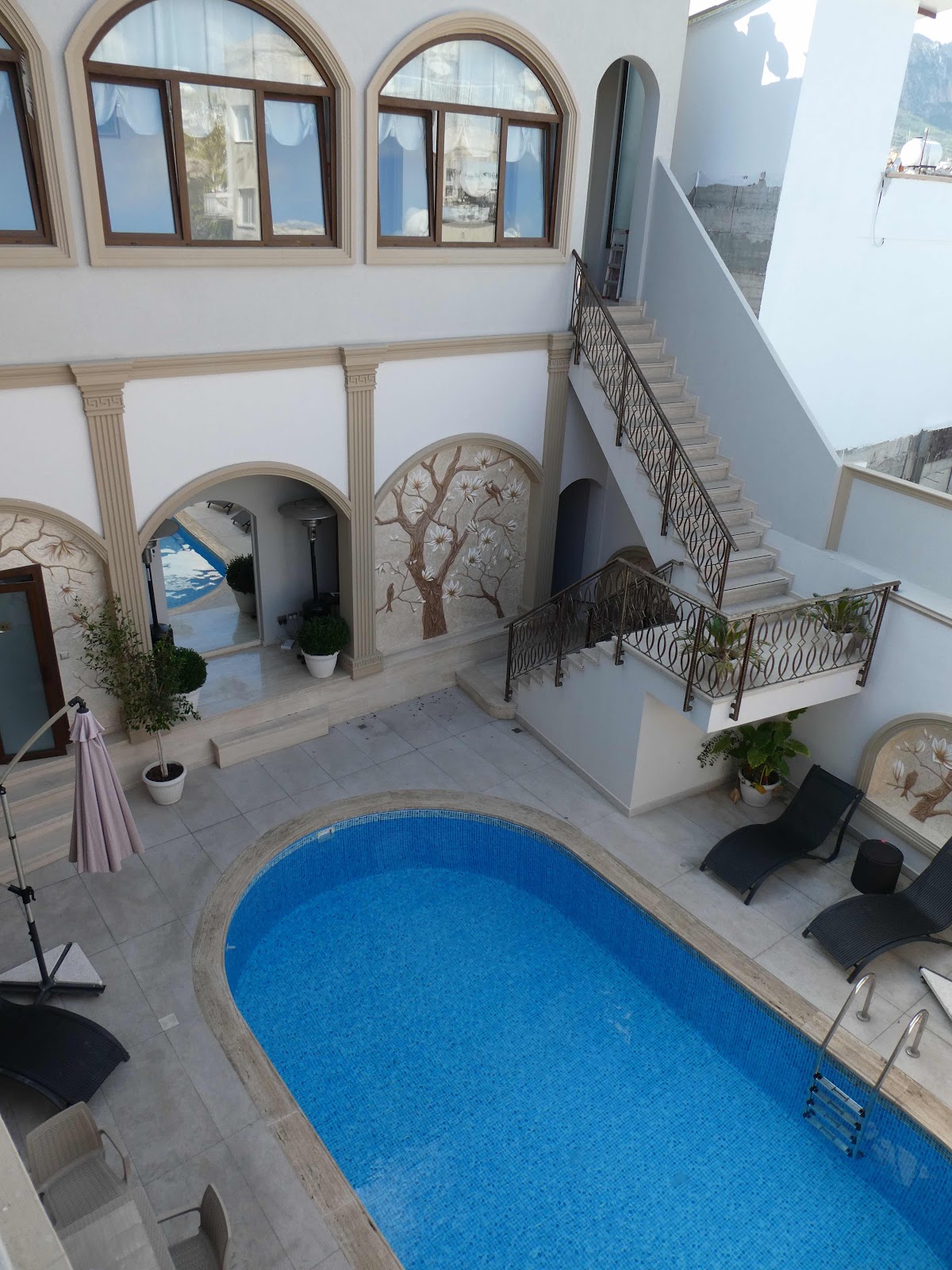

The view from our door.

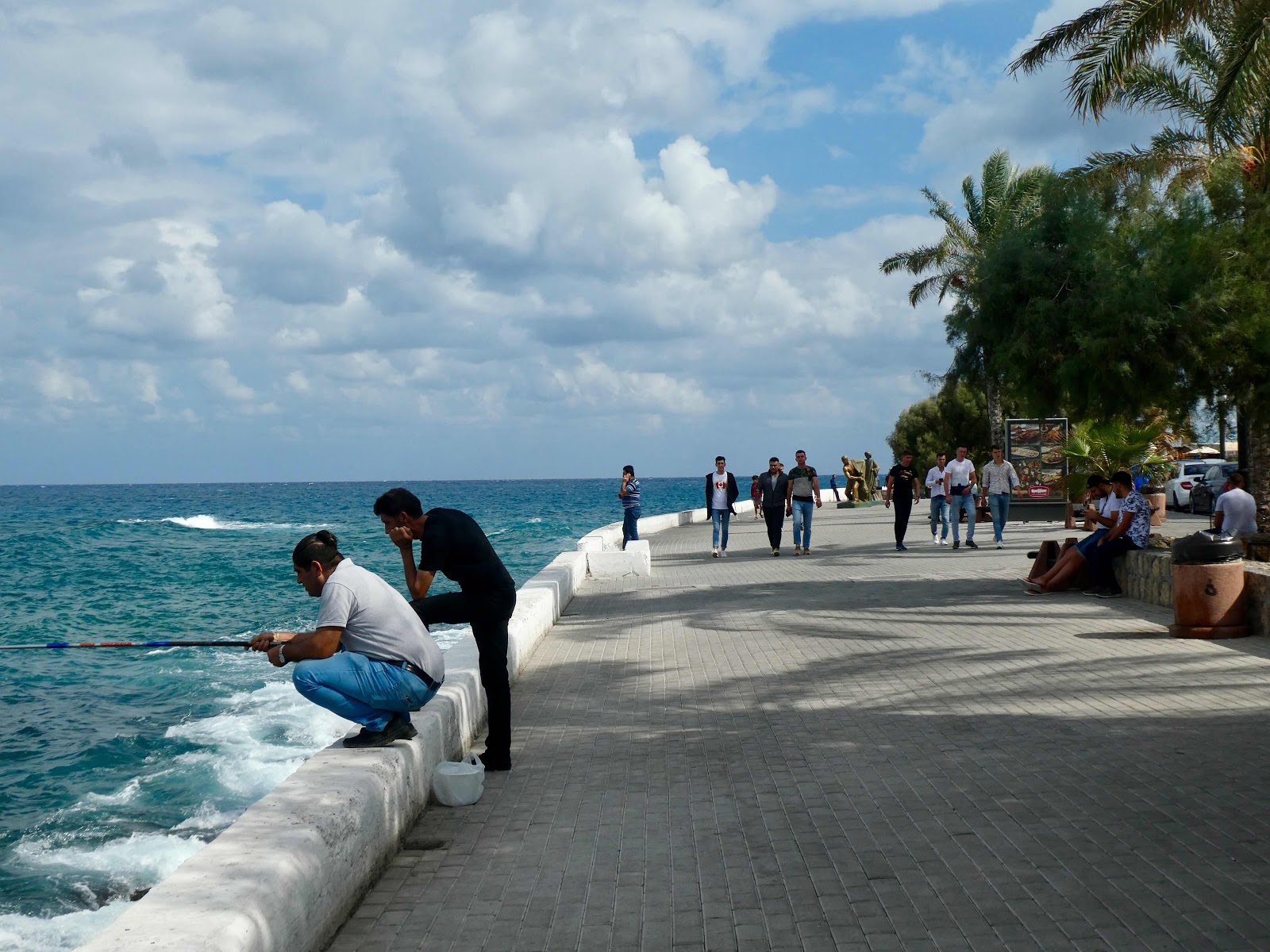
We walked around Kyrenia for a couple of hours to see the old natural harbor and castle.


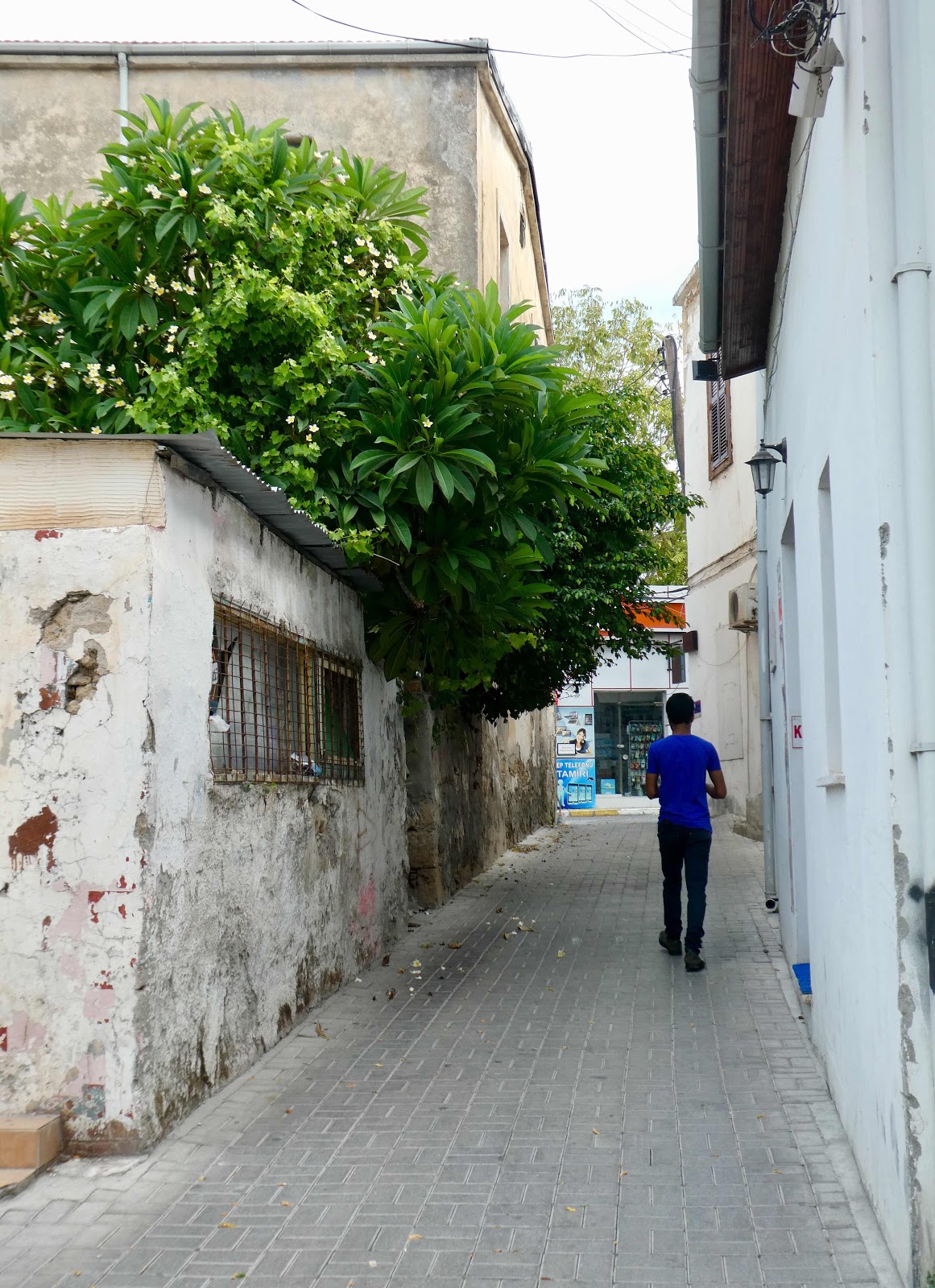
The type of little streets we were trapped in last night.


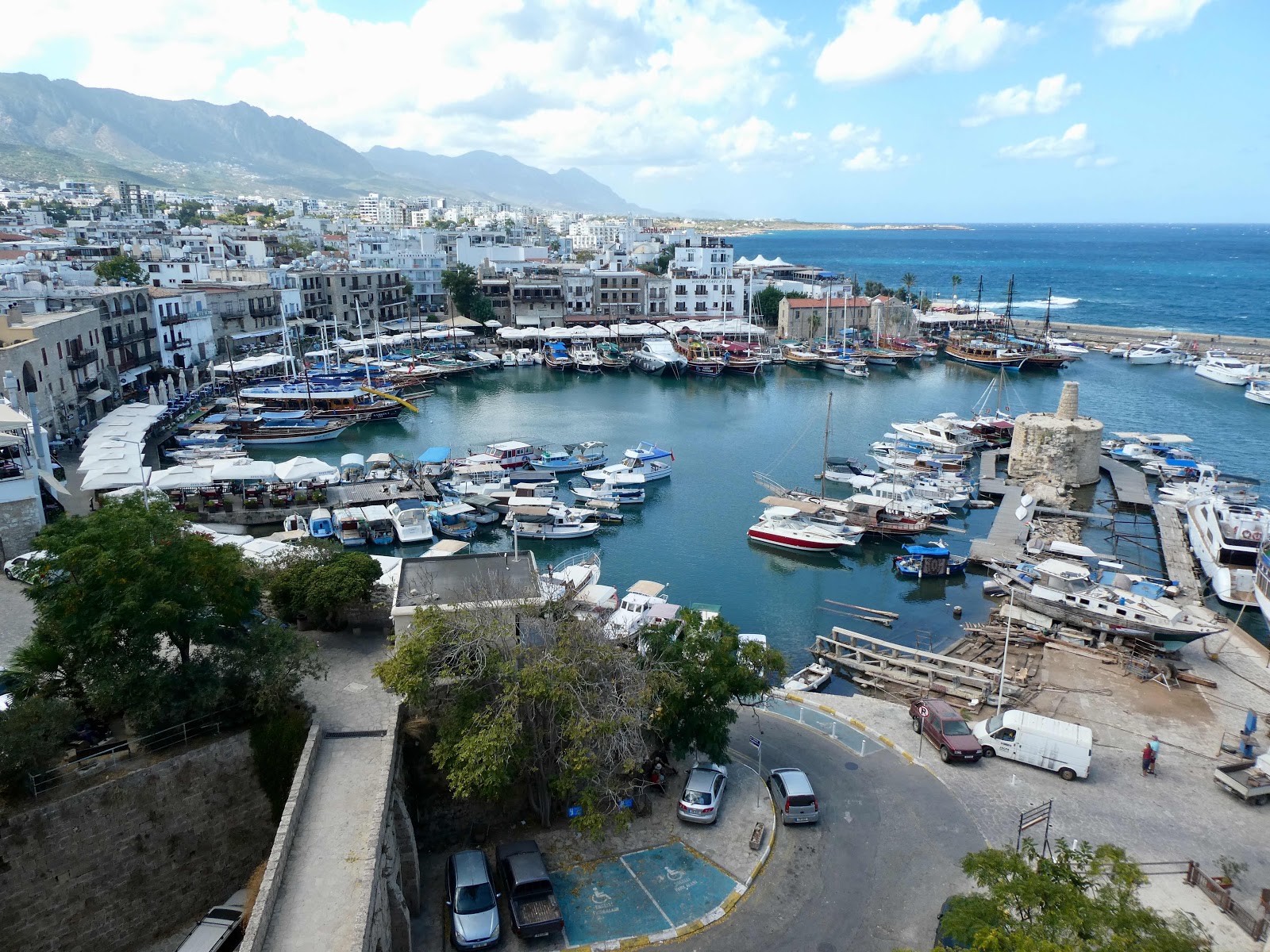
Kyrenia, founded by Mycenaean Greeks around 1200 BC, was one of the ancient city kingdoms of Cyprus. 


In Venetian times, a heavy chain was strung across the harbor entrance to keep masted warships out. The round stone structure center right is one of the old chain towers.

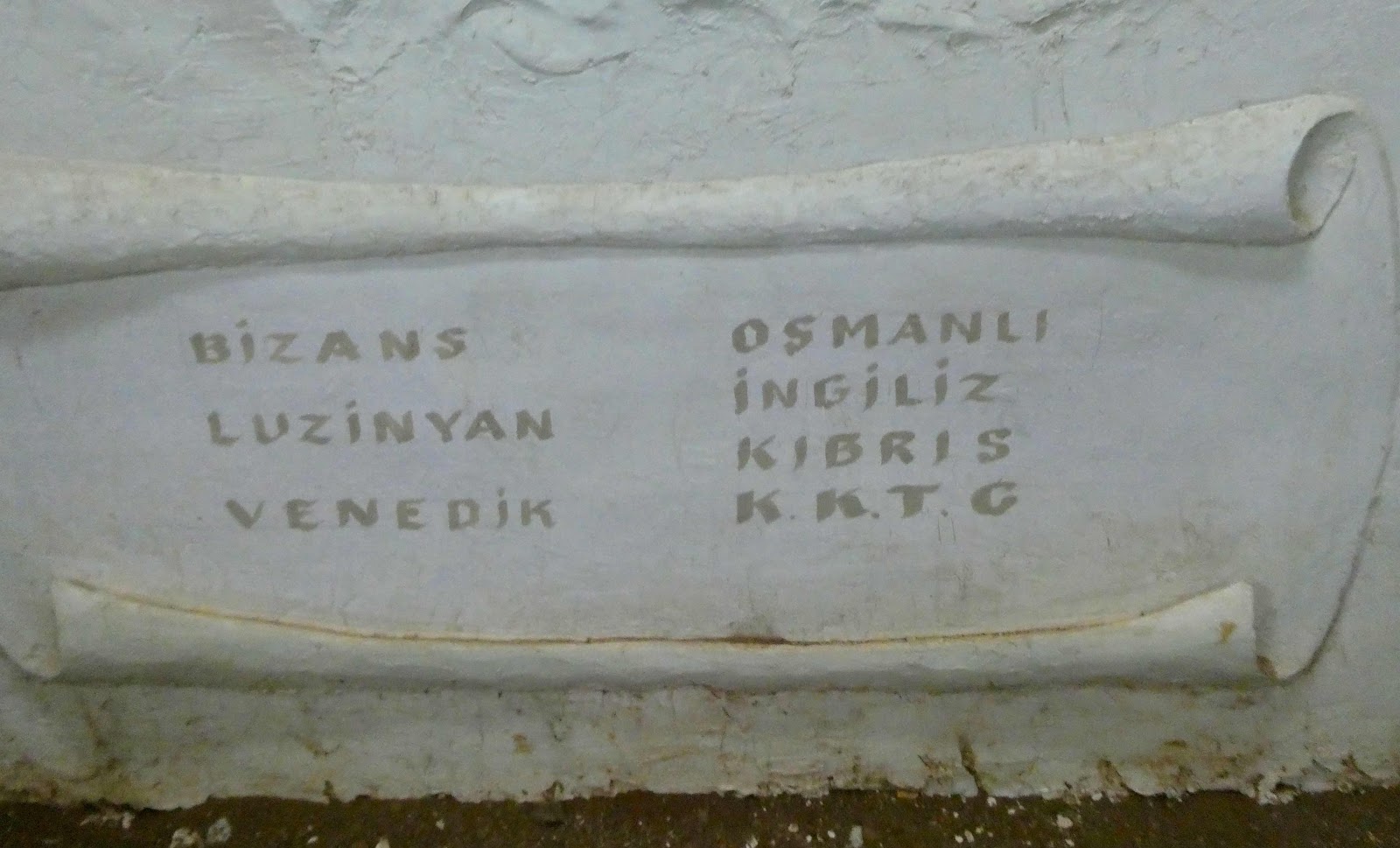
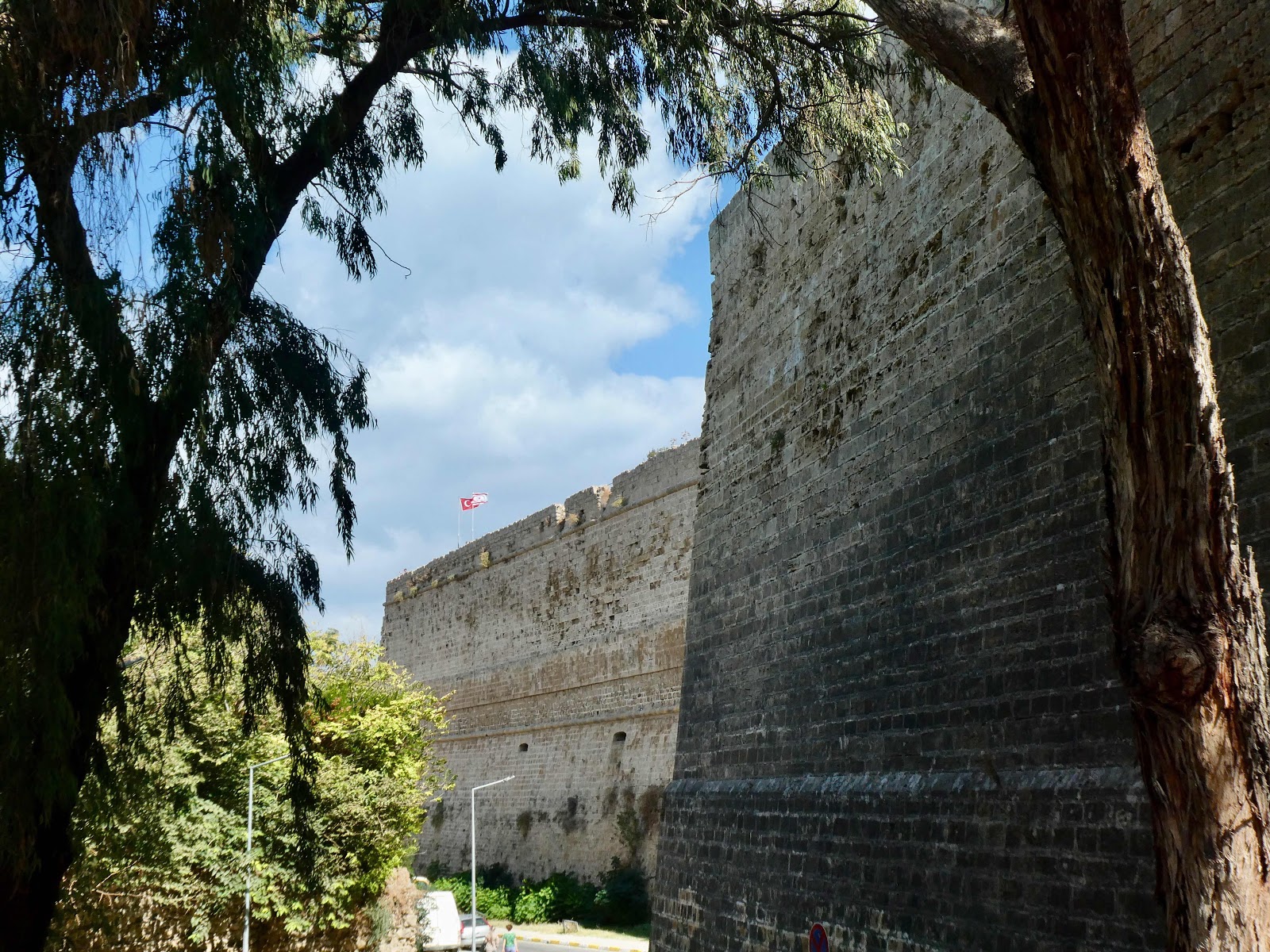
The Byzantine castle was built in the 7th century for protection from Arab raids. It was captured in 1191 by Richard the Lionheart on his way to the Crusades. He sold it to the Knights Templar, after which it fell into the hands of the usual succession of Cyprus occupiers (Lusignans, Genoese, Venetians. Ottomans, British). 


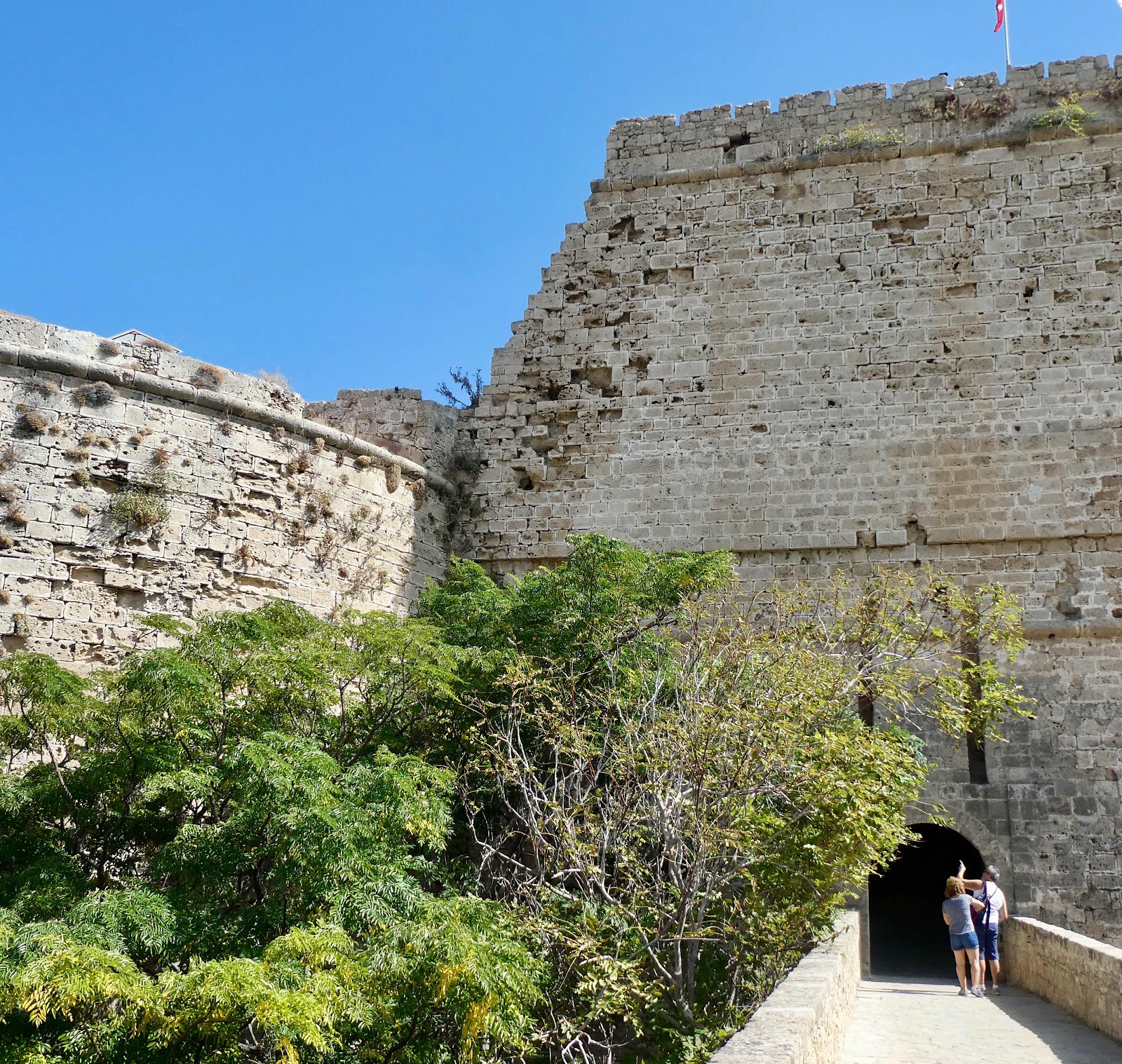
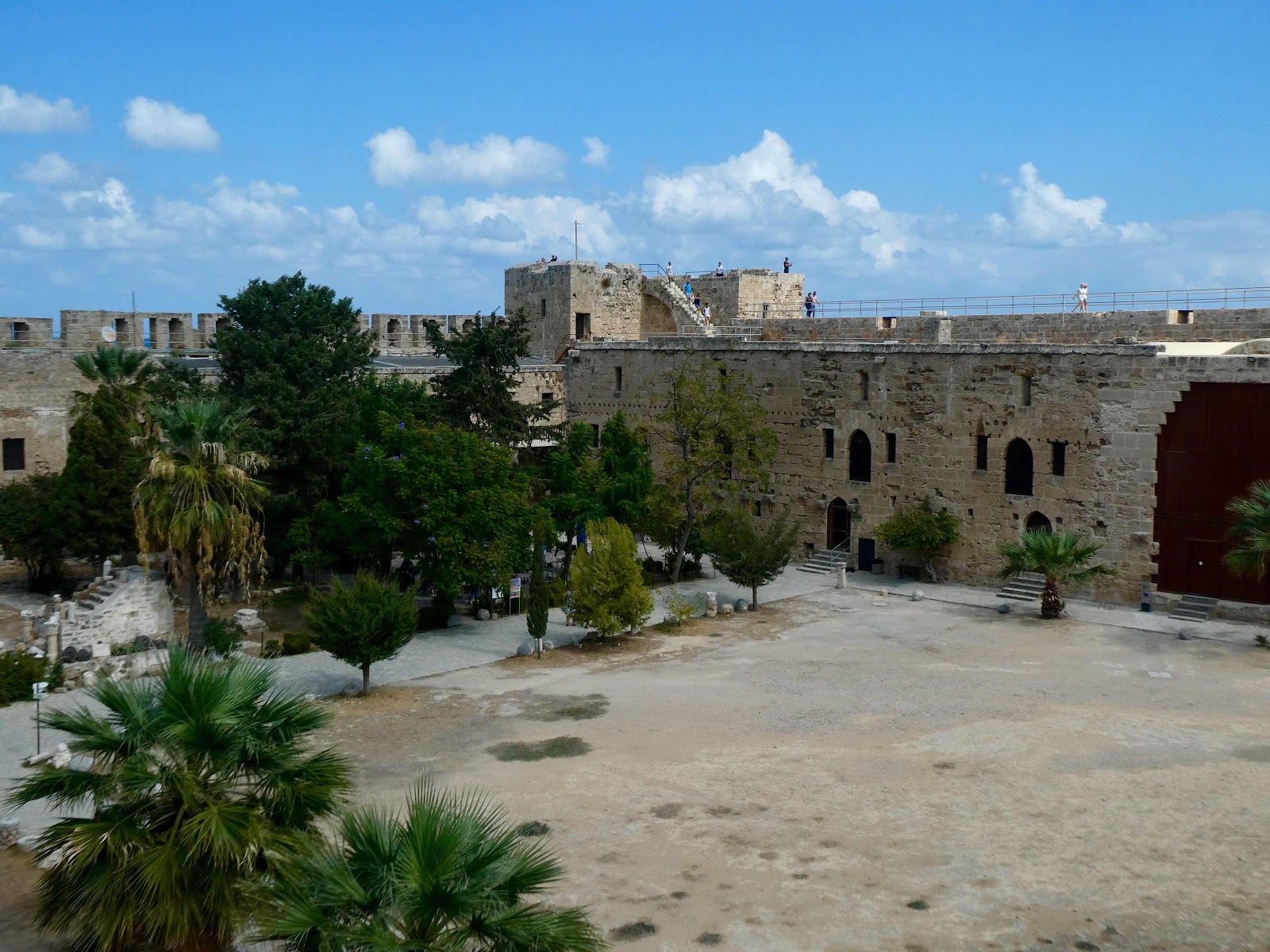
The castle is immense. Like the walls of Famagusta, there are parallel walls filled with rubble. It was surrounded by a moat in medieval times and accessible only by this bridge, ending in a drawbridge and portcullis. That's still the sole entry point, but the moat is dry and paved over now.



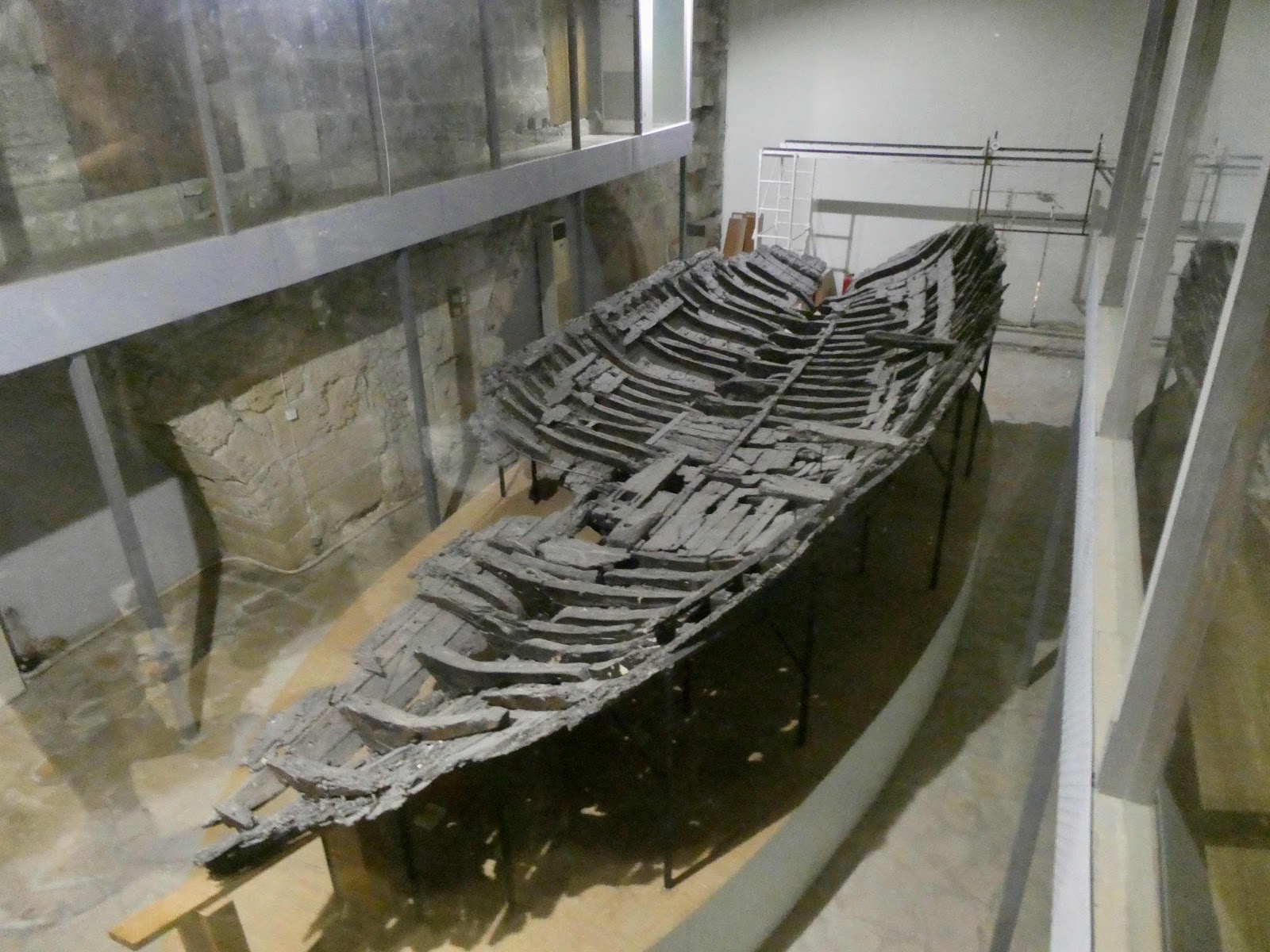
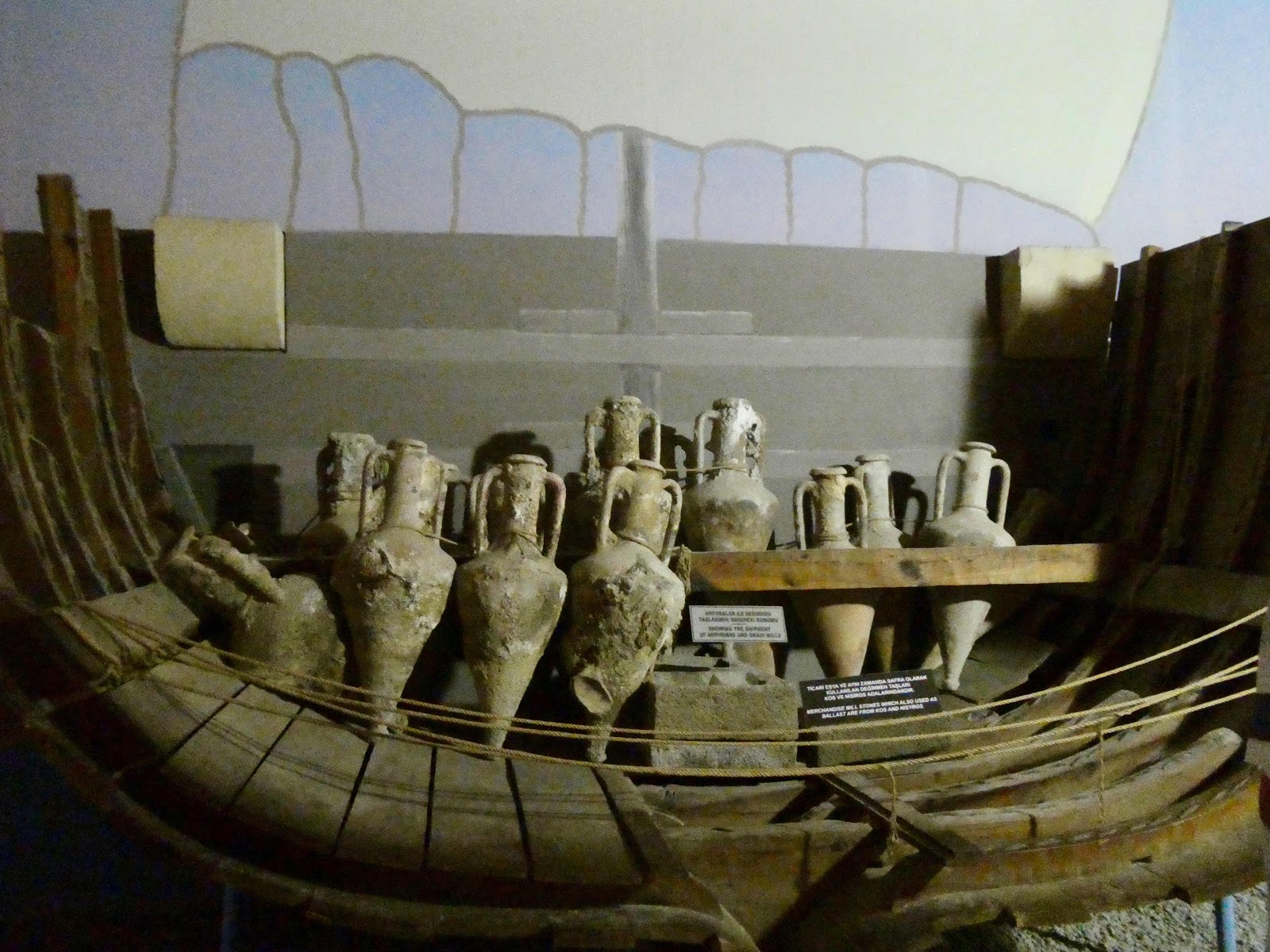
Former guardrooms off of the main courtyard house a small museum dedicated to the Girne Shipwreck. Carbon dating of almonds stored on the ship indicate that it sank a mile offshore from Kyrenia around 288 BC. It was discovered in 1967 and brought to the castle a year later. 


The contents were remarkably well preserved. From studying the ship and cargo, including 400 wine amphorae, seeds, grains, nuts and millstones (the last serving as both ballast and cargo), archaeologists have been able to determine ports of call, age of the ship when it sank, and its construction method. The best part was that the ship's hull is in a climate controlled room, quite refreshing on a warm morning.
 

We retrieved our car and found our next destination easily. Bellapais Abbey is a masterpiece of Gothic at and arguably the most beautiful Gothic building in the Near East. Started in the 12th century, most of the ruins date to the 13th and 14th centuries. It was built by Canons Regular, custodians of the Church of the Holy Sepulchre in Jerusalem. These Augustinian monks fled the Holy Land after its 1187 fall to the Syrian/Egyptian Sultan, Saladin. In addition to serving as a monastery, it was also the royal residence of King Hugh III during the 14th century. 
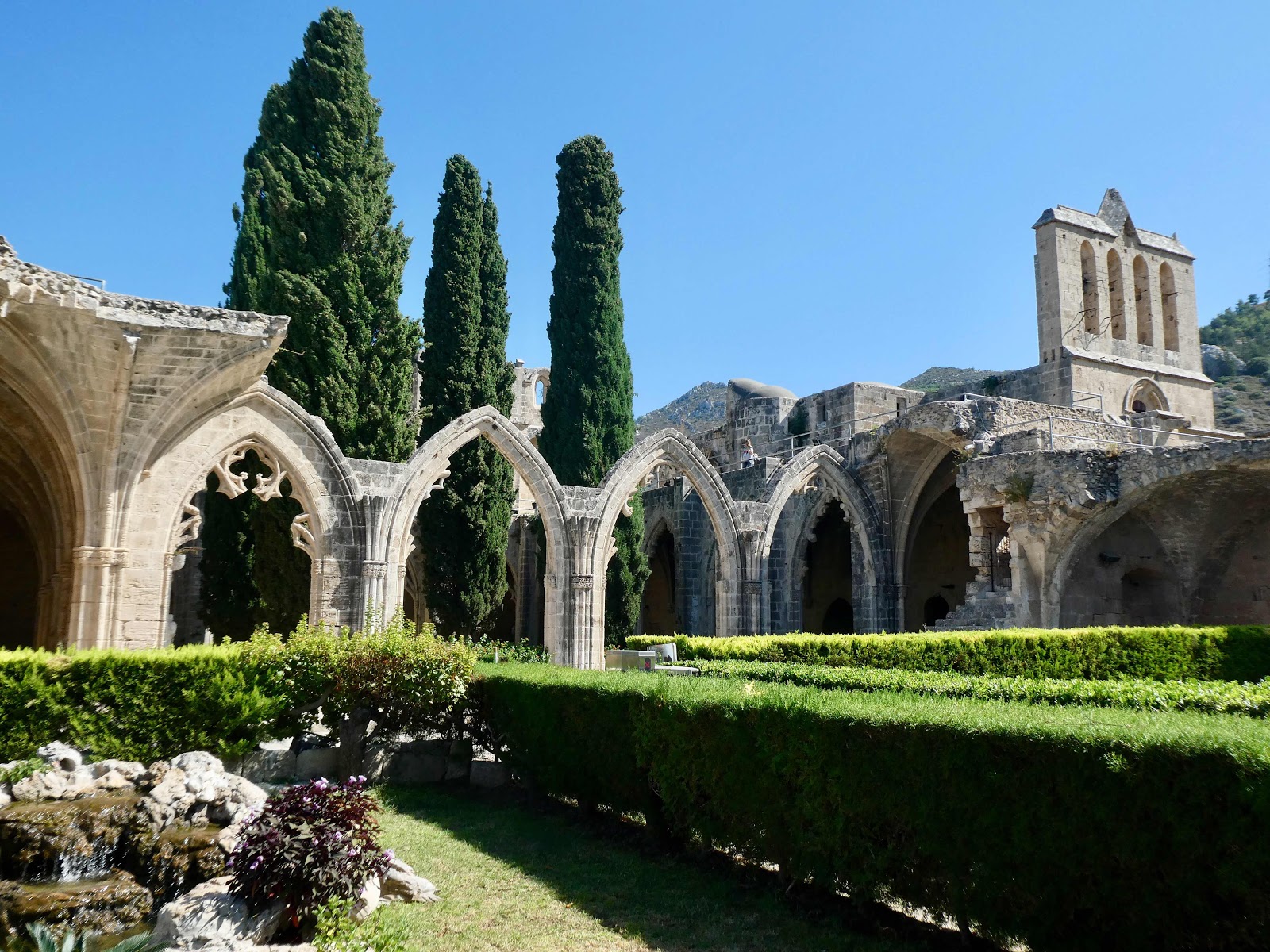


In the late 14th century, the Genoese raided Kyrenia and stole Bellapais's removable valuables. A century later, the Venetians controlled Cyprus, and the Abbey residents had abandoned the Rules of their Order. After yet another century, the Ottomans conquered Kyrenia and gave the Abbey to the Greek Orthodox Church of Cyprus. The Abbey fell into disrepair, while the abbey church served as the parish church for the surrounding village. In 1976 the remaining Orthodox clergy were forced to leave. 


The Roman sarcophagus was used as a lavabo, or trough for washing.


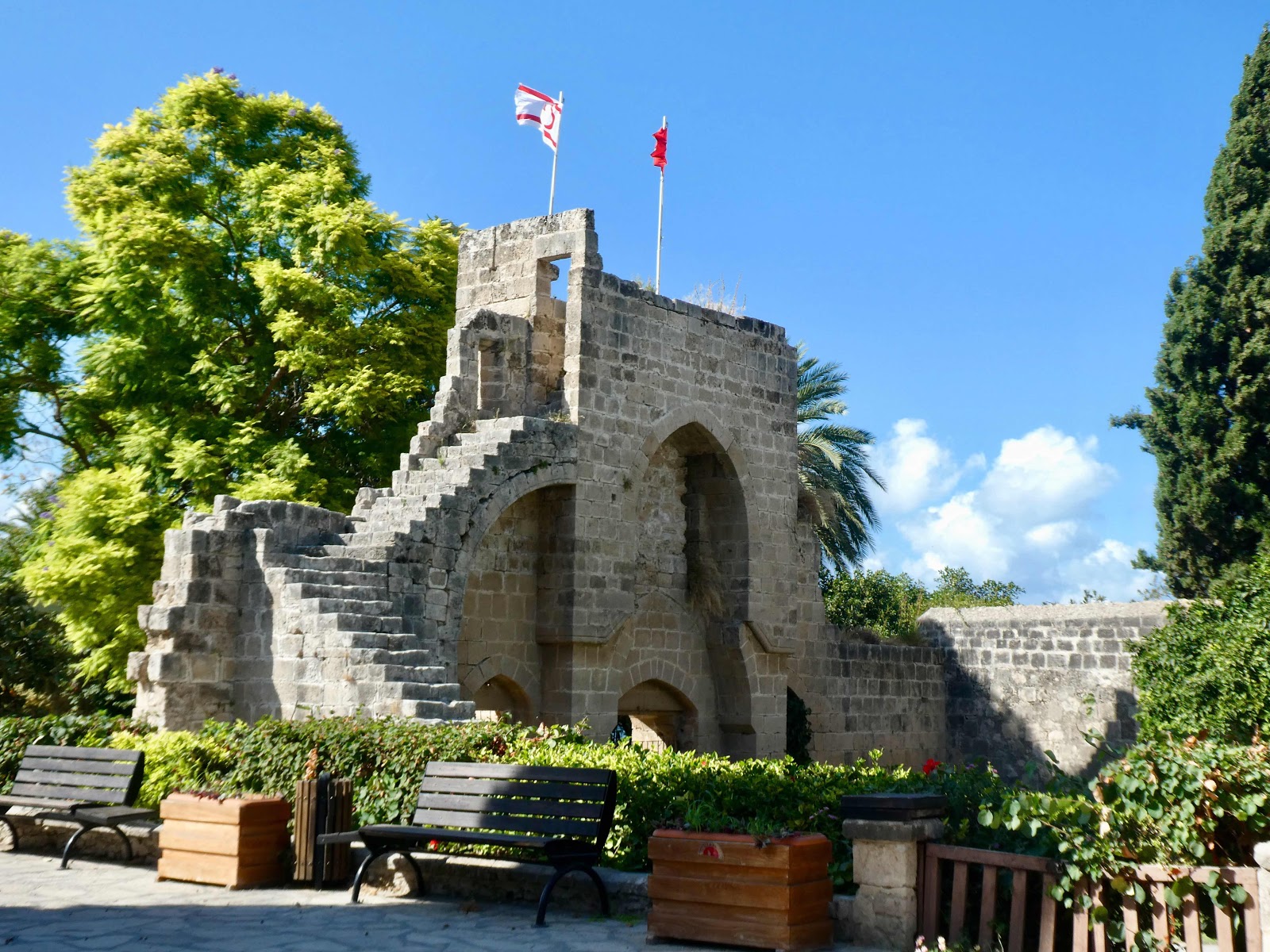
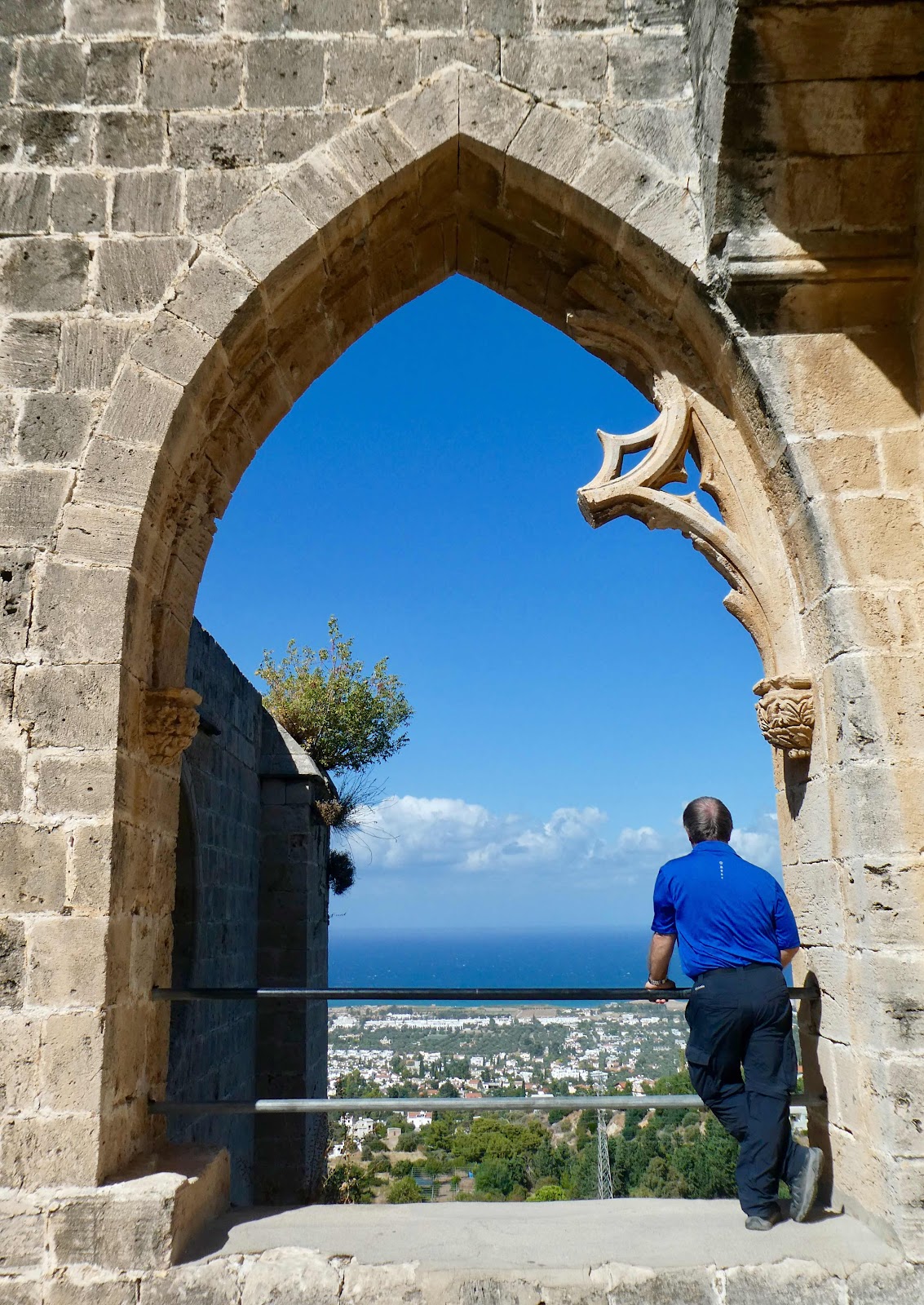
The church itself remains in good repair. The ruins of the crumbling Gothic cloister are lovely, with delicate pointed arches and a quartet of tall cypress trees. Stairs lead up to a rooftop offering wonderful views downs to Kyrenia and the sea. It’s a quiet and reflective place, storybook picturesque.

L


In the same village is the former home of Lawrence Durrell. I owe him a debt of gratitude, as I learned about Bellapais Abbey from his book, Bitter Lemons, a memoir about his time in Cyprus during the 1950s. While Greg went to find a geocache, I went looking for Durrell's yellow house.


The Tree of Idleness, an oft-referenced place in Durrell's book where the village men congregated to drink and gossip, is next to the Abbey and at the base of the narrow steep lane leading up to his house.


We continued on with a quest to find the annual Kyrenia Olive Festival. We'd found little information online, but knew it was centered in the appropriately named small village of Zeytinlik (“zeytin” means olive!) during the first week of October. There are reportedly musicians and dancers, food (of course!) puppet makers, craftsmen, etc. 


We eventually found the village and the festival. Unfortunately, many of the booths were just setting up and the big ticket items on the agenda (billiard tournament, senior folk dance team, and food competition) were in the evening. 


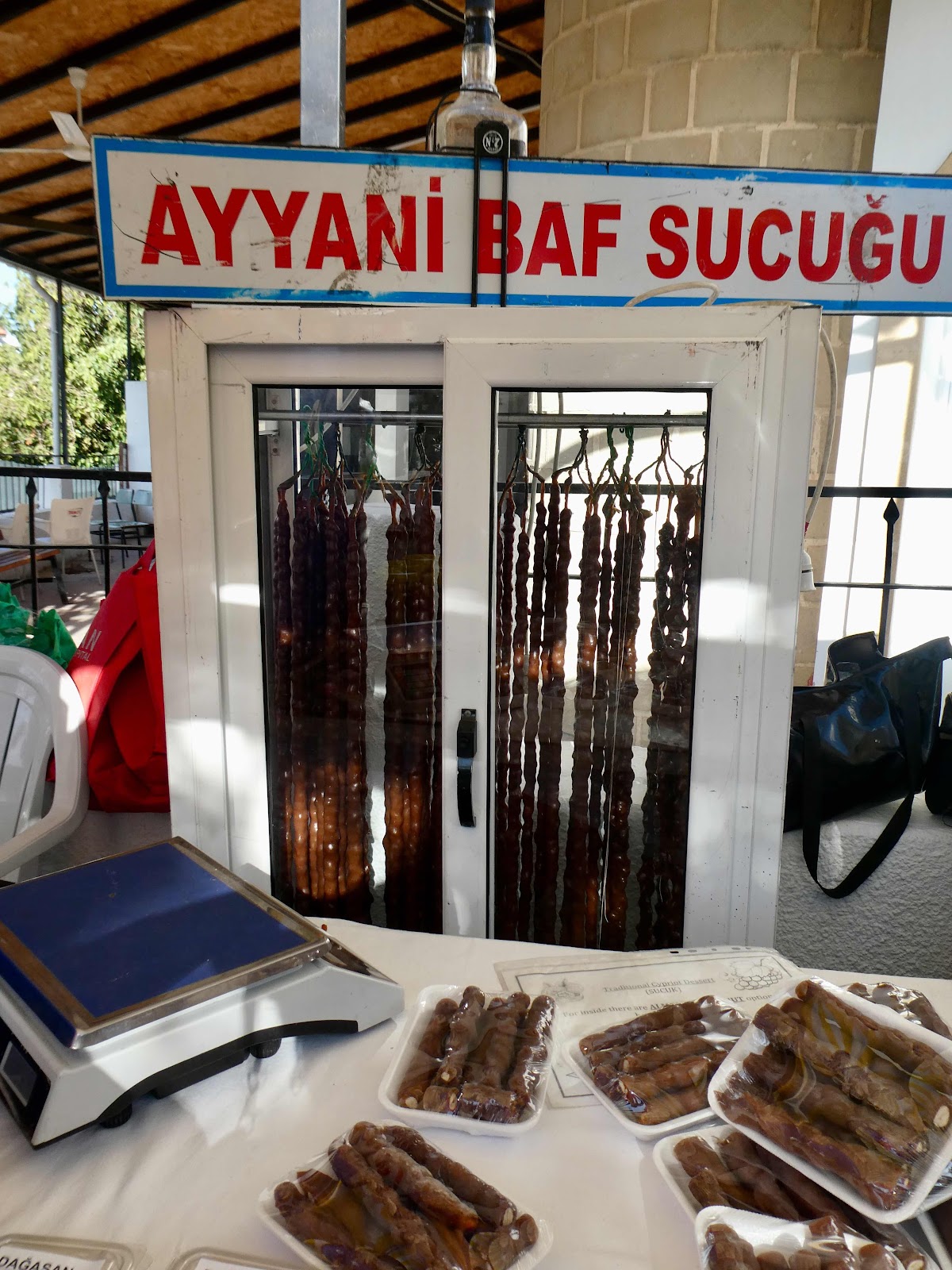
We ate samples of olives, preserved fruits and a sweet that looked like broken twigs. The core was almonds, the outside made from the juice of grapes mixed with a little flour. They dip the long concoction many times (like making a candle) to get a thick coating.


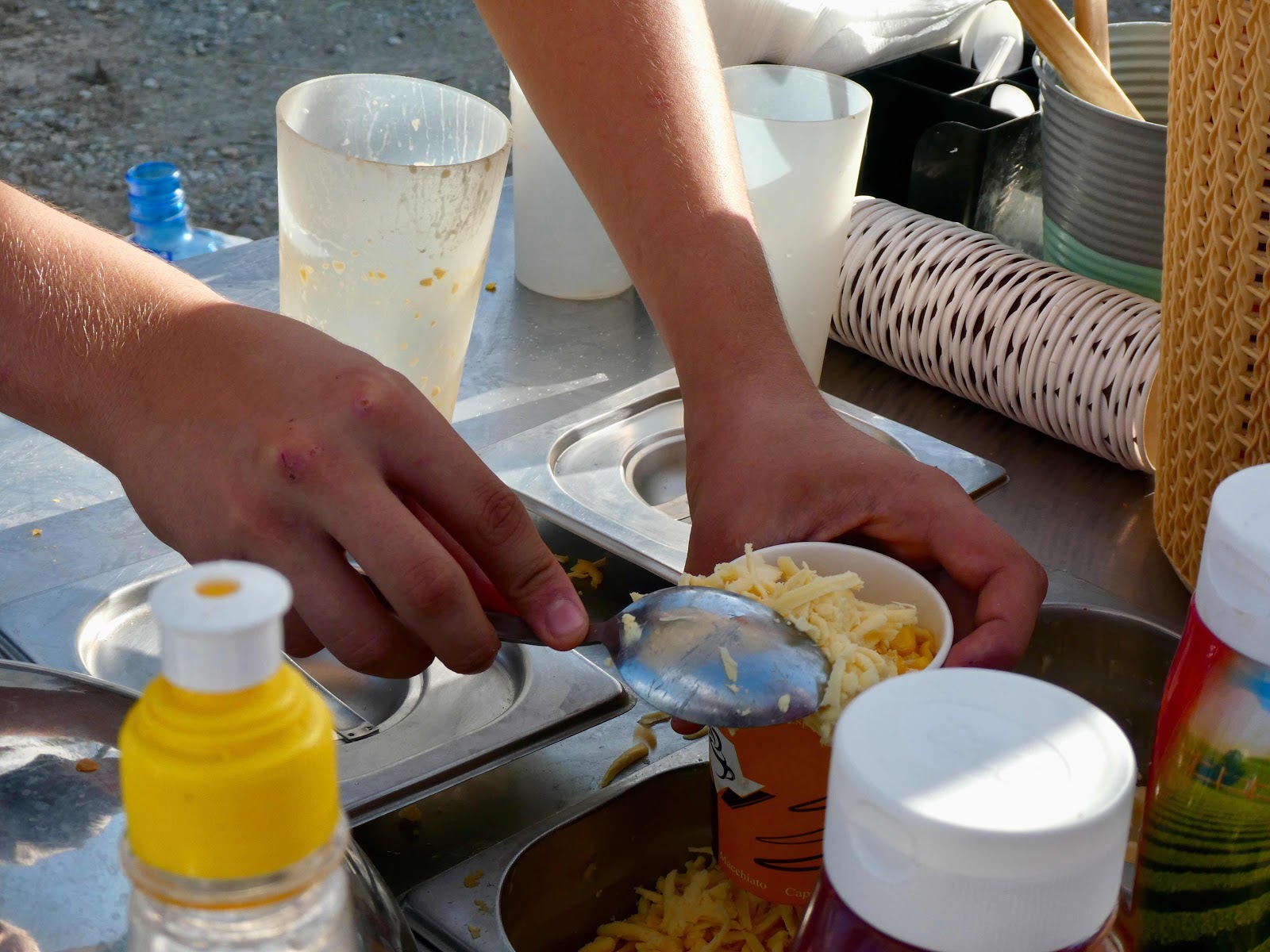
We shared a cup of corn for lunch. The guy would scoop out a paper cup of corn, add salt, butter and cheese, then invert the cup into a bigger plastic cup and shake vigorously. Sort of like making a Bond martini. 


Then, voilà, a cup of corn. You could garnish with lemon juice, vinegar, mustard or ketçup. We went for the plain version. 


Of course there were also olives, but they were home made and to my regret, we knew we couldn't bring them home.


St. Hilarion Castle lies a few miles southeast of Kyrenia in the Kyrenian Mountains. Better preserved than its sister castle, Buffavento, it occupies a strategic location over the mountain pass connecting Kyrenia to the capital, Nicosia. Originally built by the Byzantine, it was expanded into extensive fortifications and the castle during the 10th and 11th centuries. We had planned to visit this afternoon, but ran out of time. 
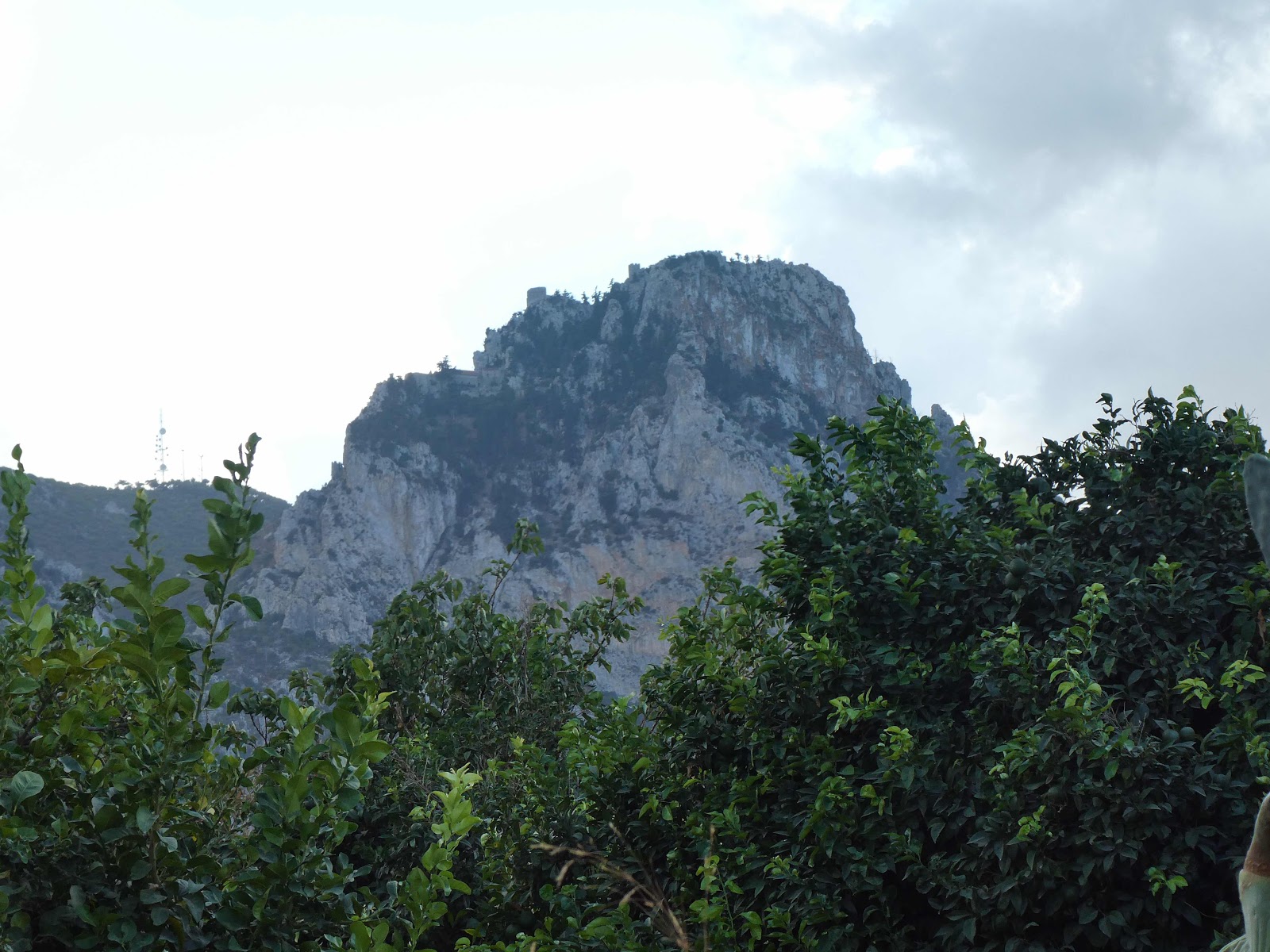

The closest we got was a view from the northern side of its towers.


And then came the drive to Nicosia. We reached the outskirts easily, but got massively lost when we couldn't reconcile our printed Google maps directions and distances with the unlabeled city streets. We needed to find the checkpoint to cross the buffer zone back into the Republic of Cyprus. We finally got close enough to the Green Line that a phone app pinpointed our location. Greg navigated by watching the arrow move on the screen and telling me where to turn. We found the checkpoint, passed through the Turkish passport control and were waved through the Cyprus side without even slowing down. Suddenly the GPS worked again. Yea!


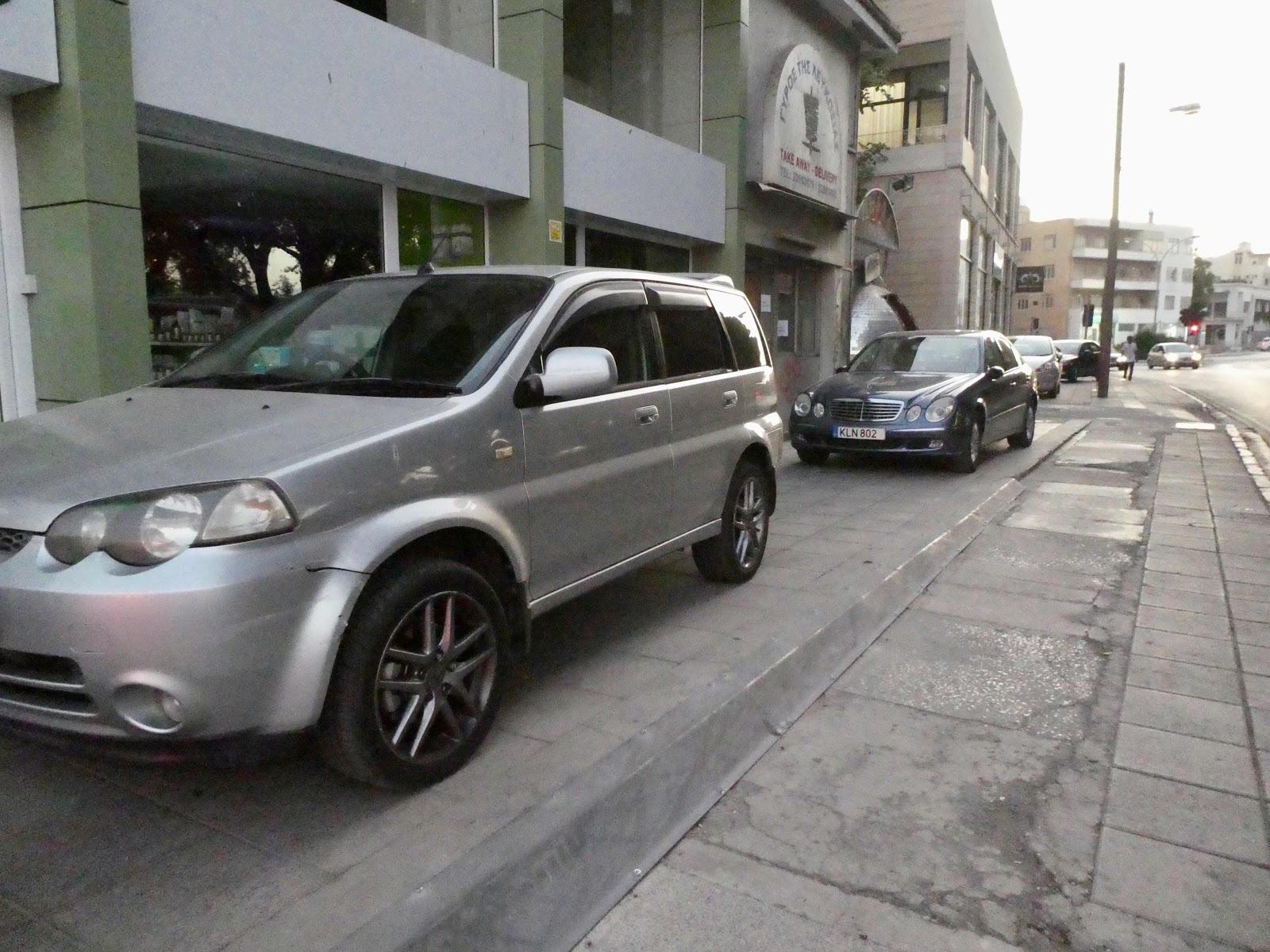
We found street parking around the corner from our apartment, and then realized we didn't need to look that hard. Sidewalk parking seems to be an acceptable option.



2019 Cyprus - Day 2 Ancient Salamis, Buffavanto Castle

About 5 miles north of Famagusta lies the ancient Greek city-state of Ancient Salamis. Legend says that the city was founded around 1180 BC (late Bronze Age) by Teucer, a veteran of the Trojan Wars and brother of Ajax. Salamis flourished and expanded into the premier port and erstwhile capital of Cyprus. The city’s lineage reflects that of Cyprus in general. After the Greeks, the city was ruled by the Assyrians, the Persians, Alexander the Great, the Ptolemies of Egypt, the Romans and the Byzantines. Each culture left its mark. The city required frequent rebuilding over the centuries following earthquakes and tidal waves. Eventually the once-fine harbor silted over and the city was slowly abandoned. By the 7th century, it was a ghost town. Many of its stones were eventually removed to construct the buildings and walls of Famagusta. Eventually Salamis was all but forgotten. Today it is one of the finest archeological sites on the island. However, after visiting Jerash last week in Jordan, it lost a little of its luster for us.

There is a beautiful beach just outside the entrance to Salamis. The port may be gone, but swimmers have a fine place.


Our guidebook cautioned against wearing open-toed shoes due to snakes throughout the site. We complied, and were happy to not see any snakes.


There is a partially rebuilt theatre from the time of Augustus. The sign said it once held 30,000 spectators, but given its present size, that's hard to imagine. Perhaps it used to have higher rows of seats. 


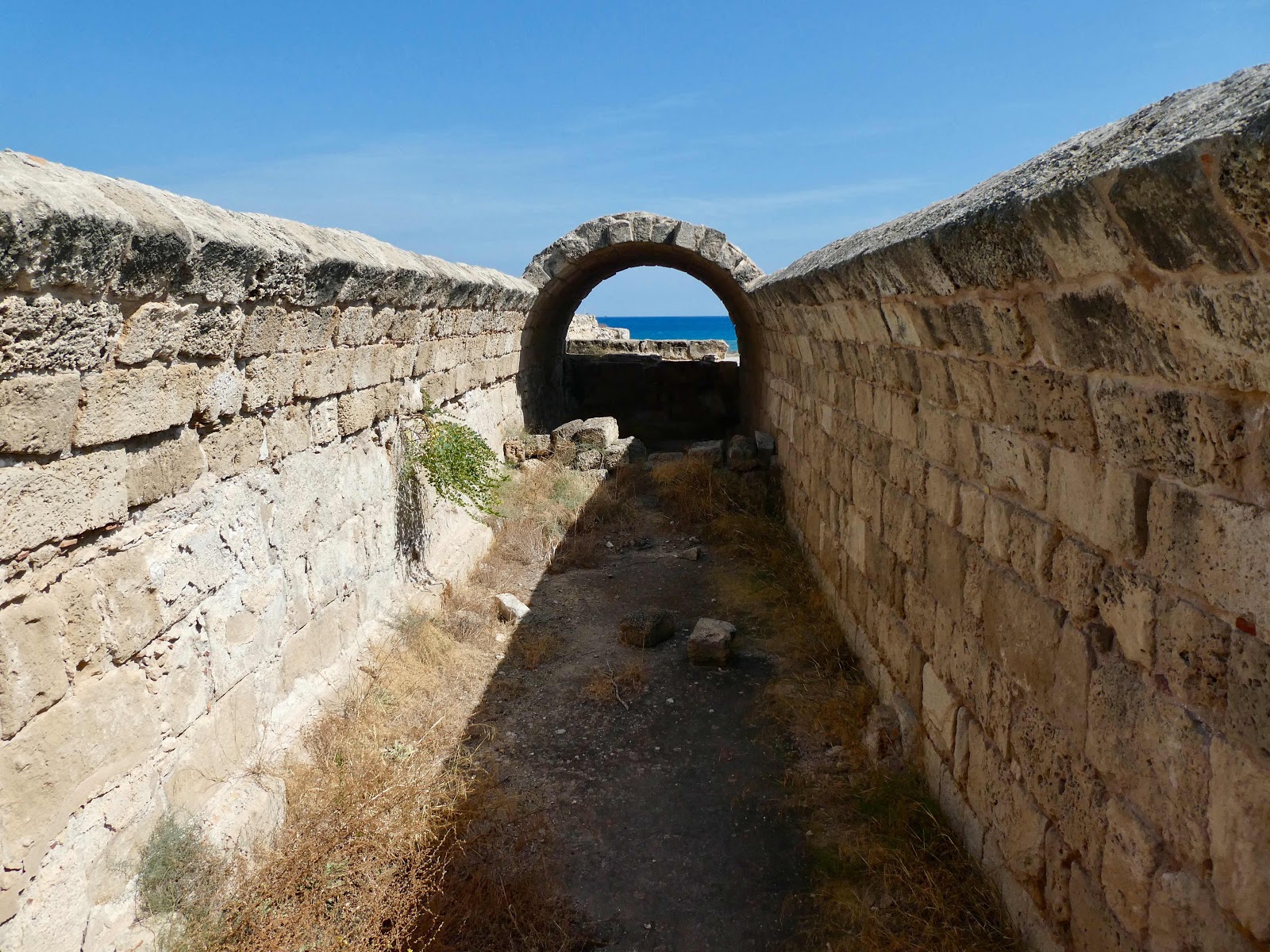
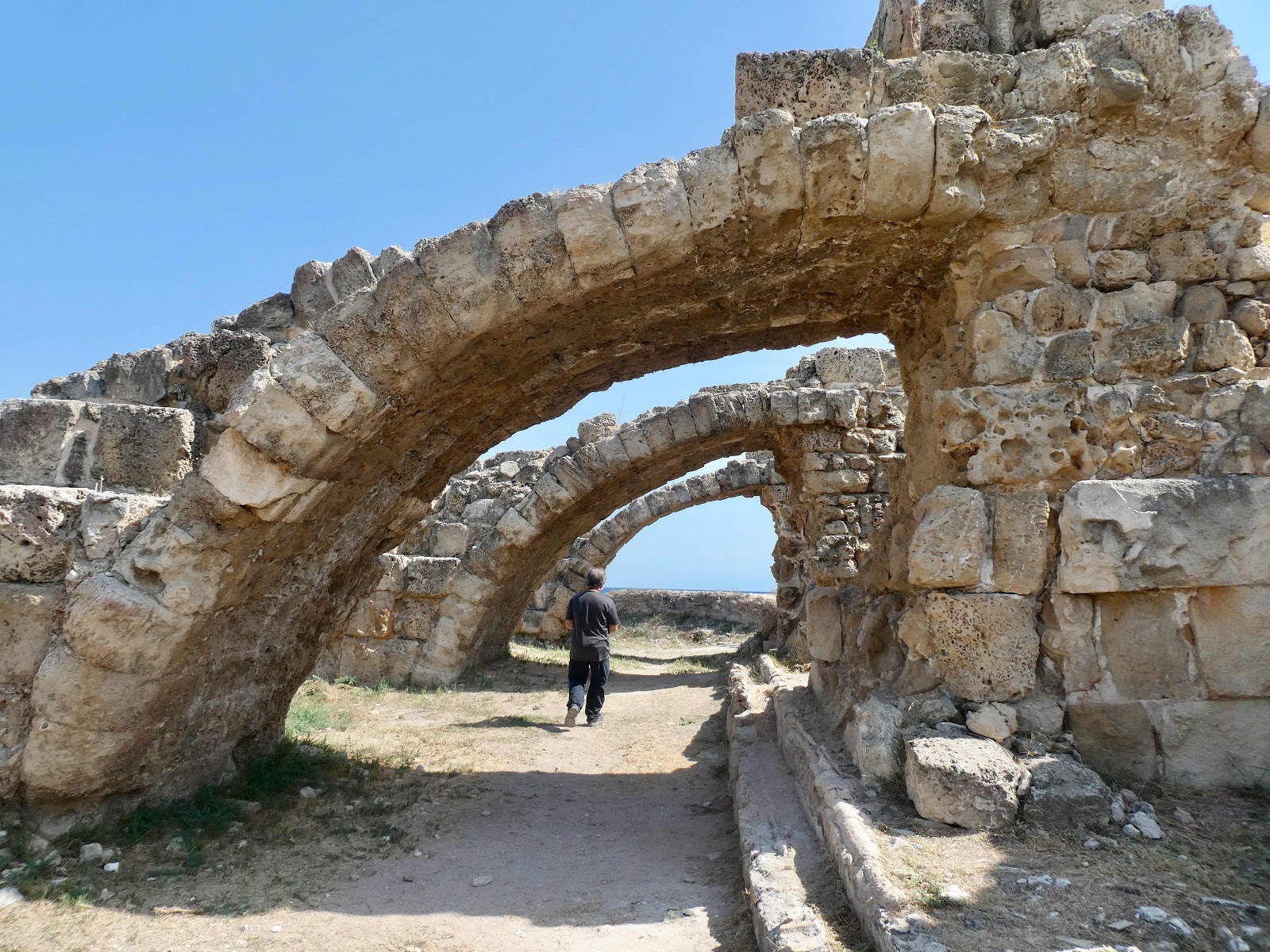
Salamis' water supply came from Kythrea via a 31 mile aqueduct. Most of the aqueduct was destroyed in the 7th century, but parts are still visible today. 


The aqueduct was adjacent to a large bath complex with an underfloor heating system. The baths included sweating rooms, hot water baths, cold rooms swimming pools and a stoking room for the hot water supply.


The loveliest part of Salamis was the gymnasium courtyard with marbled columns.


A mosaic floor paved the way from this exercise area to the baths. So prudent of the Romans to place the gymnasium near the pools.


There are parts of Salamis we did not see: an agora, Templar of Zeus, a Roman villa. The sprawling site is not fully excavated and the other buildings weren't visible from where we were. Salamis deserves more than the 2 hours we could stay.


There is also a beautiful beach there. 


We headed northwest to our next destination. The sharp, jagged Kyrenia mountain range parallels the coast in northeastern Cyprus. A series of castles were built in these mountains, probably during the Byzantine era, to serve as watchtowers and strongholds along the coast. The ruins of Buffavento Castle perch at 3120 ft, offering a sweeping view along the northern coast to watch for pirate invaders, across the plains to the south, and to sister castles to the distant east and west. The castle was considered virtually impenetrable due to its precarious location and its single entry point (see the YouTube link below). The castle nonetheless surrendered to Richard the Lionheart after its sister castles to the east and west fell to him in 1191. After that, it served as a prison and watchtower, still connected by beacons to the other castles. 


Drone footage of Buffavanto Castle 


We turned off the main road as it peaked at a pass through the Kyrenian mountains, and drove 4 miles up a narrow, hard-packed one lane road to the parking lot below Buffavento Castle. The drive is a bit harrowing, edging a steep drop off to the valley below. There are no guardrails and we had to navigate around the occasional suitcase size rocks that had tumbled into the  road. 


As we took the last climb before the parking lot, a couple of goats came out of the brush. They froze. We froze. Then they ran straight at the car, swerving at the last minute and bounded up the mountain.


We were glad to see other cars in the parking lot. There was no ticket booth. We'd read there are 600 steps up, but that hardly does the climb justice as it's a 1,000 foot vertical climb in the sun. ( It's mostly ramped switchbacks). We hadn't been sure if we'd actually hike to the castle, but the trail was in much better shape than we'd expected. 


Castle is at center top 


Getting closer


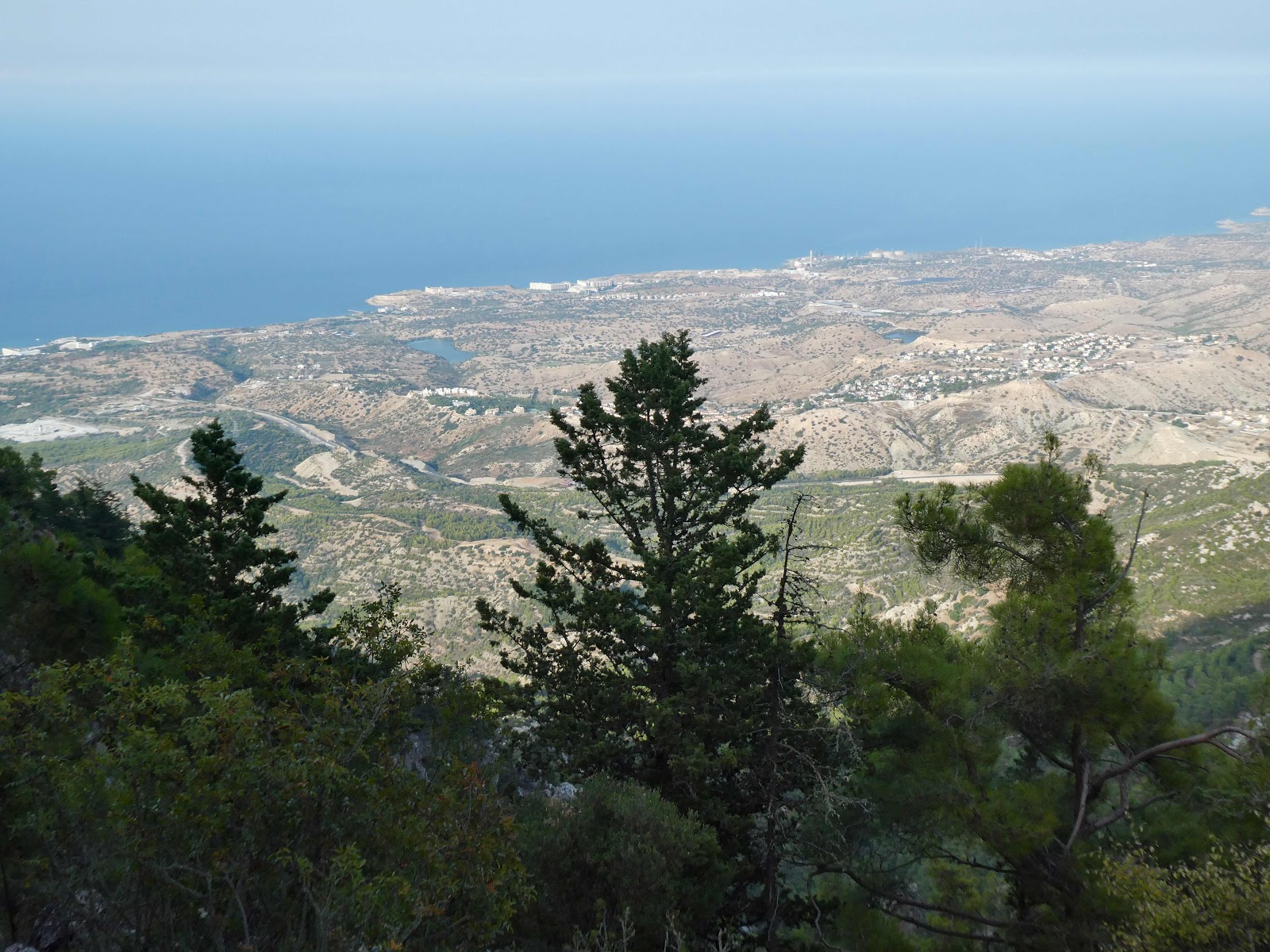
Looking north to the Mediterranean when the trail crossed to the other side of the ridge

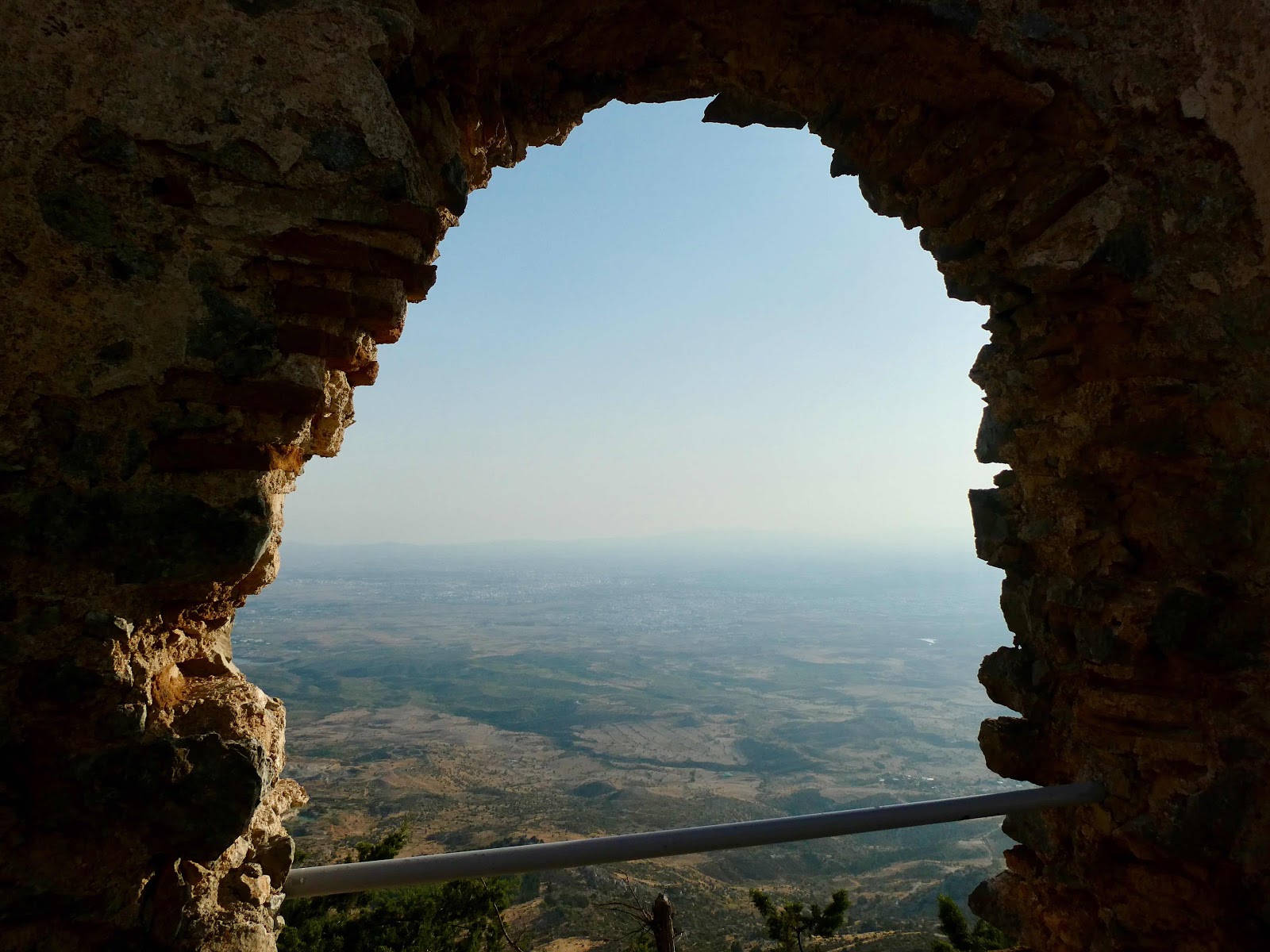
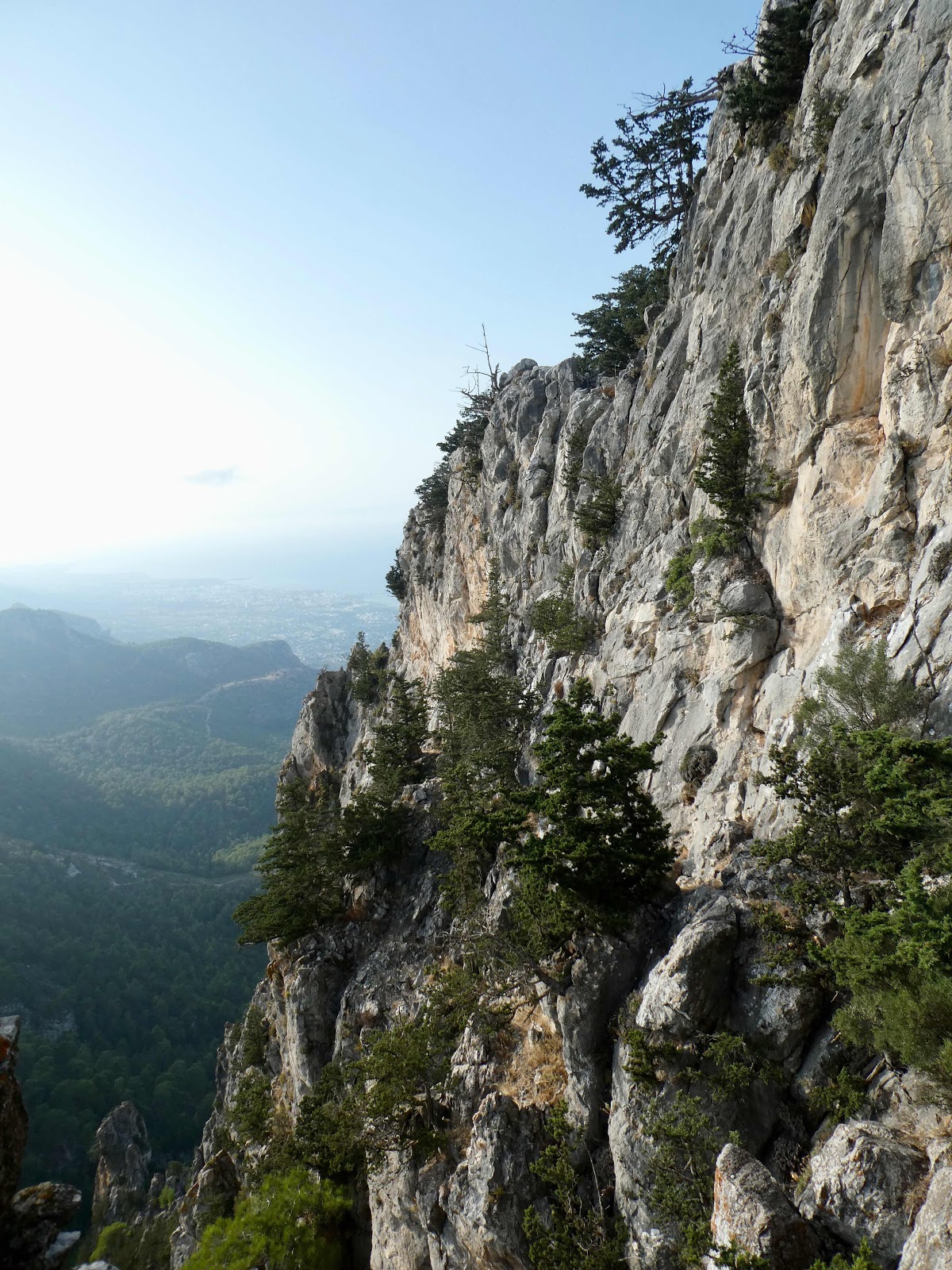
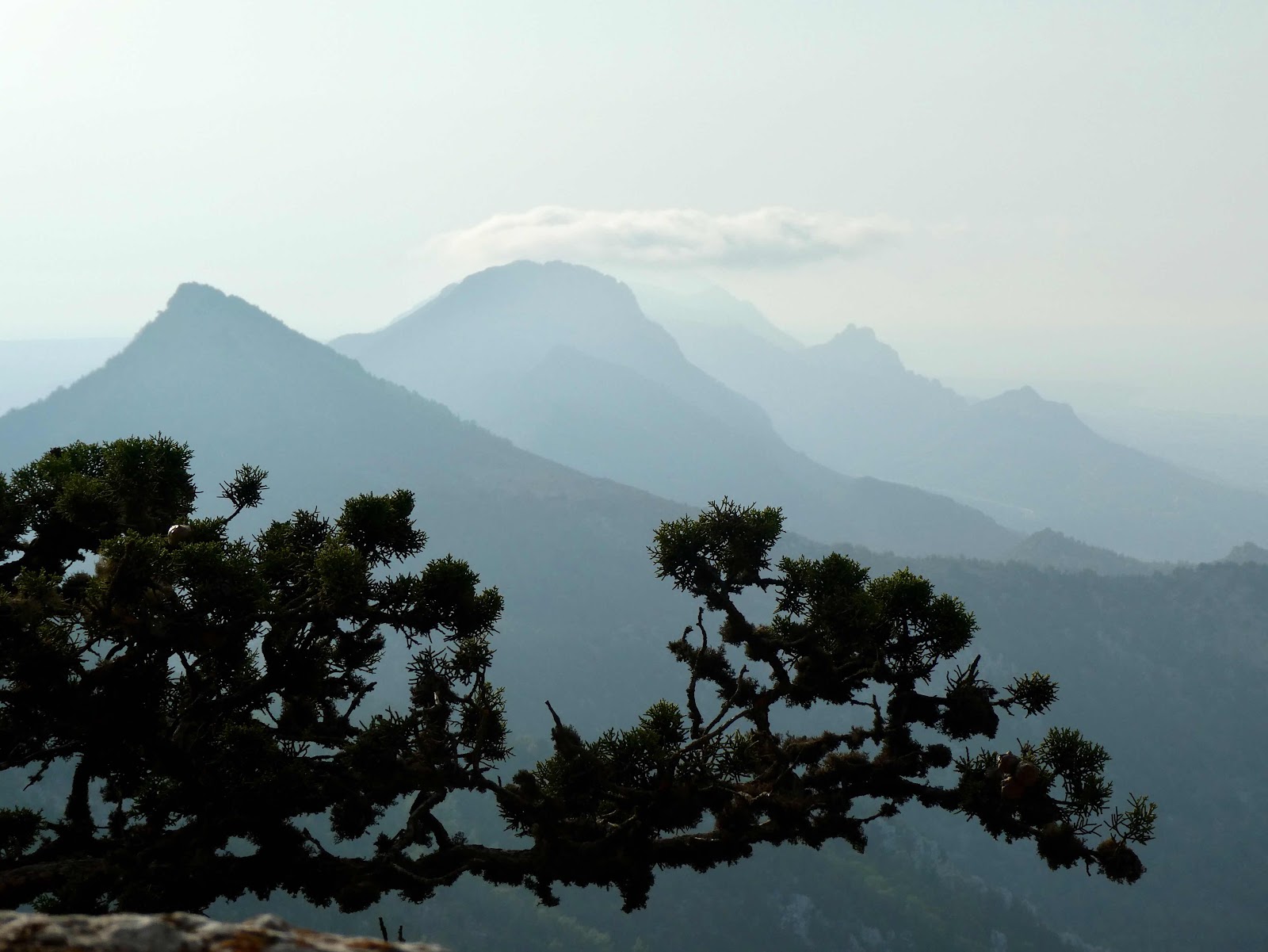
Views at the top:


The hike down was a lot easier. The plan was to get to the northern port city of Kyrenia before dark, but we failed. We spent at least an hour trying to find the right roundabout and then were trapped in a series of tiny one-way alleys. We circled around a few times until we finally decided to save our marriage and just park (an adventure in itself) and walk to the hotel. 


Saturday, October 5, 2019

2019 Cyprus - Day 1 Intro and Famagusta

Friends and family have asked us, why Cyprus and where exactly is it.  Europeans come here year after year for the fabulous beaches, diving opportunities and reasonably priced lifestyle and Cypriot hospitality. Not being big beach people, we came to explore the geography and history of this beautiful island.


Cyprus has had a long, turbulent history. I expect I'll mention it throughout our week here, but thought

I’d start with an overview to provide a frame of reference. 


Cyprus is the third largest island in the Mediterranean. It is roughly the size of Vermont, with a population of 1.2 million people. People have lived here since at least the 10th millennium BC. Its strategic location in the eastern Mediterranean (encircled by Greece, Turkey,  Syria, Lebanon, Israel, Palestine and Egypt)  and its copper mines led to its occupation by a long list of invaders: Persians, Assyrians, Egyptians (twice), Alexander the Great, Roman Empire (twice), Byzantines, Venetians, Arab Caliphates, French Lusignan Dynasty, the Ottoman Empire and the British. 


Cyprus was placed under British administration in 1878 as a result of the Cyprus Convention, a secret agreement between the UK and the Ottoman Empire. Britain subsequently annexed Cyprus in 1914 at the start of World War I. With a majority population in Northern Cyprus (but at the time only 18% of the total island population), Turkish Cypriots began to petition in the 1950s for partition of the island into a northern Turkish state. Meanwhile, the majority Greek Cypriots and the Orthodox Church were pursuing union with Greece. The Republic of Cyprus was granted independence from England in 1960, but tensions and violence continued between the Turkish and Greek factions. In July 1974, the Greek army, with support from Greek Cypriots, staged a coup in an attempt to incorporate Cyprus as a Greek state. Five days later the Turkish army invaded and captured territory in Northern Cyprus. 150,000 Greek Cypriots and 50,000 Turkish Cypriots were displaced. In 1983, a unilateral declaration in the north established a Turkish Cypriot state in Northern Cyprus. Today, the state continues to be recognized only by Turkey. The rest of the world views Northern Cyprus as de facto part of the Republic of Cyprus, albeit occupied by Turkey. Slashing across Cyprus from northwest to southeast is the United Nations buffer zone, or Green Line, partitioning the island in two. In 2003, checkpoint crossings were established along the Green Line. Today there are seven official border crossings, two of which are for pedestrians only. 


The Republic of Cyprus is Greek-speaking, with the Euro as currency. The self-declared Turkish Republic of Northern Cyprus (TRNC) speaks Turkish and uses the Turkish lira. Greek Cypriots are predominantly Greek Orthodox, while most Turkish Cypriots adhere to Sunni Islam.


We picked up our rental car at the Larnaca airport. I'd arranged ahead of time for the paperwork needed to take the car to the Occupied Area. The rental agent commented that he was surprised to see Americans, as he seldom sees them in Cyprus. 


We are a bit apprehensive about navigating here. Cypriots drive on the left side of the road, which I’ve done before. We have a good road map of the island, both north and south. Everything on the map is labeled with two names – Anglicized Greek and “real” (alpha, beta, lamda) Greek letters. But that won’t be too helpful in the TRNC, as the cities there now have Turkish names. Our first night is in Famagusta (Greek) / Gazimağusa (Turkish). We’ve printed detailed road maps from Google Maps to show the turns to our accommodations each night, but know this is going to be an adventure. As we'd planned to spend our first two nights in Northern Cyprus, we got an early experience of the border crossing. 


We have a GPS from the rental car company but, as they warned us, it quit working as soon as we reached the UN buffer zone. We reached the checkpoint, handed the guard our passports and proof of car insurance for Northern Cyprus, and were waved through. No passport stamp, nor paper visa. Hopefully it will be this easy when we cross back to the Republic of Cyprus in a couple of days.


So on we went to Famagusta, which was only a few miles beyond the checkpoint. We ducked through a little entryway in the old Venetian walls and scouted around unto we found our guesthouse.


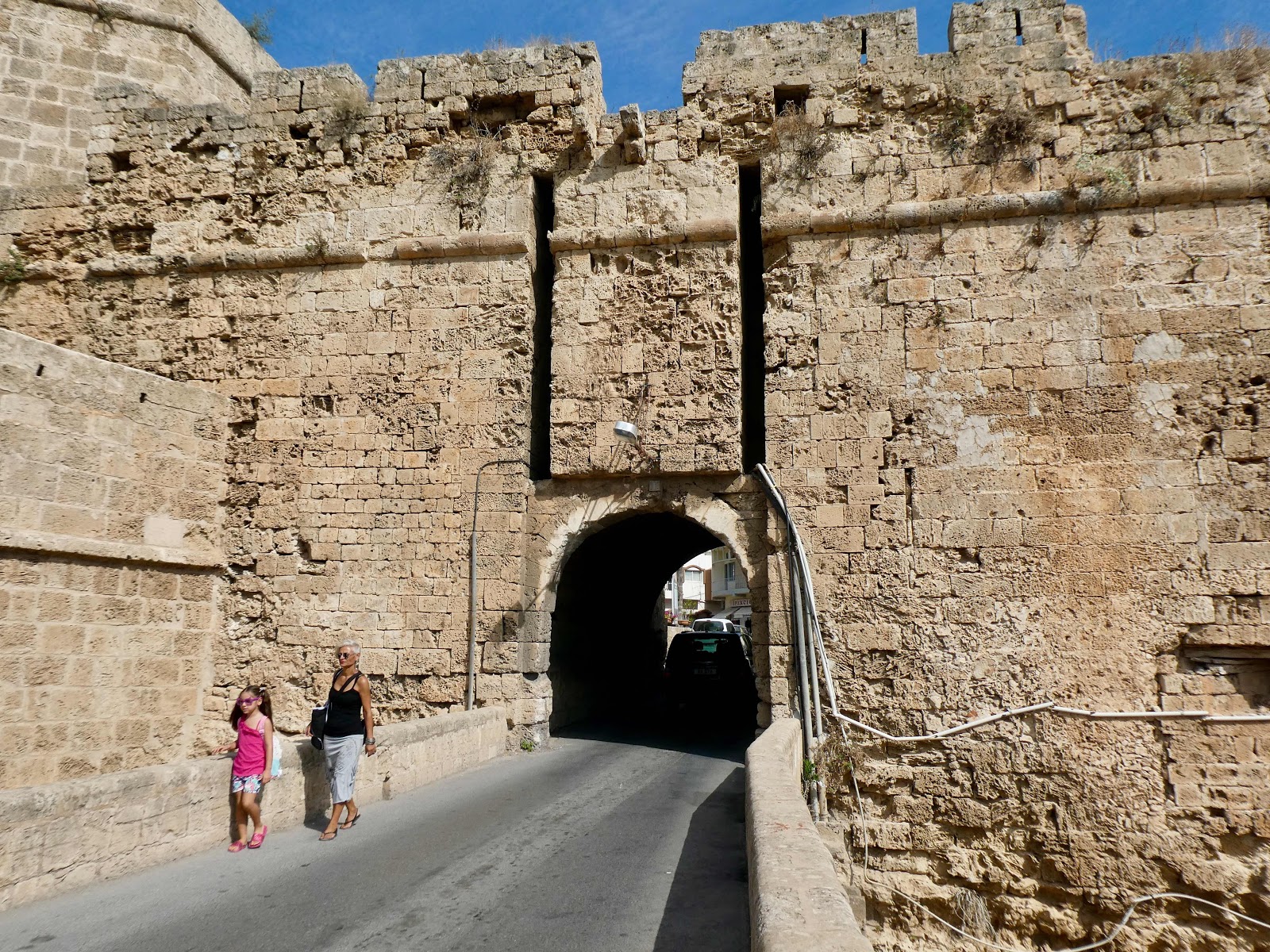
Land Gate into the walled city.


Greg is waving atop the wall, about a third of the way in from the left.


The city was founded in the third century B.C. by the Egyptian Pharaoh Ptolemy II Philadelphus. It remained a relatively small fishing port until the 13th century when it became a refuge for Christians fleeing Palestine during the Crusades. 


Famagusta quickly became one of the richest cities in the world, a center of commerce between Europe and  the kingdoms ringing the eastern Mediterranean. The city was so opulent and decadent that it provoked criticism by the devout. In response, the wealthy financed construction of elaborate and lavishly decorated churches, ostentatiously flaunting their piety. Genoa captured the city in 1372, followed by the Venetians in 1489. Immense Venetian walls and bastions still enclose the old city, but they failed to prevent the fall of the city to the Ottomans in 1571 after a bloody 13 months siege. An estimated 100,000 cannonballs were fired at the city, leaving many of the churches and palaces in ruins. Some of the buildings were repurposed to serve the now-Muslim Ottoman population (mosques, fountains, public baths, a bazaar, etc) but much of the damage was never repaired. Today, much of Famagusta has had a facelift and there is a small but dedicated tourism infrastructure. Other sections remain in a ruined Gothic time warp.


Over 3 million euros were recently invested in preserving the walls and monuments within the city. The restorations led to the opening of a few guesthouses, and travelers can now stay within the walled city. We are staying at the Mystery Garden Guesthouse, run by a delightful couple, Birsem and Tomar. Birsem was born in the house. She used to rent apartments around her courtyard. He is a retired policeman. Three years ago they opened their guesthouse. 


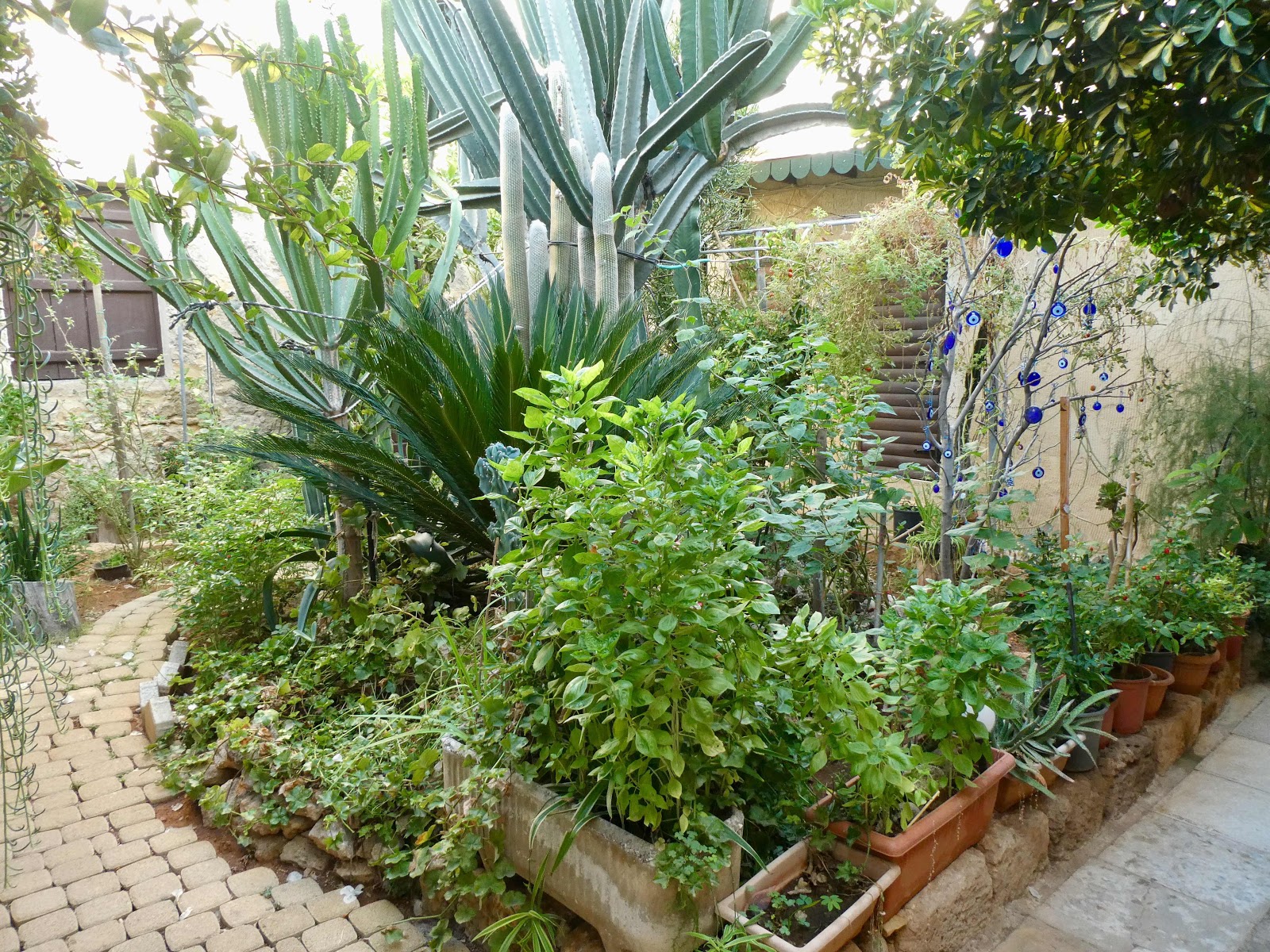
The courtyard is a riot of plants. At breakfast we got to sample the olives and jams they produce from their garden. Caged birds sing all day. 


This chicken made us laugh every time we saw it. It looks like a cross between Angela Davis and Big Bird. 


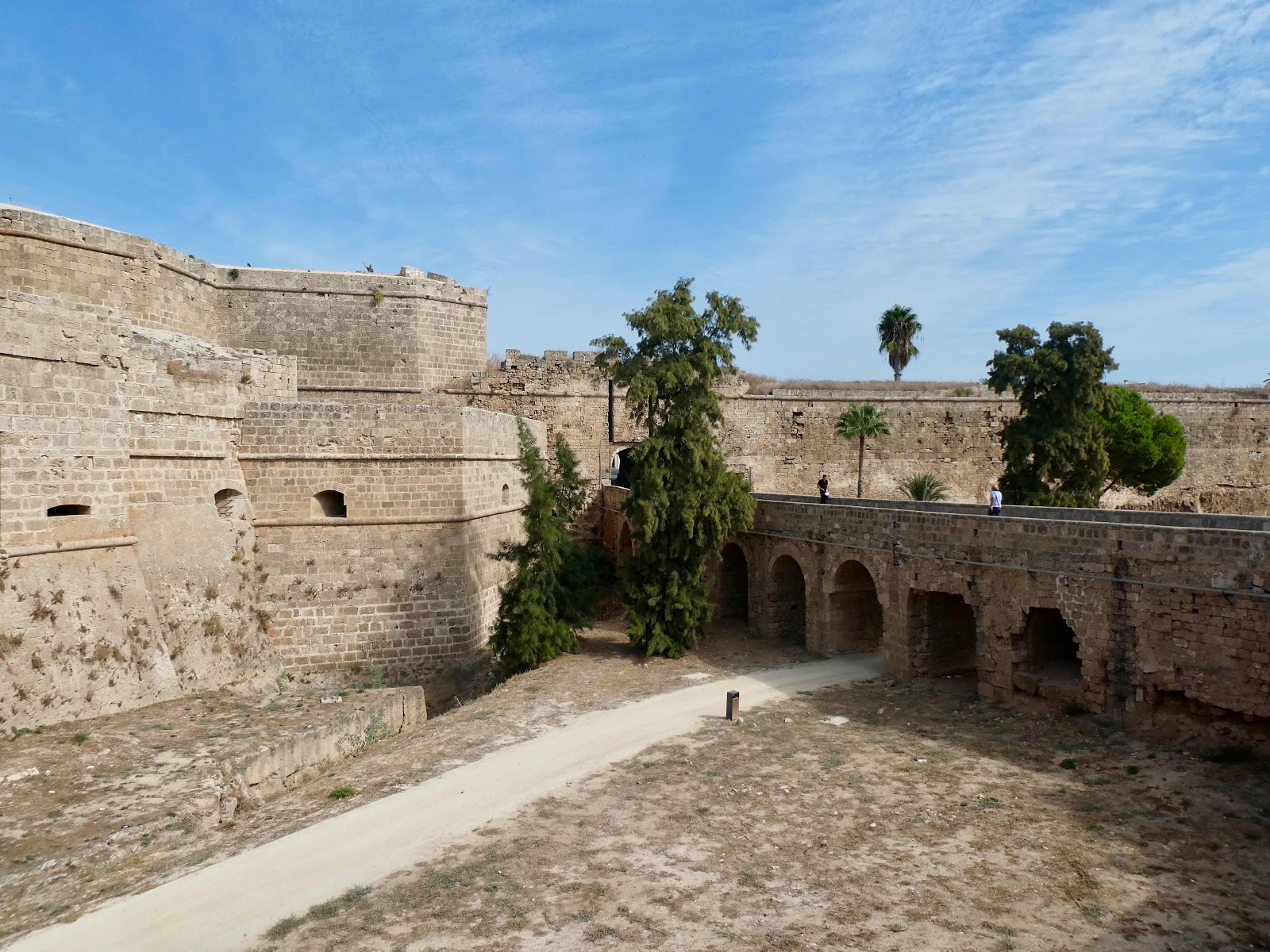
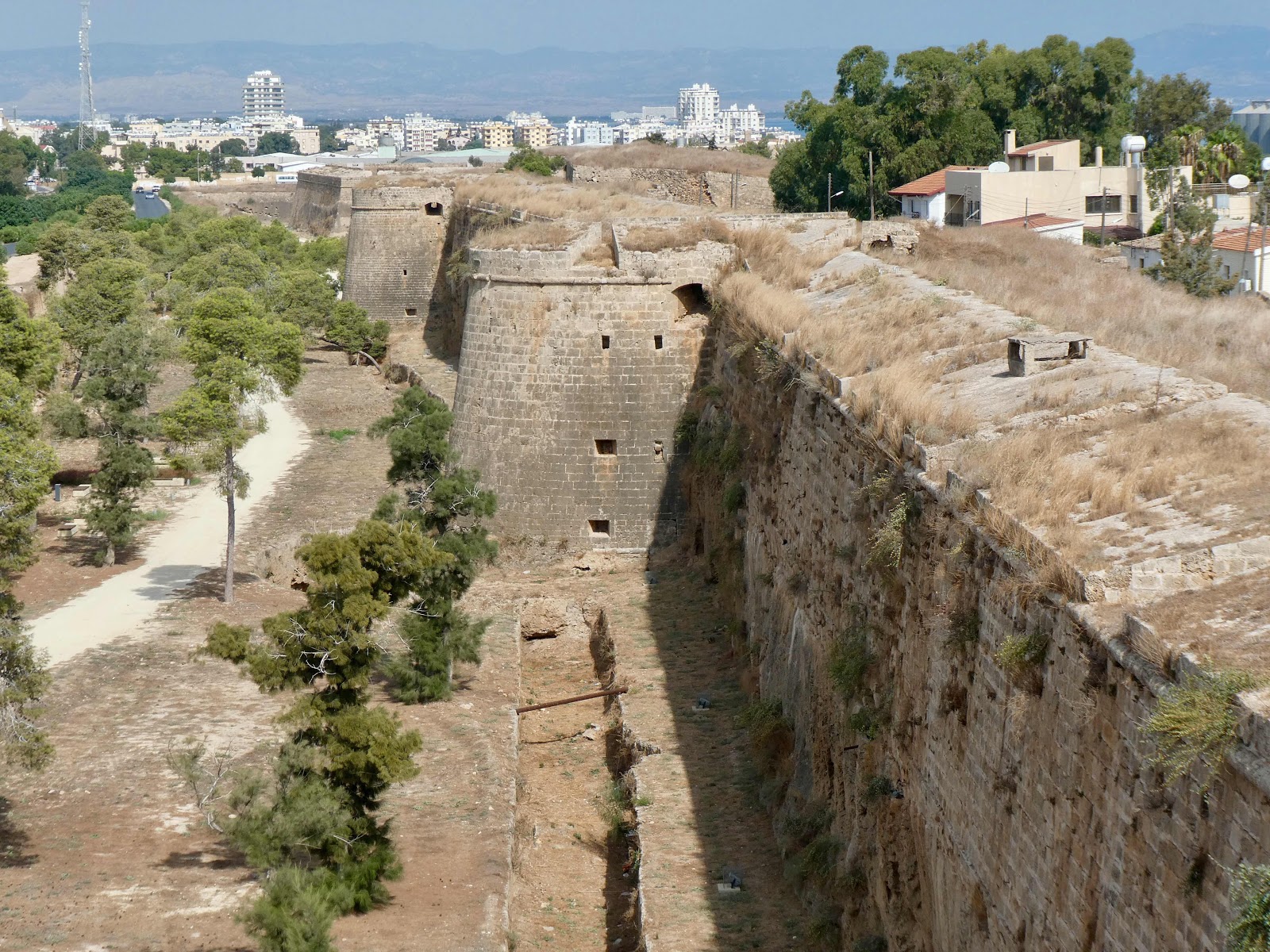
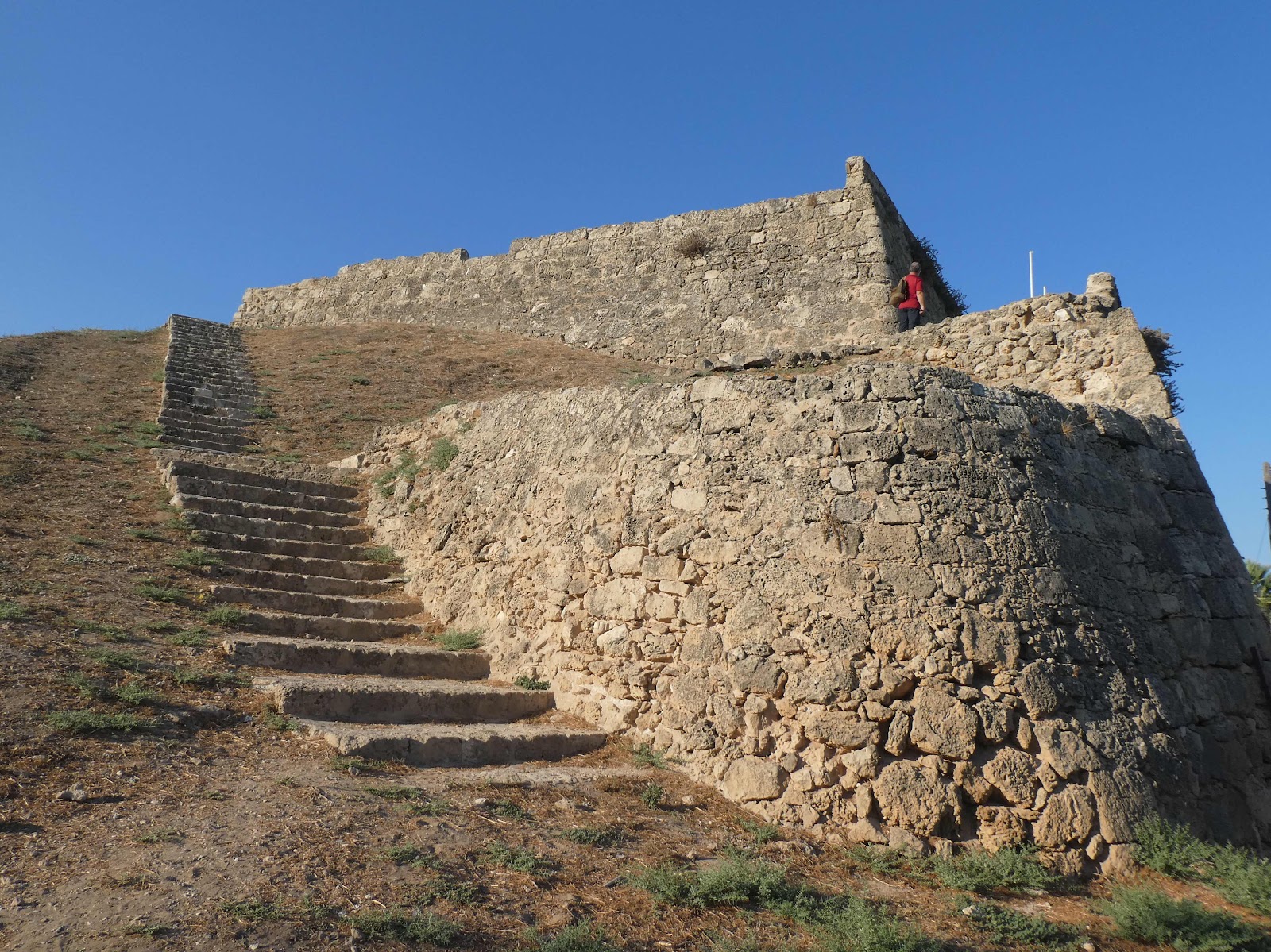
The Old Town of Famagusta lies within its massive Venetian Walls. Nearly 50 feet high and up to 25 feet thick and surrounded by a now dry moat, they were considered impenetrable until the relentless bombardment by the Ottomans in 1571. Thanks to the ongoing restoration project, you can walk on sections of the wall for fine views over the Old Town and an appreciation of the size of the fortifications. The walls have 14 ramparts and 5 gates. 


There are 3 ways to invade a walked city: climb over the walls, blast through them or burrow beneath. Venetians built walls on rocky outcrops where possible, precluding the latter option. The fortified city walls were never breached. The Venetians eventually surrendered to the Ottomans when their remaining forces were starved and ill. 6000 of 8000 had died.  450 years after the fall of Famagusta, one can still spot an occasional cannonball embedded in the walls.
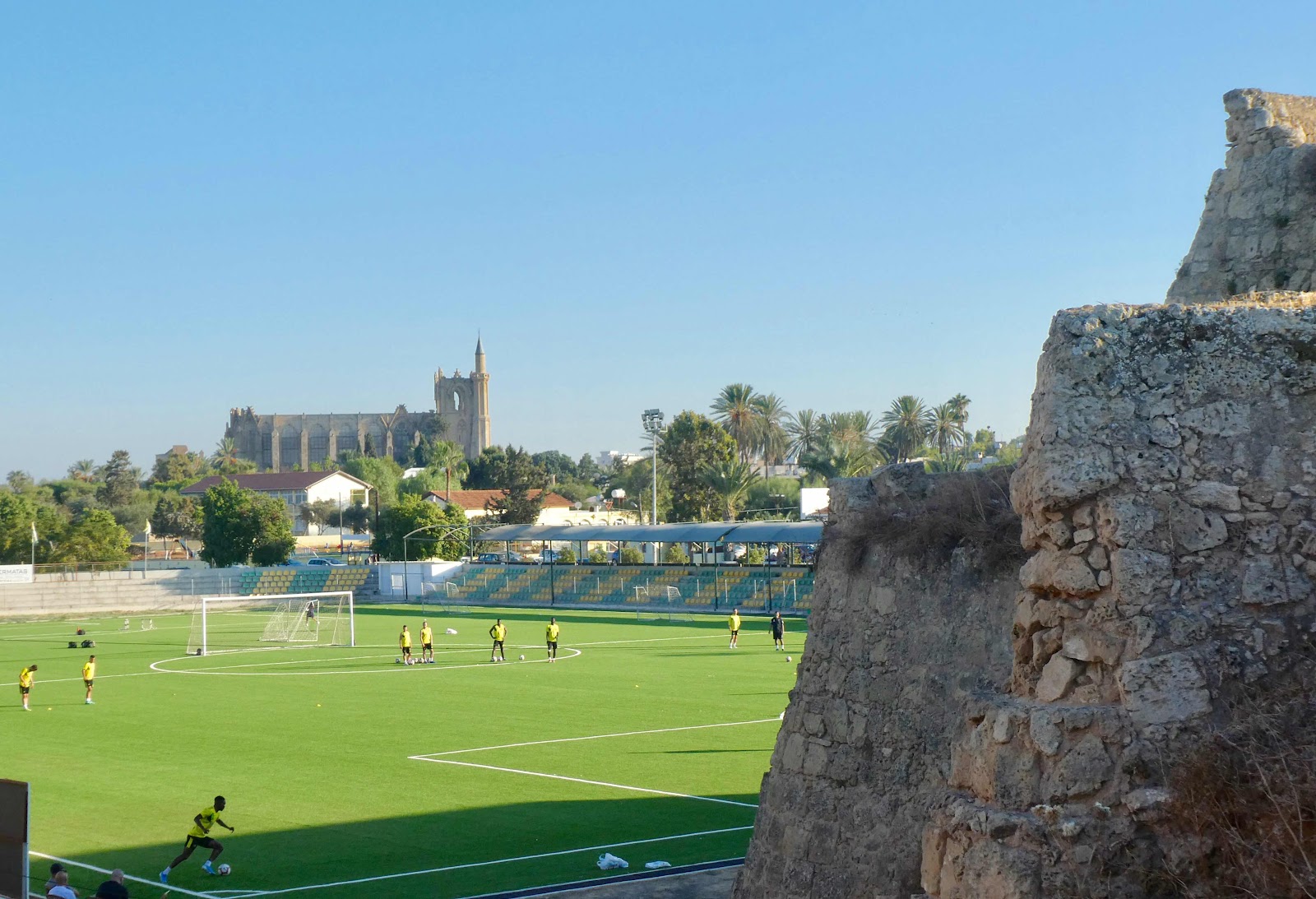

Our guesthouse is near Othello Tower (or Castle). Othello’s Tower was built in the 14th century by the Lusignans to protect the city’s port, and was later incorporated into the Venetian Walls  The building’s crumbling stonework was saved by a 2014 restoration. The Venetian Lion, carved into the stonework, continues to stand guard above the entrance. 


The structure has 4 towers, a dining hall and barracks. There is a loose link to Shakespeare: his namesake play is set in “a seaport in Cyprus.” The Othello Tower in Cyprus was named after a Venetian governor in 1406, a century before Shakespeare wrote his play, and it's unlikely this Othello is the Moor described by the bard. We had planned to tour the castle, but it was closed. It's Friday, the first day of the weekend in Muslim countries, or maybe they are starting November hours early.


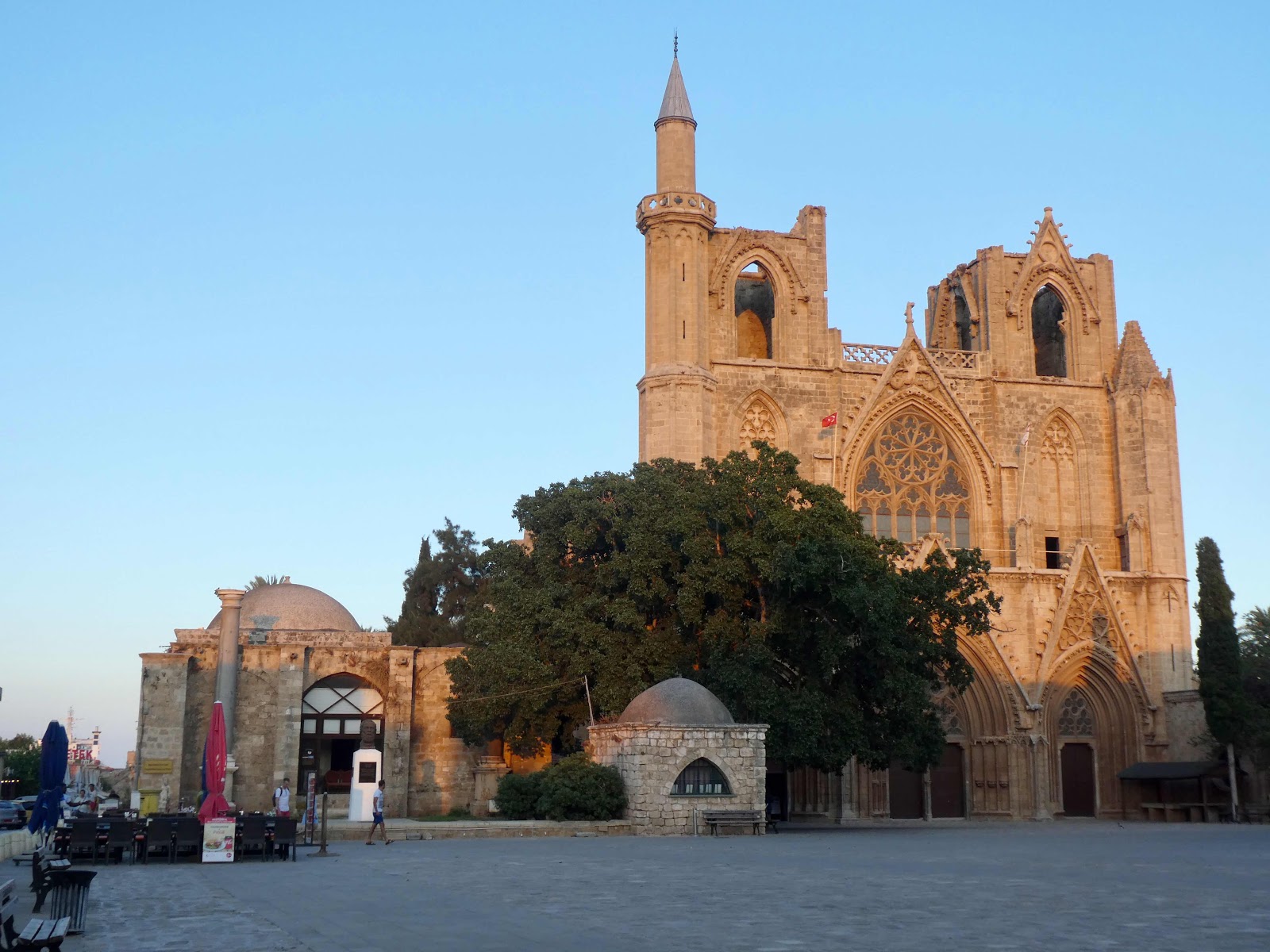
Punctuating Famagusta's skyline is the finest example of Lusignan Gothic architecture in Cyprus: the Lala Mustafa Pasha Mosque. 


Inspired by the Cathedral of Reims in France, the former Cathedral of Agios (Saint) Nicholas was built between 1298 and 1326, during the heyday of Famagusta's lavish ecclesiastic construction. The form is typical of Crusader architecture: three doors, twin towers flanking the aisles and a flat roof. The tops of the twin towers were damaged by earthquakes, and further damaged during the Ottoman siege in 1571. After Famagusta fell to the Ottomans, the cathedral was converted to a mosque. A minaret now reaches up from the base of one of the original twin towers. In keeping with Islamic fashion, nearly all statuary, crosses, stained glass, frescoes, altars and paintings in the former cathedral were removed or plastered over, The Gothic structure, however, was preserved.
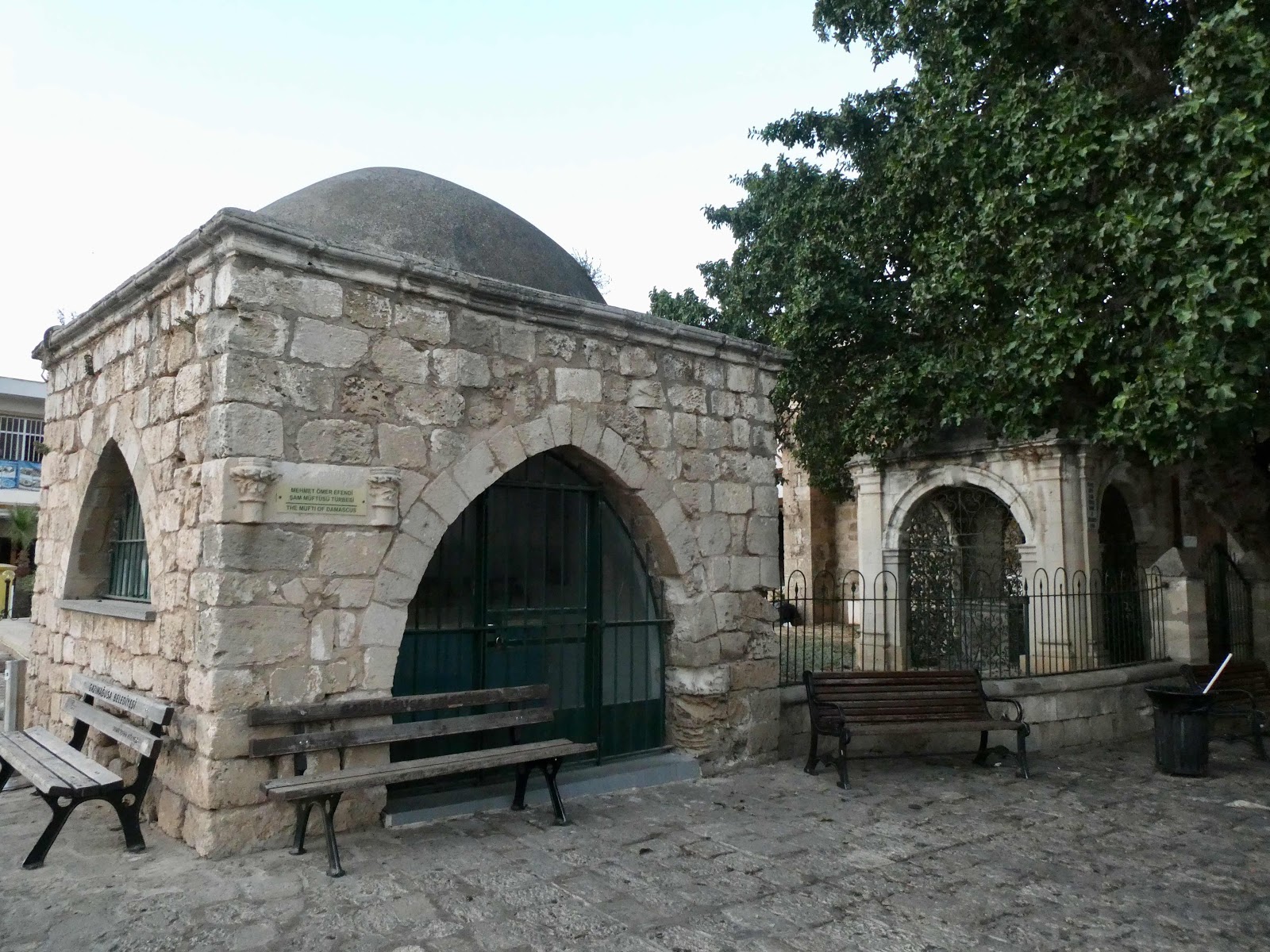
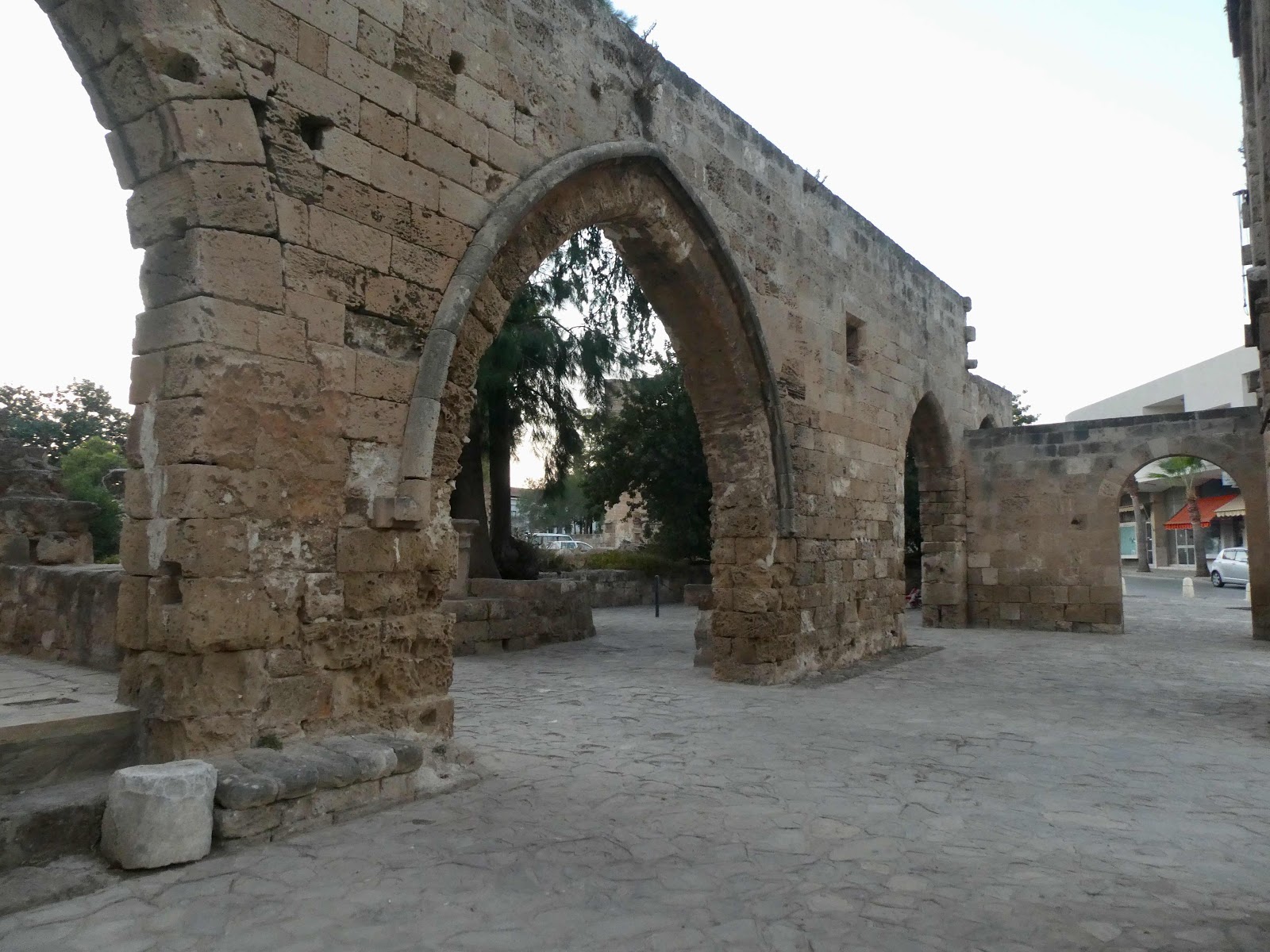


Just outside the mosque are a pair of Mufti tombs 

and a tenacious sycamore fig that has been hanging on since 1299. The tree survived the Ottoman bombardment, Venetian and Genovese conquests, and a slew of other political changes. All that fighting and death for temporal gains, and what remains are ruins and an old tree.


Across the plaza from the Lala Mustafa are the ruins of 

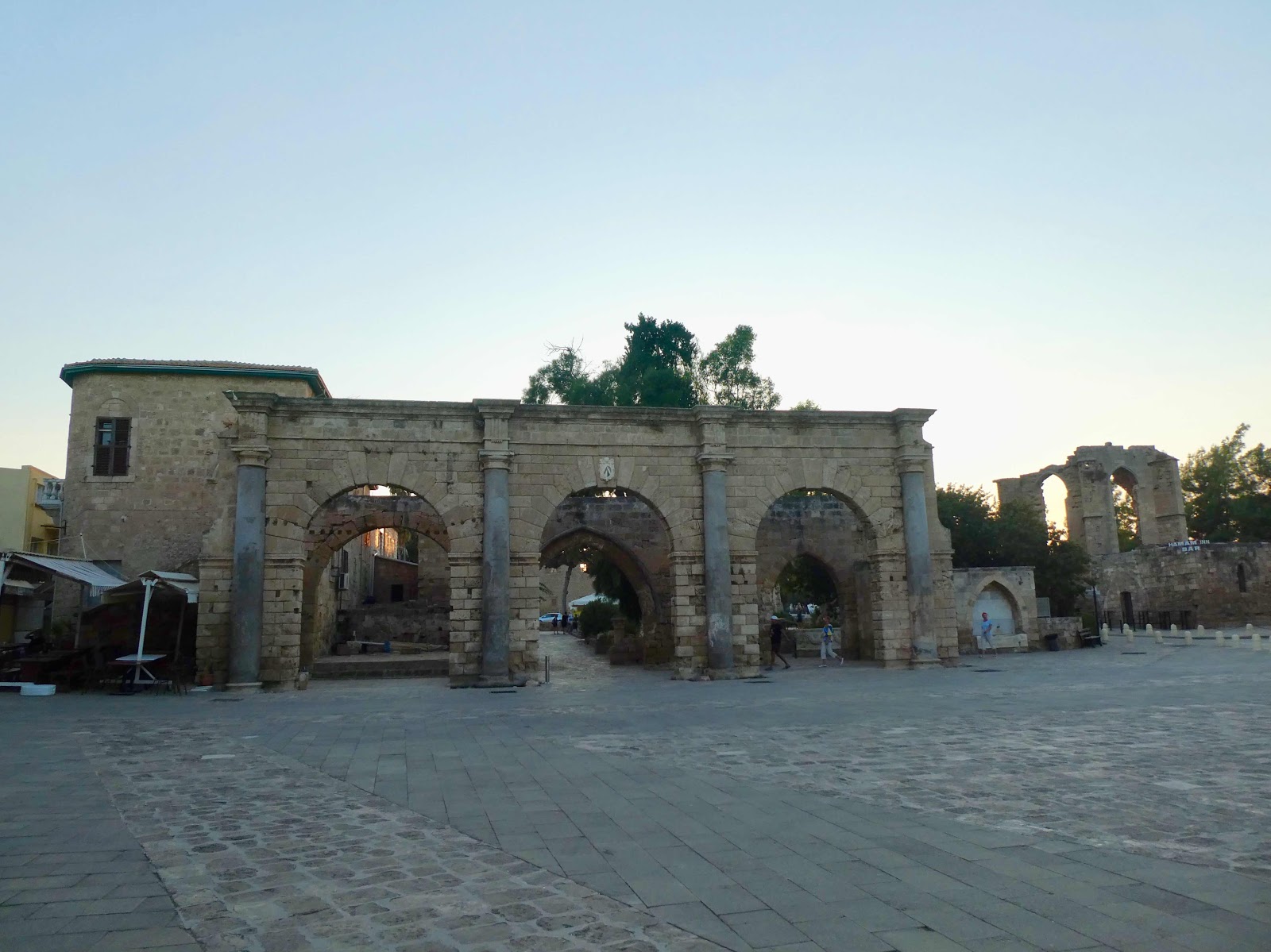
Palazzo del Provveditore, commonly known as the Venetian Palace. 


This royal palace, built around 1300, is a rare example of Renaissance architecture in Cyprus. The bulk of the palace is in ruins, destroyed during the Ottoman bombardment. Somehow the triple-arched grand façade and back courtyard walls have survived. The columns and stones making up the front arches are made from materials salvaged from the Roman city of Salamis, which we will visit tomorrow.


Some of the othere old buildings in the walled city:


St George of the Latins Church. Early Gothic architecture


Ottoman Bath House  c. 1605.


St. Francis Church


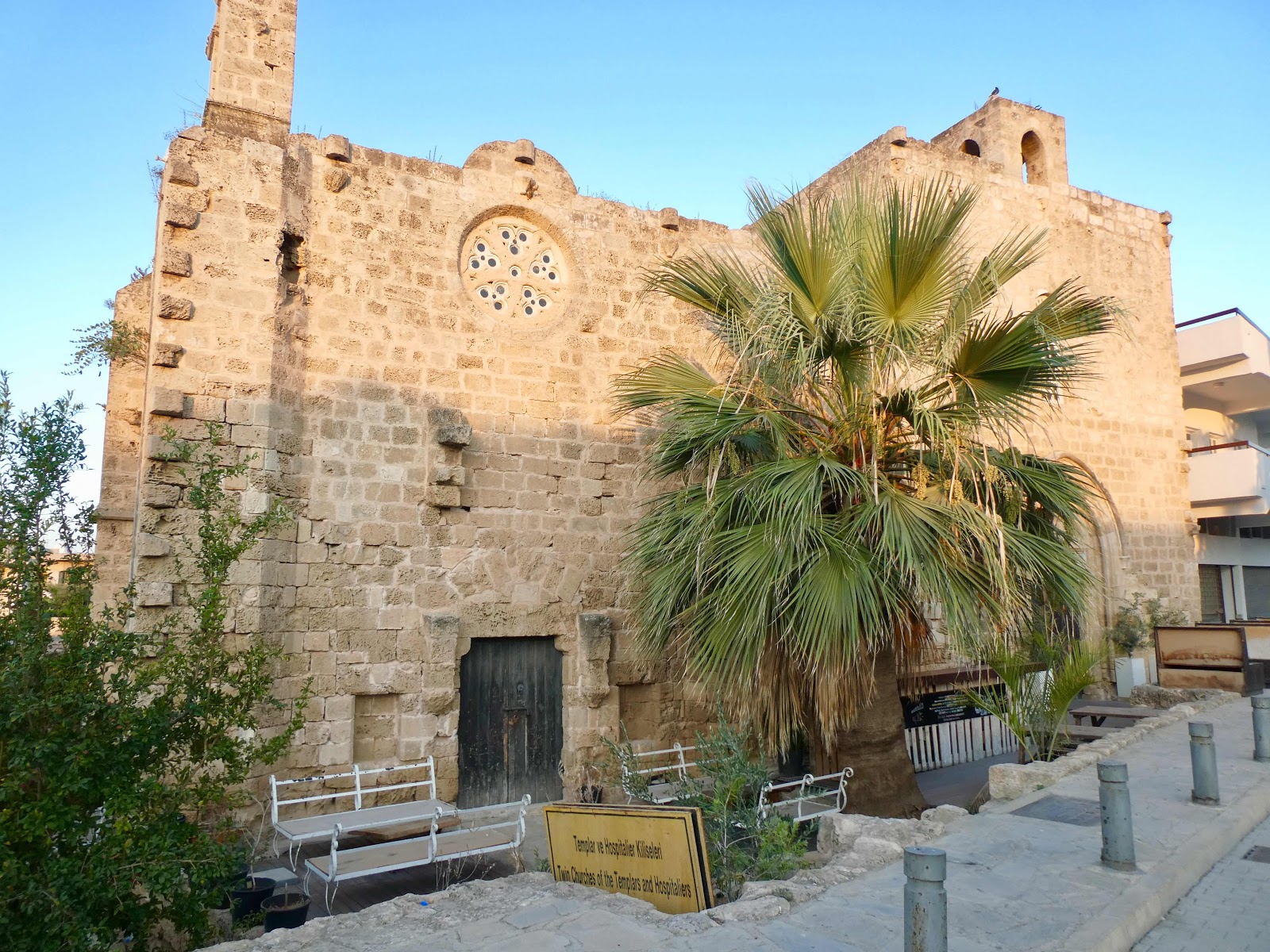
Twin Churches of the Templars and Hospitaliers (We stuck our heads in the one on the right because we noticed the door has been opened when we walked by after dark. To our surprise, it was a little bar.


The next morning we had a nice breakfast in the guesthouse garden, and were on our way.