Thursday, August 30, 2018

2018 Scotland - To Isle of Skye

We enjoyed a gourmet breakfast prepared by Fiona at the Glencairn B&B this morning. Smoked salmon, grilled tomatoes and scrambled eggs. I was most excited to see the array of fresh fruit.

We took the CalMac ferry from Mallaig to Skye, an easy 30 minute ride. It was sunny and breezy, perfect for standing on the top deck and watching the scenery and an occasional dolphin.


Looking back towards the highlands.

We'd read about two long-deserted and crumbling castles that could be visited, and thought they would be fun to explore as we slowly made our way towards our B&B outside Portree.  

The ruins of the first, Knock Cattle, were easy to spot but difficult to access. After several false starts (in the course of which we'd find ourselves on a steep gravel road we'd back out of, or slogging through a boggy tidal area only to realize there was a wide stream between us and the castle), we finally made our way to the promontory on which they were perched.


The castle was built in the late 13th century by the Macleod clan and then taken and expanded by the MacDonald clan about 200 years later. It was abandoned sometime in the 1600s and stone was thereafter pilfered from the structures for use in other projects. Today it is primarily visited by sheep that graze about the ruins, necessitating great care be taken in watching where you step. 

We then set off to find Dun Scaith Castle. This entailed a beautiful 6 mile drive down a one lane road past free ranging sheep and shaggy cattle. The one lane roads have little pullouts every quarter mile or so. When 2 cars approach each other, whoever has the closest pullout yields to the other. If that requires backing up to it, that's what you do. The system works well: drivers are patient and cooperative.


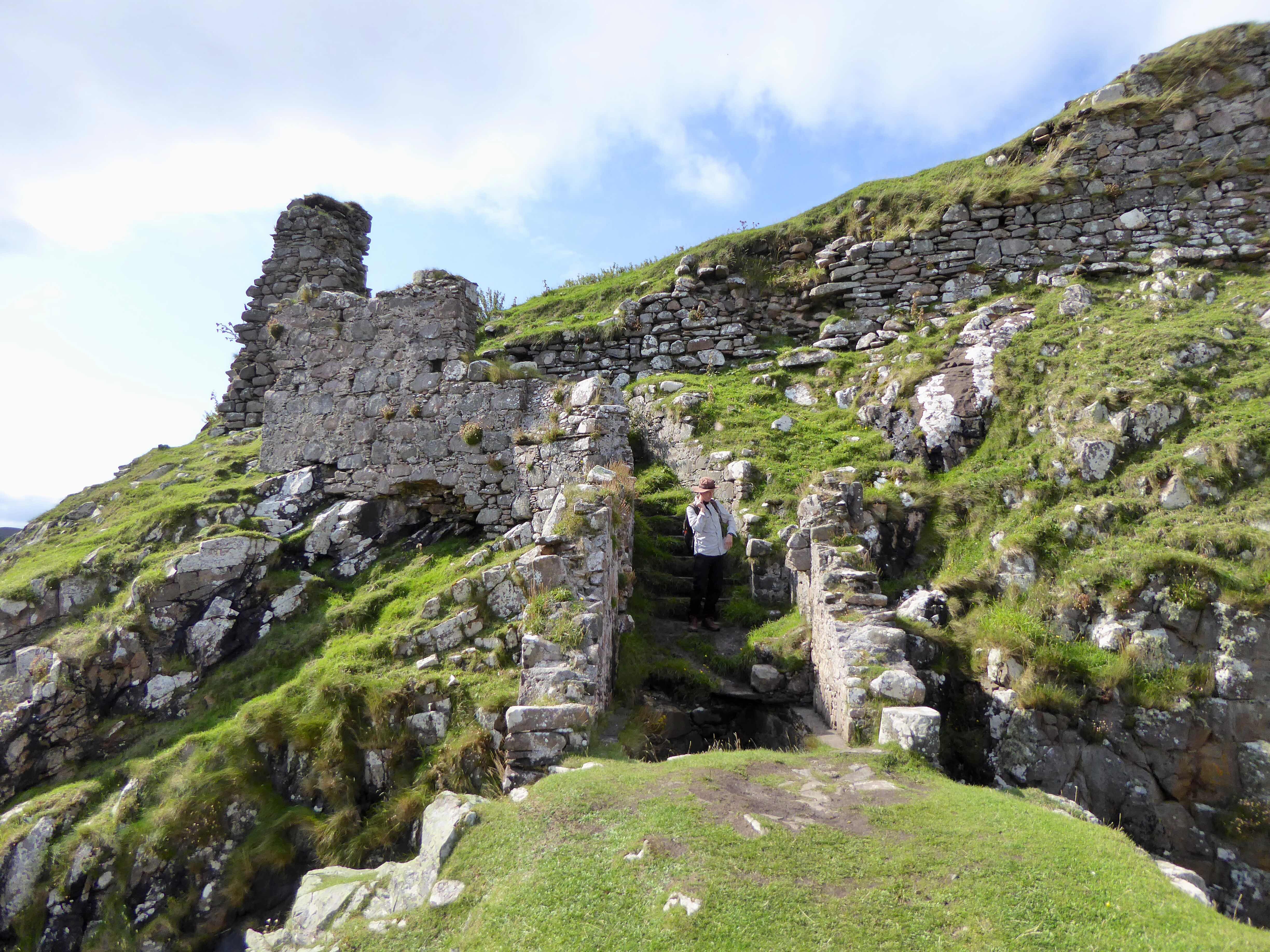
The castle was reached by a gravel path and then across grassy and granite hills to the base of the castle stronghold. Like Knock Castle, Dun Scaith was built by the Macleods and later became a principal seat of the MacDonalds. 


It was easy enough to walk to the castle ruins, but entering it was another thing altogether. The drawbridge is long gone, leaving a gaping hole with a significant drop below. 


Note the perplexed expression as he ponders his return strategy.


This is how it's done.

Having less sense than Lydia and with a helping pull up the last bit, I made the crossing and climbed to the top. There is not much there: a few scraps of wall, a rich carpet of grass and some sheep who scramble up an even more difficult route.


The views from nearby cliffs across Loch Eishort to the Coillin mountains are spectacular.


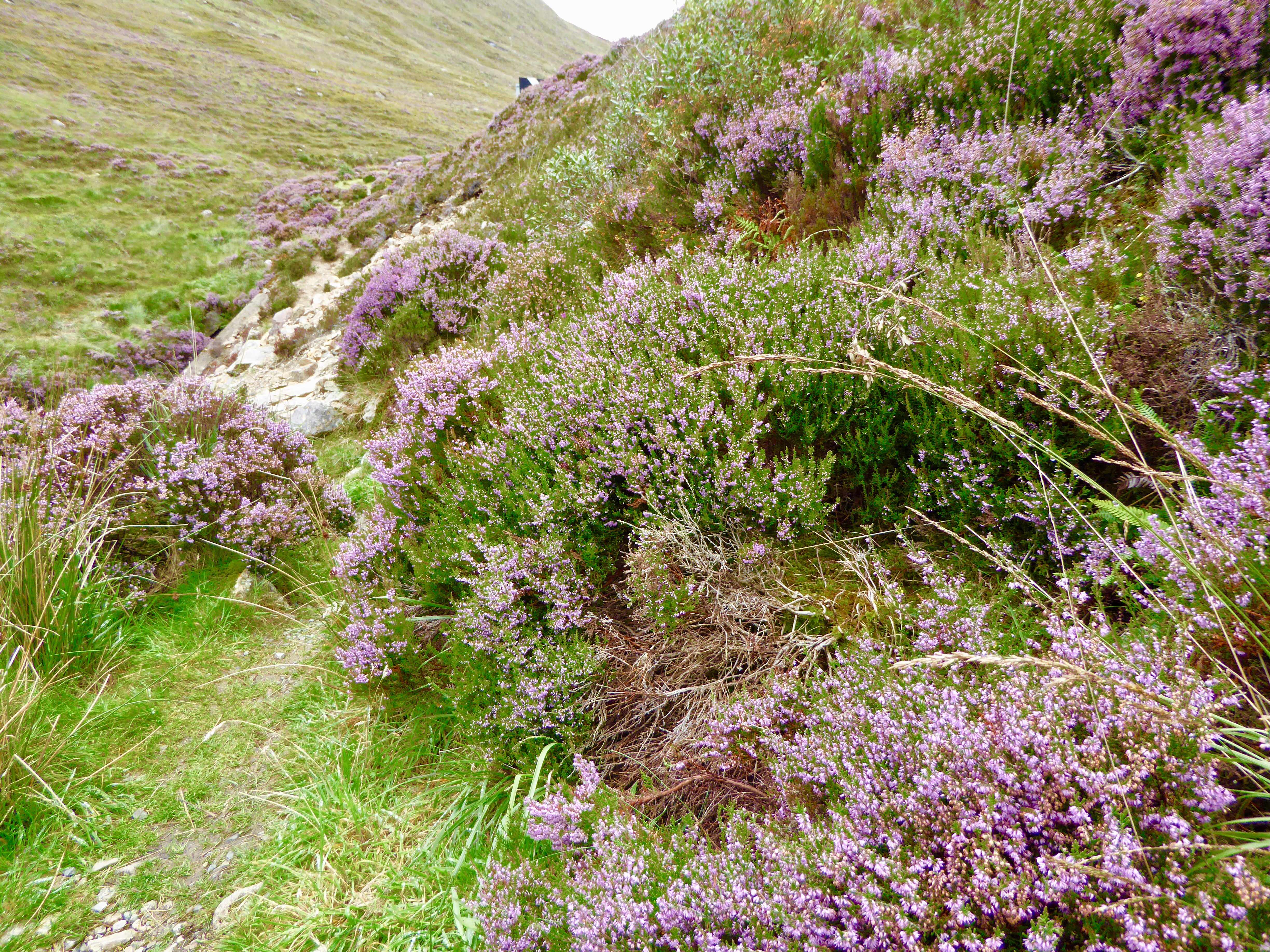
We passed this waterfall and lots of heather between Broadford and Portree.


We checked into our B&B, Tulach Gorm, and I had a rest while Lydia talked with the owners. Don has a wealth of information about walks all around Skye, and detailed maps and hiking guides for his guests. I think I could easily spend a week here and just enjoy a good walk and the scenic views every day.

The B&B location is amazing. I'll take more photos tomorrow, but this is behind the beautifully landscaped back garden.

Croft house 


At Don's recommendation, we had dinner at the Pier Hotel in Portree. It's a tiny place (7 tables) with a small menu of 6 appetizers and 8 mains. They were full up, so we had a drink in the adjacent bar while we waited for a table. For perhaps the first time in my life, I ordered beef that was not disguised in some form or other (ground beef). And it was good. And it came with lots of fresh vegetables. 


Portree harbor.

In the carpark, Lydia noticed a problem with one of our tyres. It's not flat, but damaged and needs to be replaced. Lots of potholes here. So we'll be dealing with that tomorrow. At least we are near the biggest town on Skye.




Sunday, August 26, 2018

2018 Scotland - To Mallaig and back and back again

Before I forget, KFCs are rumored to be here in Scotland. Evidence is strong, but final proof is pending.


We woke to drizzle this morning and a forecast of rain all day. So we had a leisurely, generous breakfast at our Forest View guest house and spent some time speaking with our hostess, Liz. 


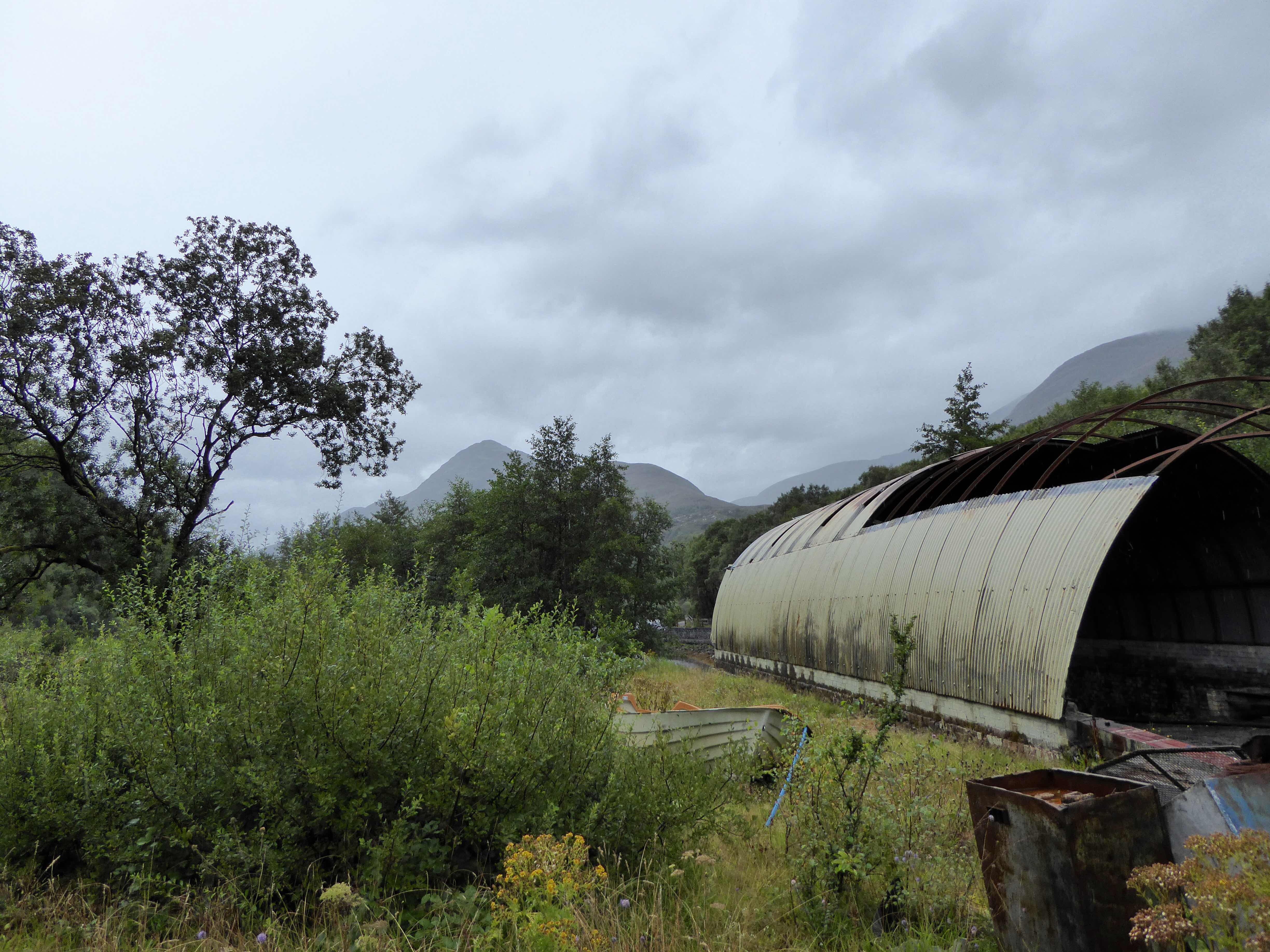
Like Alston, where we stayed the previous night, Kinlochleven was a boomtown during the industrial revolution and is now dotted with converted and abandoned factories. The industry here was aluminium manufacturing. A huge scar slashes down the mountain on the other side of the lake, resembling a bare earth ski slope. The works have long been removed, but it used to hold 6 parallel tubes a meter each in diameter, bringing filtered water down to the plants.
View from our window, with an aluminium (NOT aluminum) plant in the foreground. 


There was a trail down the road from our B&B that led to Grey Mare's Tale, a waterfall supposedly named by Edward VII because it reminded him of a favorite horse. The woods are the lush green of a temperate rain forest, wet and moss covered. 


Liz had told us about another walk down to the old wharves for the factories. We had the area pretty much to ourselves, a benefit of the weather. There were reports of a stag sighting yesterday, and sometimes otters and a lonely old seal. We had to content ourselves with 3 swans, a heron and some ducks. But the views around the misty Loch were gloomy and wonderful.


We said goodbye to Kinlochleven and drove to Fort Williams along the Loch, stopping to explore the graveyard at a roadside church.


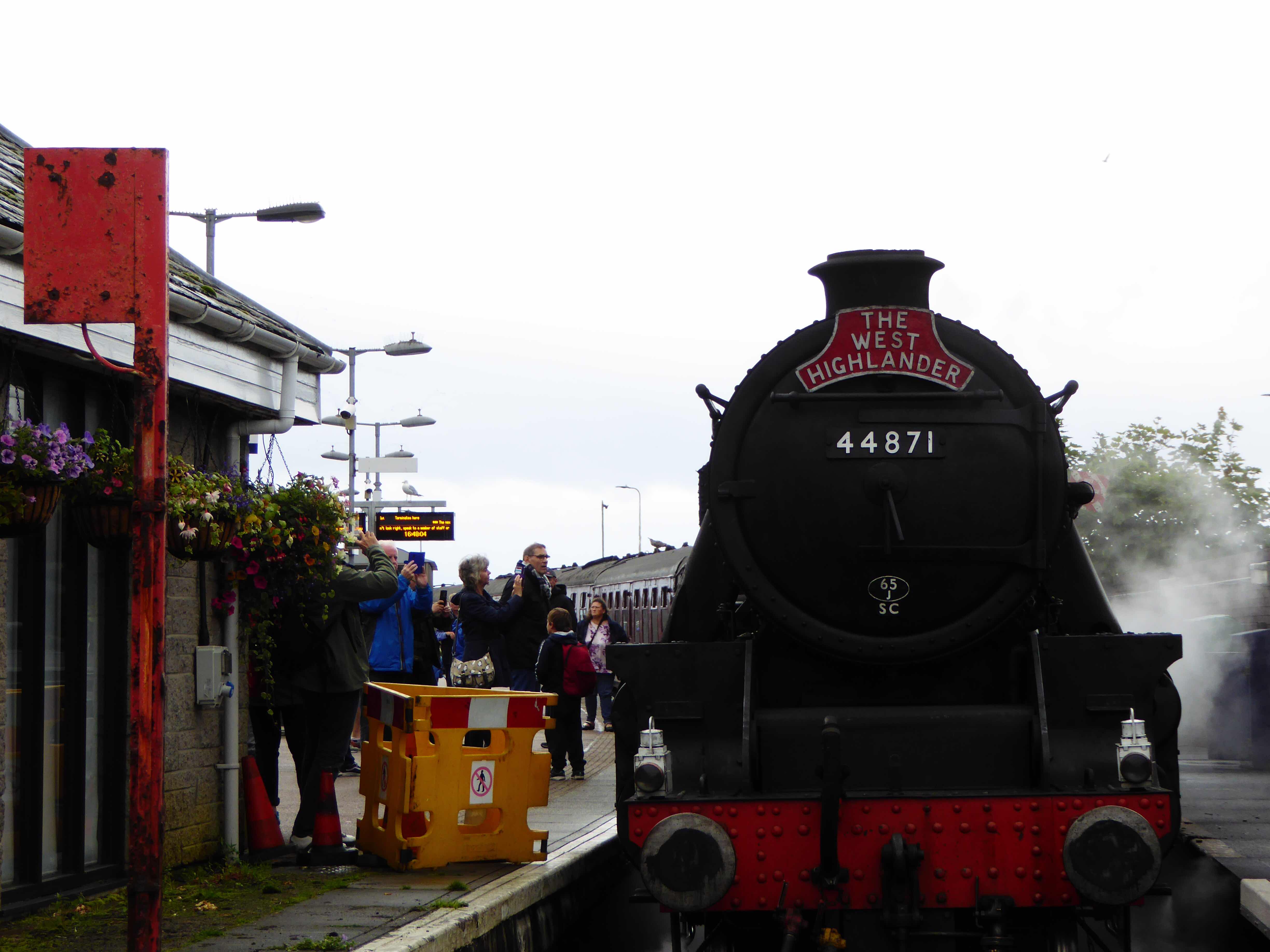
Once in Fort William, it was all aboard the Jacobite Steam Train, aka the Harry Potter Express. 


Fort William's main drag felt like Diagon Alley.

We were supposed to be sharing a table for 4, but our coach had magically morphed into one with compartments. We found ourselves sharing with a delightful family of 4 from a coastal town west of Glasgow...near the village of Fairlie!


The 42 mile line to the fishing village of Mallaig, intended to help open up the remote villages of west Scotland, has been operating since 1901. The coal powered steam train has been running on the West Coast Railway line since 1984. 


The highlight of the ride is crossing the Glenfidden viaduct, which is featured in several Harry Potter films. Its 21 concrete arches each span 15 m (almost 50 feet) as the viaduct curves up to 30 m near Loch Shiel. As we approached, we could see dozens of people who had hiked out to watch the train pass.


For the true HP fan, they also pointed out Dumbledore's final resting place.


But most of the journey was just enjoying the misty moors, rugged landscape and the chugging train. And occasionally a stag or red deer. 


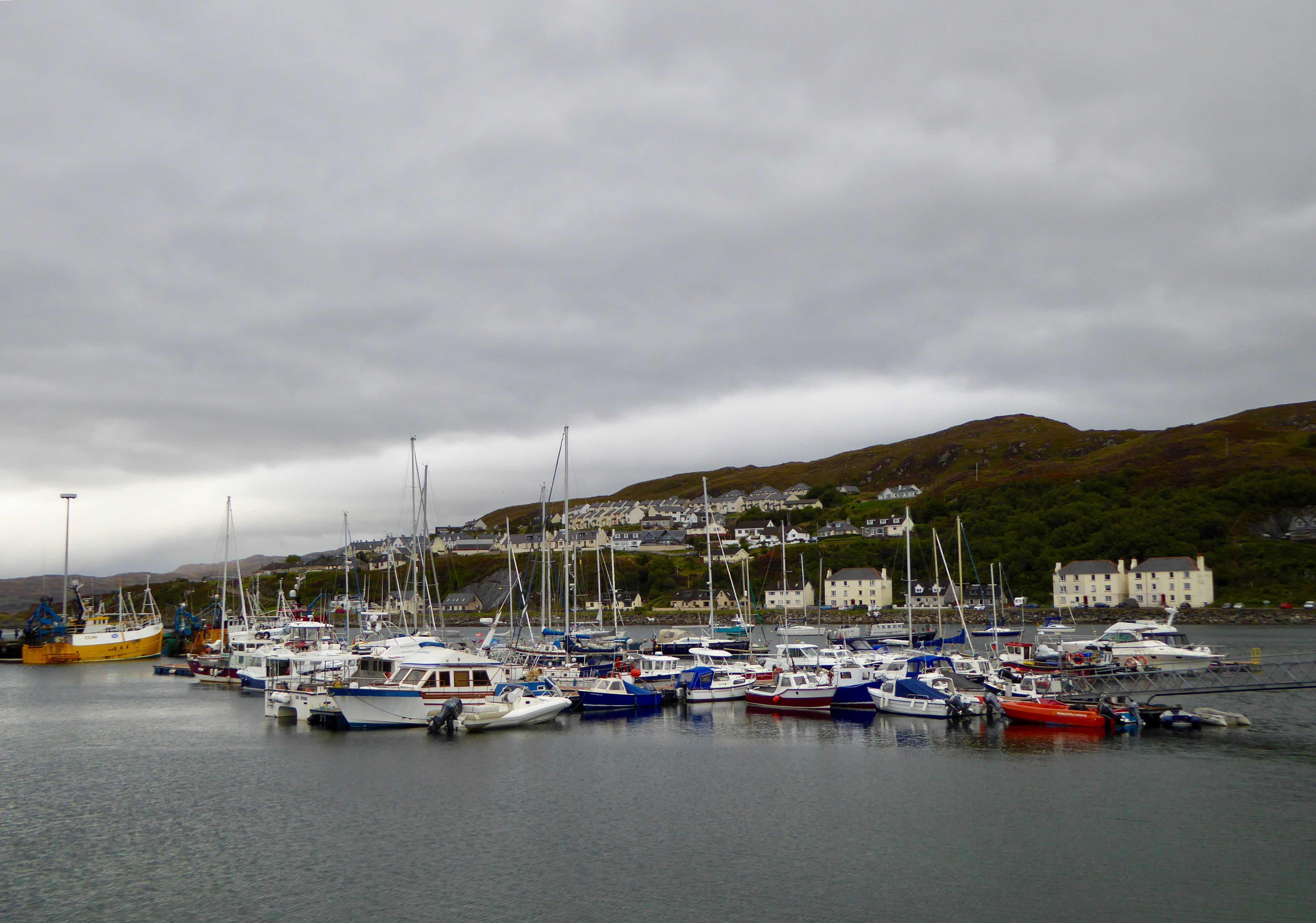
We had a two hour layover in Mallaig, which still has an active (though greatly reduced) fleet of fishing boats that catch herring and white fish. There were several boats in dry dock, a variety of "working" boats and a small marina.


We spotted our B&B for tonight across the little bay, and knowing we'd be getting back to Mallaig late this evening, walked over to check in before catching the train back to Fort William. 

We got back to our car around 9 pm, where we ate our grocery store carry out dinner before starting the drive back to Mallaig. It was a bit of an adventure: dark curvy roads with posted warnings similar to yesterday, constant reminders to watch out for stags, heavy rain with puddles, and of course the bit about driving on the left. And I couldn't figure out how to turn on my headlights until we stopped at a petrol station for help. 

But here we are, safe and sound in Mallaig and ready for the ferry to Skye in the morning.


Saturday, August 25, 2018

2018 Scotland - Taking the higher road, to the Highland

After a full "English Breakfast" at the Angel Inn, we took a last look around quaint Alston and the little pub before heading north through the moors.


Breakfast was an Atkins practitioner's dream and a vegetarians nightmare. The mystery dark item is black pudding. The propriatress was evasive about its composition (congealed blood, barley, meal and spices) until after we ate. 


We motored up through Glasgow and through The Trossachs National Park to the bonnie, bonnie banks of Loch Lomond. It's the largest lake in Great Britain by surface area, cutting a long north-south scar across the fault that divides Scotland's lowlands from its highlands. The road that parallels the western side of the lake is a bit of a thrill ride, with frequent signs cautioning one in alarming detail to slow down in the curvy sections, as oncoming traffic in the blind curves may be in the middle of the roadway. I tend to hug the left edge while driving here anyway, but with little or no shoulder on the narrow road it was a rather intimidating.

We stopped at the village of Luss, site of an ancient settlement and rebuilt in the 1800s with sandstone and slate cottages. It's quite touristy now, but a pretty place to see the Loch and explore (once we secured a parking spot). 


Lydia had haggis on a Scottish roll for lunch. I was less daring with a banana and a roll with bacon. We passed other lakes as the topography continued to evolve.


Finally we came to Glencoe Pass, one of Lydia's bucket list places, with sweeping, dramatic views and the site of an infamous massacre. We spent an hour or so walking into the valley.  


A busload of Italian tourists erupted into the valley. I was so glad to be traveling with a party of two!


We'd learned yesterday that you can walk or camp anywhere in Scotland, even if land or an access road is posted "Private". We saw walking trails throughout our drive, and cars pulled off just about anywhere that offered access. Sometimes a solitary colorful dome tent hugged a flat area below a rocky outcropping. It's obvious people take advantage of the accessibility and raw beauty of these highlands

We finally reached our B&B in Kinlochleven after 7 pm. It's a nice little town, again with a good tourist business. Our host, Paddy, said he's full up for about half the year. In the winter, with a growing skiing and ice climbing clientele, things slow down a bit. We walked on a footpath through the woods into town and had dinner at a nice little restaurant above a pub.

------ 

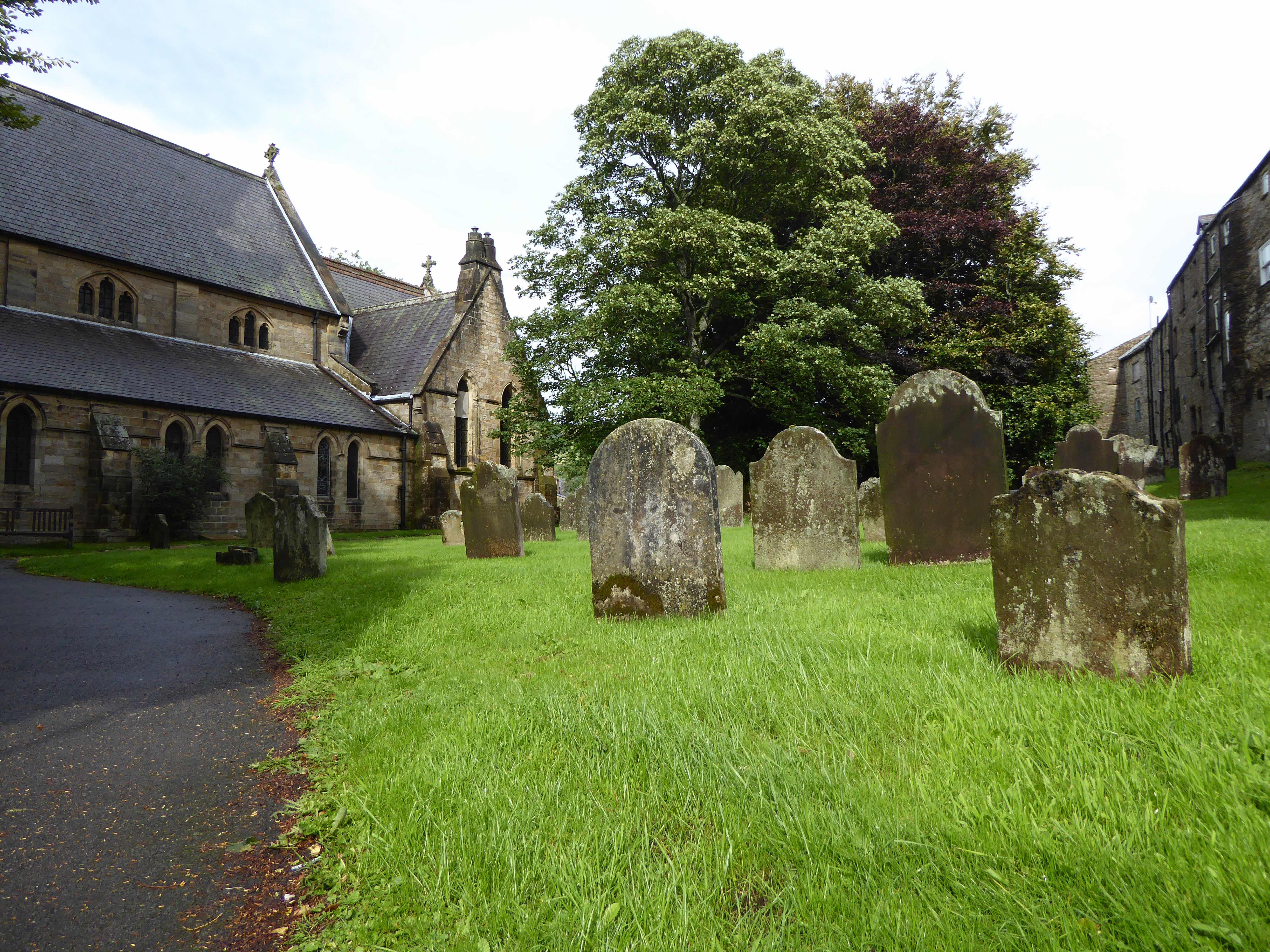
Interesting Encounters department: When we vstopped to look at the old church in Alston (congregation size: 38 people) last night, someone invited us to come back for fish and chips and beer and something else (we couldn't catch the last word). Well, we both like fish and chips and, figuring it was some kind of fundraiser and having no other dinner plans, we wandered back to the church 30 minutes later. We ordered and paid for our fish and chips, which they were getting from a take-out chippery down the block - the only restaurant we'd seen in town besides the pubs. There was side table set up with an impressive collection of beer, porter, wines, hard liquor, etc. Then we were asked to pick a hymn for a sing along. Turns out that the "something else" was hymns!


We saw the posting on the way out after singing and supping.


Friday, August 24, 2018

2018 Scotland - We'll take the high road, to Hadrian's Wall

Despite a few scheduling glitches and medical snafus that threatened to cancel the trip for me until the last minute, my college roommate, Lydia, and I managed to rendezvous in the Glasgow airport this morning pretty much on schedule. My flight had been delayed (mechanical problems necessitated a chance of plane and gate) last night from Philadelphia, while she caught an early morning puddle jumper from Heathrow, as she's been in London for the past 3 days with her husband. We're here for a 10 day road trip to hit bucket list items, explore, hike and enjoy the countryside and each other's company.


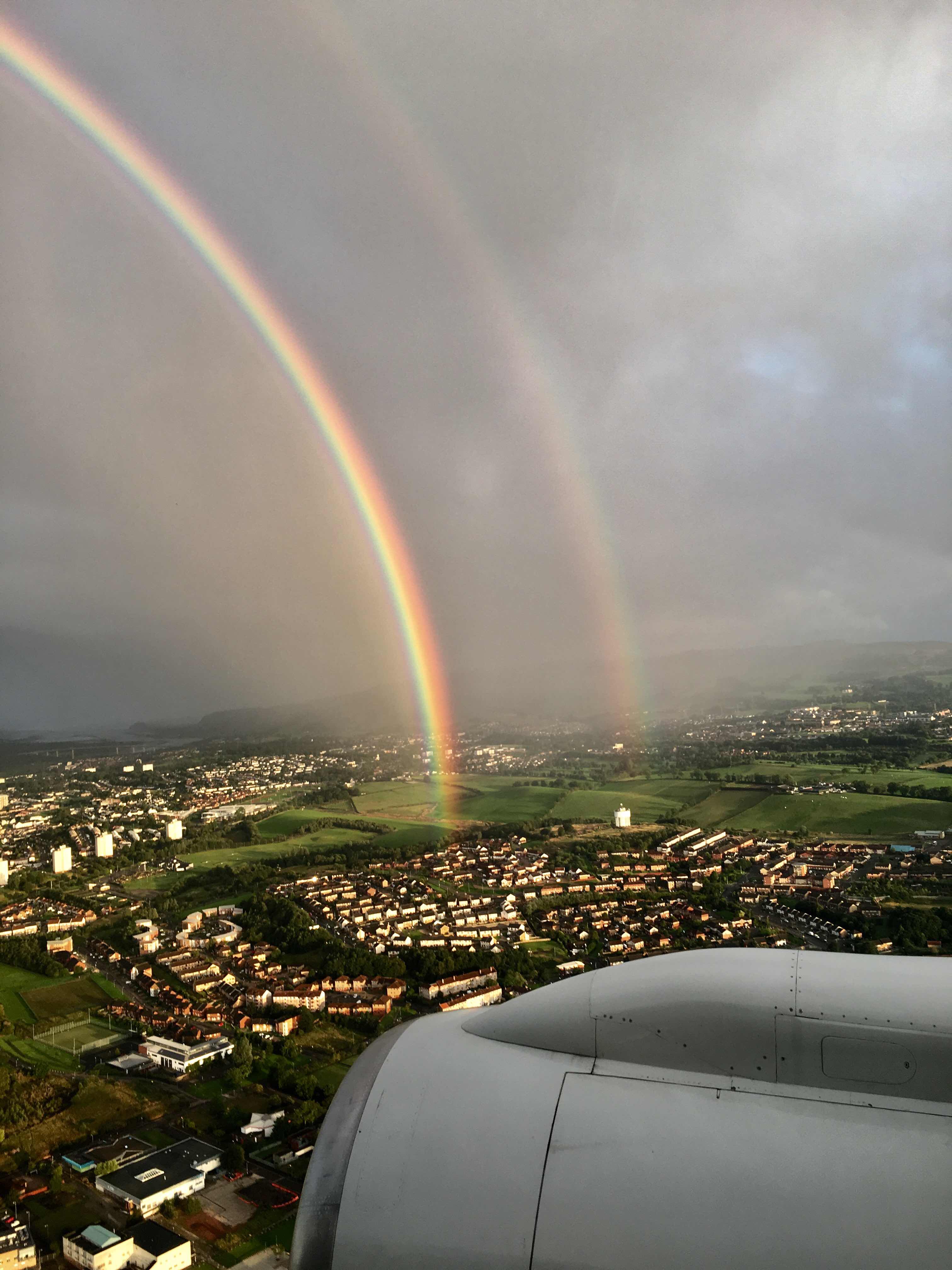
An auspicious double rainbow heralded my arrival in Glasgow.

After picking up our car, we found our way to Glasgow and headed south towards Carlisle, England. This is the opposite direction from where we plan to spend most of our trip, but today's goal was one of my bucket list items, Hadrian's Wall. 


Once we peeled off from the A74, the main north-south artery between Glasgow and Carlisle, we were in picturesque moors dotted with sheep and delineated by ancient stone walls. We stopped to walk across the 17th century Abbey Mill bridge near the 12th century Lanercost priory. 


Public trails, some well-used and others barely discernable (except for signposts) crossed the fields.


Lydia tried out one of the many options to scale a stone border wall. 


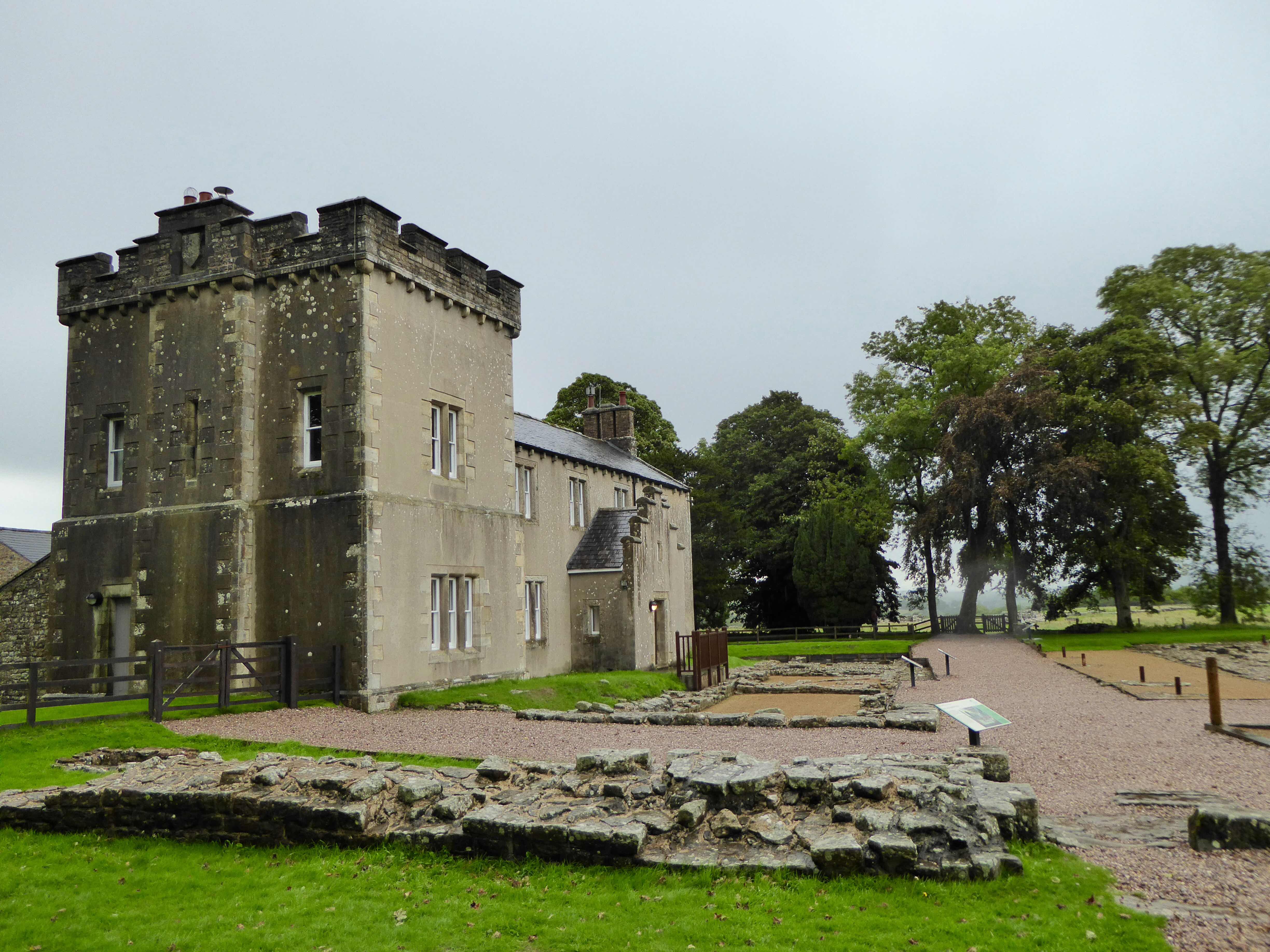
On our way to the Birdoswald Roman Fort on Hadrian's Wall, we caught our first glimpse of the Wall  at Banks East and stopped to take in the views and inspect the watch tower foundation.


We made it to the Birdoswald car park just in time to step into a sideways blowing squall complete with hail, thunder and lightening. The visitor's center at this World Heritage site was compact, interesting and a great hands-on place to bring children. 

The Roman emperor Hadrian started construction on the wall in 122 AD, defining the northern boundary of the Roman Empire. It runs 117 km (73 miles) across Great Britain, and is now the border between Scotland and England. From Birdoswald east, the wall was constructed of stone. Heading west, it was primarily made of turf. Reaching up to 4.5 meters (16 ft) high, the wall included 16 large forts, milecastles each mile and two turrets or watchtowers spaced between each milecastle. The wall was further protected on the Roman side by a road, then a drop ditch called a vallum which was flanked by parallel mounds of earth. Like the old wagon tracks worn across the American prairie by pioneers in the 1800s, the ancient scars are still faintly visible in the landscape.

Towns grew up around the forts and lasted long beyond the Roman settlement of Britannia.


The Birdoswald Fort has one of the longest stretches of remaining wall, now only waist high.


We drove about 40 minutes south to the little village of Alston where we are staying in a c. 1610 hotel over a bustling little pub. Next door is a late-1700s church with oversized tombstones. Alston was a lead mining community of perhaps 10,000 until the mines closed. Today it is sustained largely by walkers and cyclists who visit the area to enjoy its scenery, moors and solitude.