Thursday, November 17, 2022

2022 Ecuador Day 3 - Into the Clouds

It seems incongruous that we are at the Equator but waking up to temperatures in the mid-40s F each morning. Funny what altitude can do. 


We were picked up from the hotel at 8:00 this morning and bundled into 2 comfortable vans. I sat with the driver, which was great both for the views and for conversation during our 3 1/2 hour drive to Mashpi Lodge. It’s not too far from Quito, but the roads are progressively narrow as you go, ending in several miles of unpaved road followed by a two-tread track through the forest. 


But I’m getting ahead of myself. 

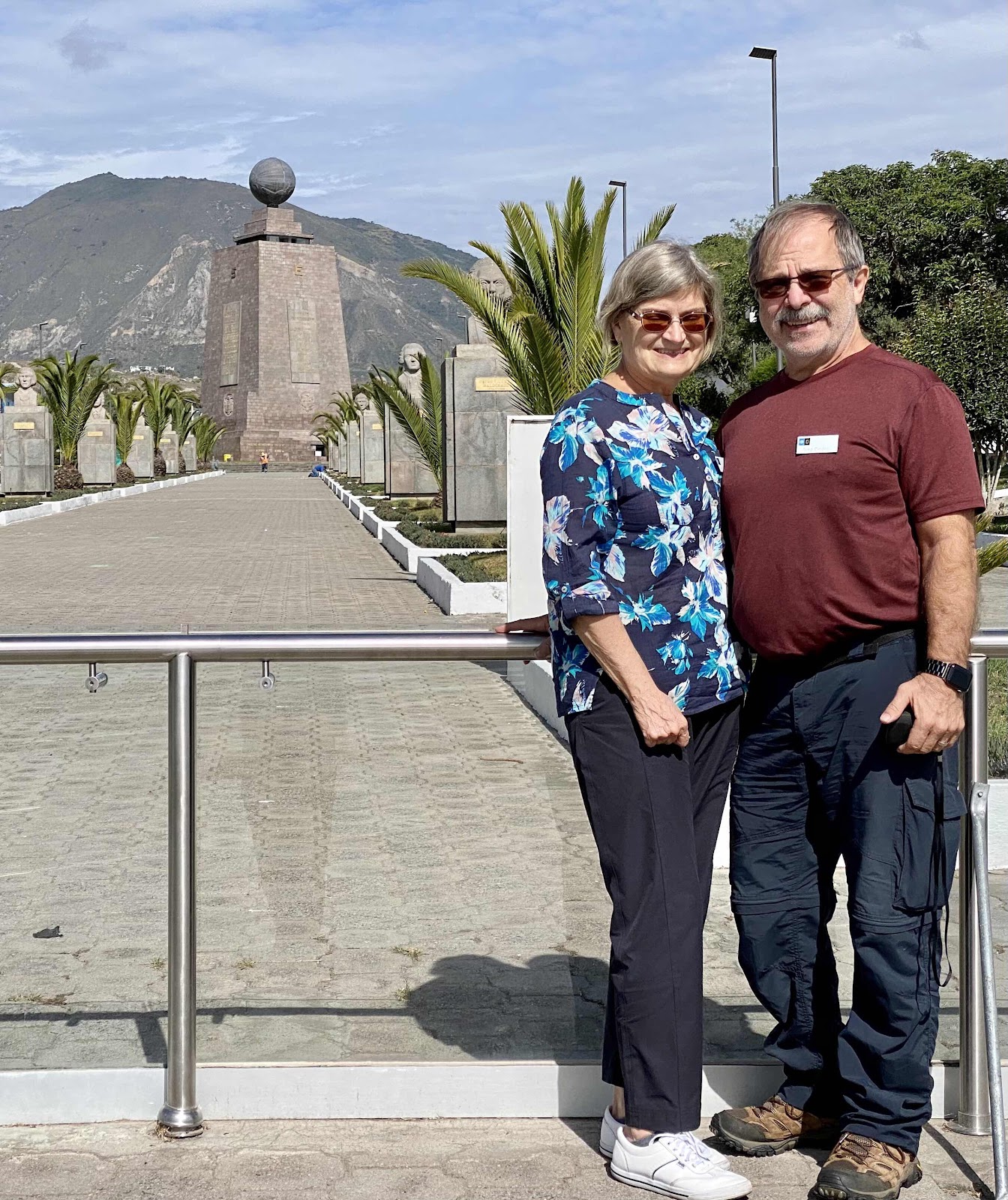
Just a few miles beyond the Quito city limits, we crossed the Equator. There is a monument with a yellow line marking The Spot, but we weren’t able to approach that spot for the obligatory photo as the ticket office wasn’t yet open. So our driver, Diego, kindly took photos for us. As the “real” Equator is a short distance away in the middle of the road, Greg recorded our progress across the imaginary line so that he could qualify for a geocache there. 


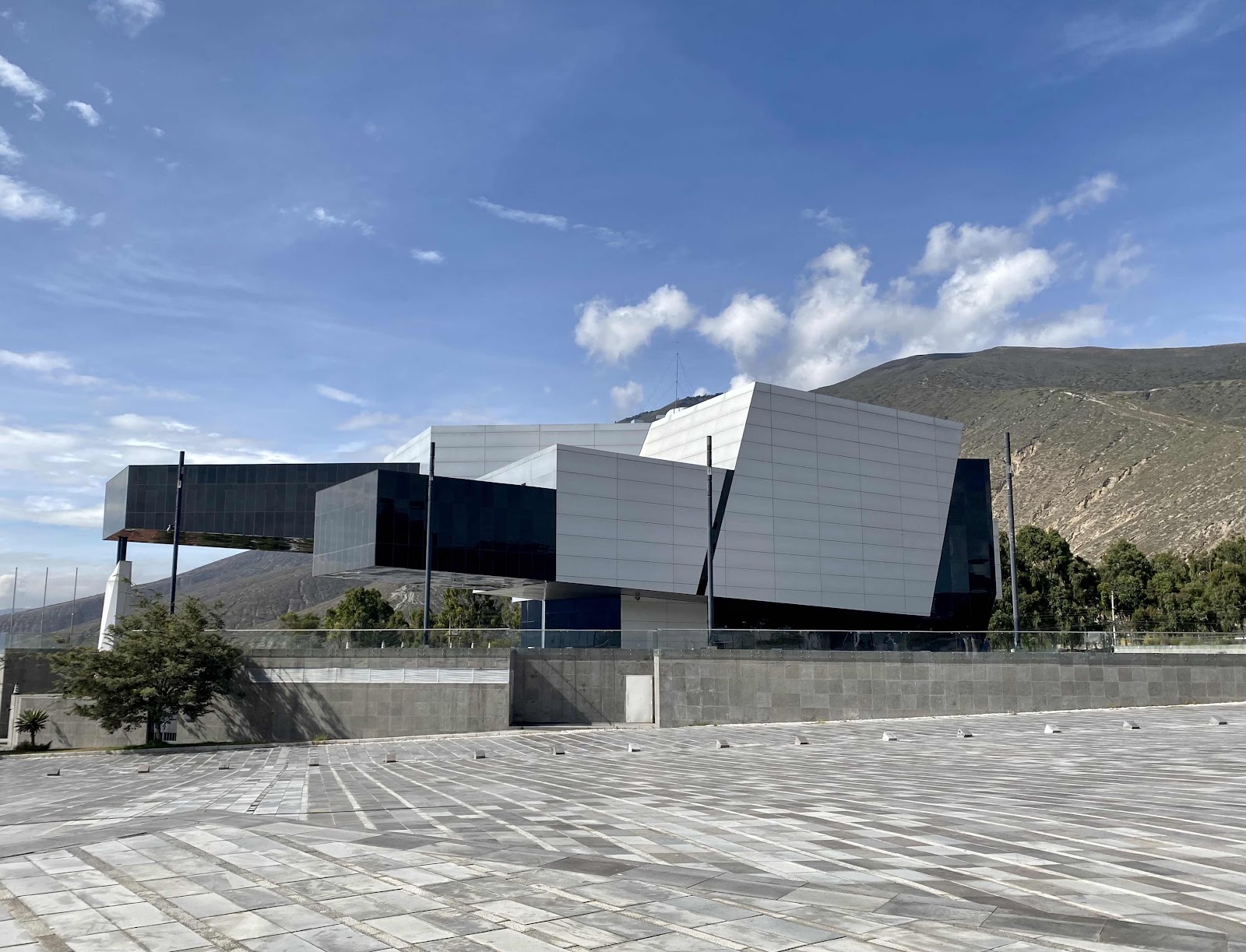
Adjacent to the monument site was a striking, modern cantilevered building. It sits completely empty. Inspired by and modeled after the European Union, a group of 12 countries formed the Union of South American Nations in 2008, and chose the site near the Equator for their new Secretariat Headquarters. According to our driver, the Ecuadorian government withdrew from UNISUR in 2019, finding that the organization had grown too socialist. To date, more than half of the original founding nations have abandoned UNISUR. 


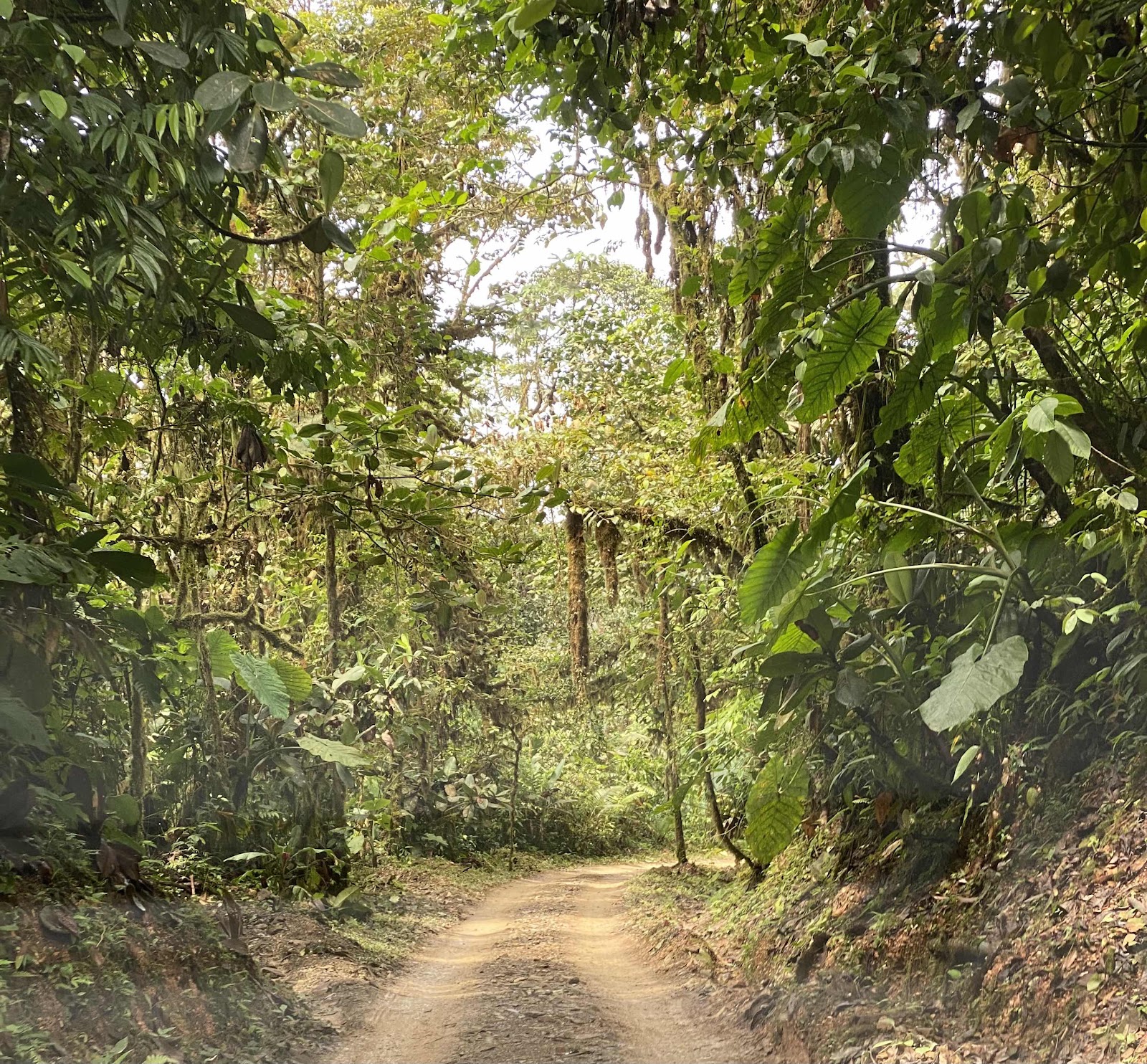
We continued through multiple microclimate zones: high mountain, middle of the world (guess which one that is), tropical, cloud forest, high mountain forest, etc. It was arid in the immediate area of the Equator, with agave and other desert plants. But we quickly descended to a much more lush region. We passed people walking their fields, pushing corn seed into the ground with sticks. Other fields were neatly furrowed, apparently with horse drawn plows. We passed big stands of sugar cane growing on the hillsides. We passed through little villages that may or may not have a gas station, but definitely did not have a high school or a hospital. 
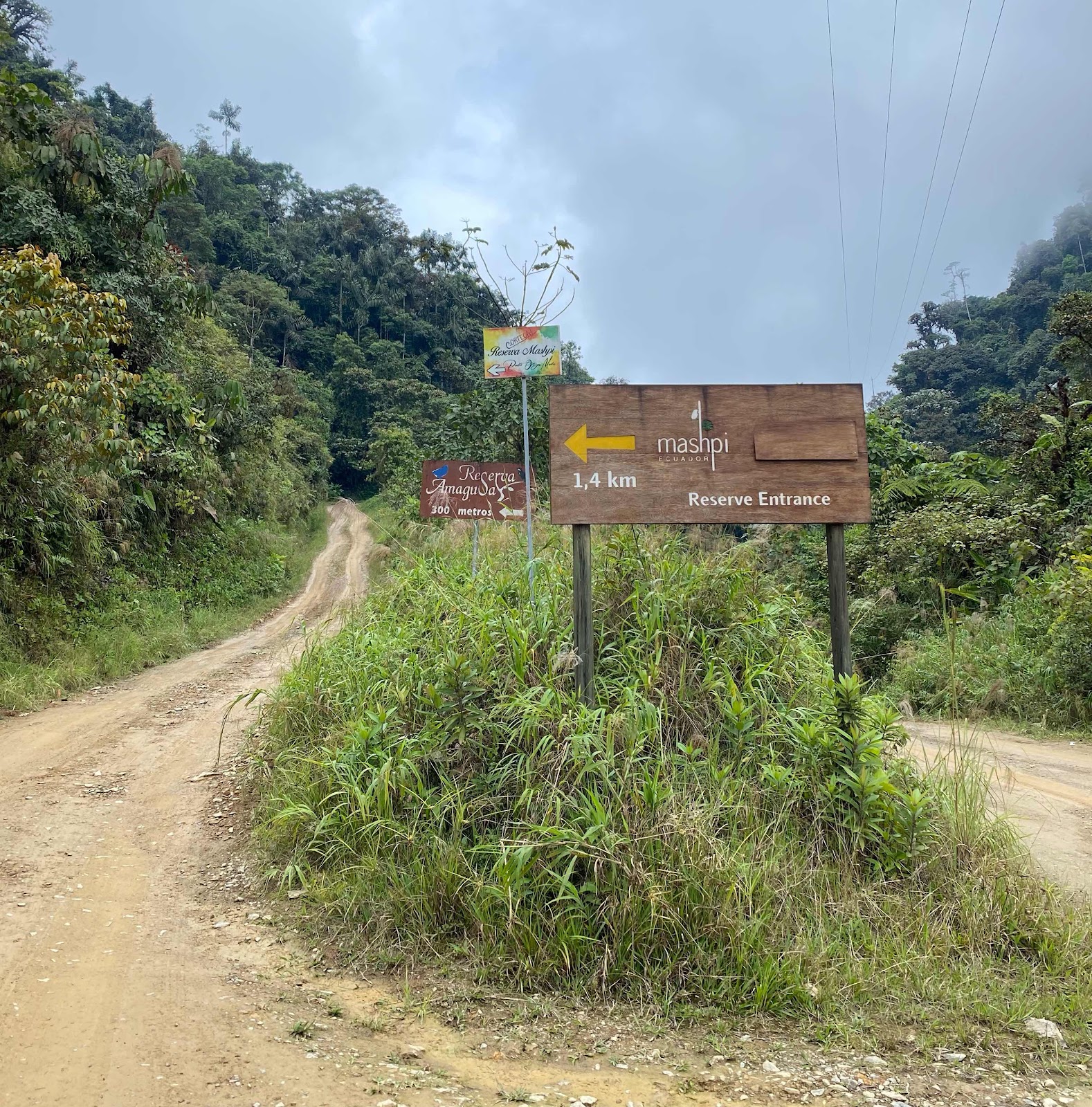

After several miles on a bumpy dirt road, we were excited to see we were nearing Mashpi.


Mashpi Lodge is a private forest reserve dedicated to sustainable tourism and forest preservation, Although only 60 miles and a few hours from Quito, it truly is another world. 


The story of Mashpi began 21 years ago when Roque Sevilla, a former mayor of Quito, (the same former mayor who renovated the Casa Gangotena where we stayed the last two nights) purchased a former timber company in the Choco cloud forest. Fifteen percent of the trees had already been removed. Only 2 percent of the Choco ecosystem, which once stretched into Panama, remains. 

 Sevilla’s goal was to preserve the area, its wildlife and plants, from further deforestation and the threat of gold mining.


Determined to share the amazing biodiversity of the forest plants and wildlife, he built a lodge on the deforested site of a former sawmill. The location allowed construction of the lodge in the middle of the forest without destroying a single tree. The lodge’s architecture pulls you into the forest. This is the kind of place I’d drool over in National Geographic Magazine, or expect to see in Conde Nast Traveler. But never a place I imagined myself. Floor-to-ceiling glass walls provide every guest room with an unfettered view into the forest, either at ground level or into the canopy. The lead architect said that the idea “was to make a bubble of comfort in the middle of the jungle.” The goal - and then some - was achieved. There are 24 rooms designed to accommodate singles, couples or families. Up to 48 guests can stay; Diego told us there are currently 33 people staying here.


The restaurant at Mashpi. Organic food is locally and seasonally sourced from nearby farmers. There are vegan and standard menus for each meal, as well as sandwiches, a kids menu and several other options. 

Situated at 960 meters (3,117 ft) in the western foothills of the Andes, Mashpi Lodge includes over 6,000 acres. Over 300 varieties of butterflies and moths, and 400 bird species (including 35 found only in this region) have been observed here. 


There is a spa on site, and you can even get a massage at at the base of a nearby waterfall. I suppose one could simply relax and wallow in this paradise. But there is so much to see and do, and we are active travelers. 
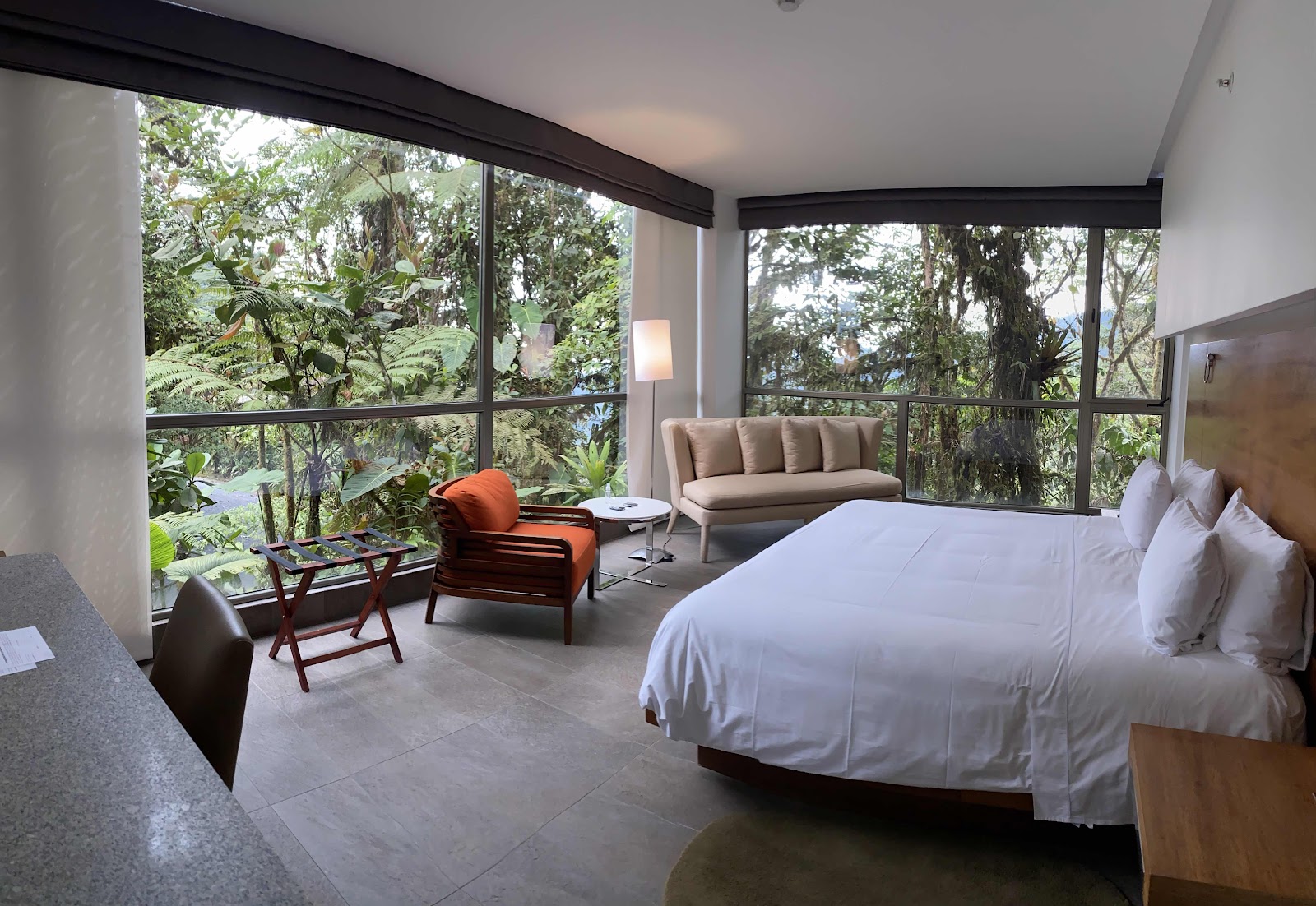

We love our room!


After a brief orientation and lunch, we (our Galapagos-bound party of 7) headed out for a walk with our assigned guide, Lizardo (a perfect name for a cloud forest naturalist!). I called it a placement test; I think we were being evaluated to see what level of activity would be appropriate for us. He fetched us rubber boots which will be ours for the duration of our visit, and we headed up the road. 


We hadn’t even all left the entrance pavilion when Lizardo stopped us and pointed out a pretty red and tawny brown bird. He said he’d just spent a few days with previous guests who were desperate to see this bird but never did. It was a female collared trogan. We heard the male, but didn’t see him. 


A couple hundred feet later, he spotted a toucan. Well, I wasn’t beside myself. But close. 
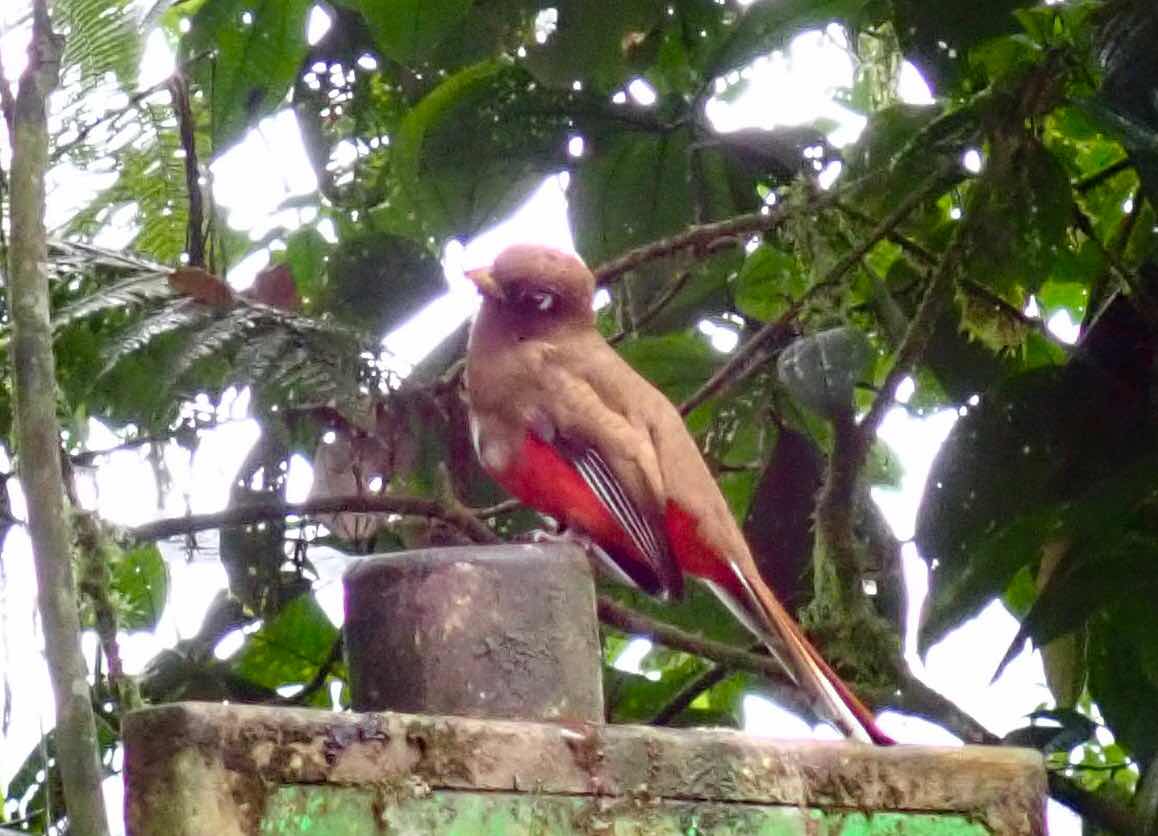

We didn’t see another bird for the next 3 hours. But that was ok. I got my toucan!


We hiked a distance uphill and up the road, then on a short trail to the Sky Bike. This was what Greg was most looking forward to experiencing here, so it was a great way to start our stay. They have two of them, so 4 of us could ride at a time. The Sky Bike is suspended from a 665 ft cable 100 feet above the forest floor. It can carry two passengers. The one in front (me) gets to take photos, peer down into the trees, and watch clouds rolling down nearby mountains. The person in back (Greg) provides the muscle to propel the contraption across the valley. It is not geared like a racing bike; it takes a lot of revolutions to cover a short distance. So muscle, indeed. It was super cool!


Mashpi Lodge, from where we’d walked, is the green-roofed complex through the branches.
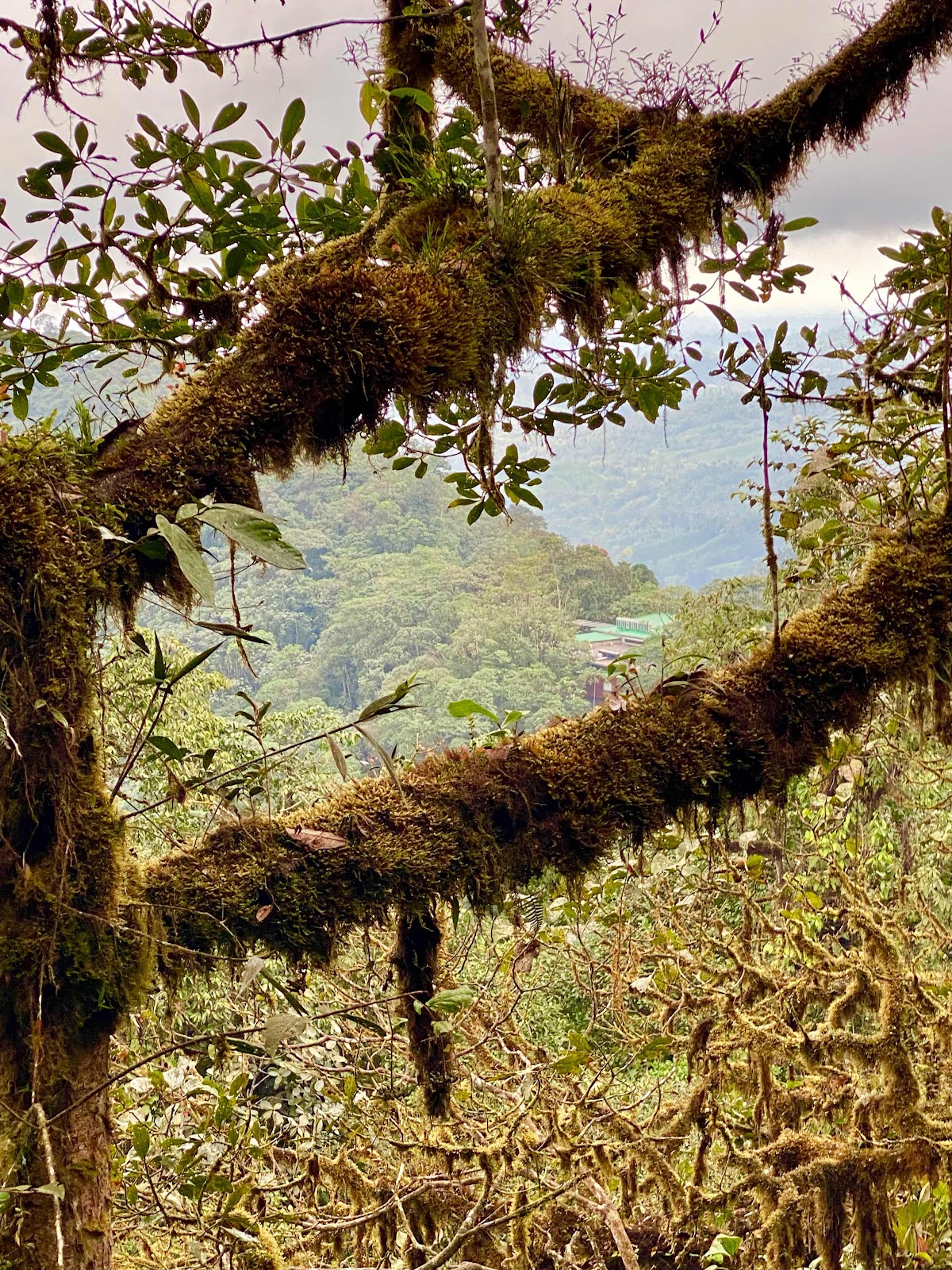


While the next group of people rode the Sky Bike (Greg went again, to help pedal one way for a solo traveler), I climbed the 85 feet Observation Tower. 


The top is higher than the surrounding forest. Wonderful views in every direction. 


That’s the lodge again in the lower right quadrant 


We headed further up to the road to see a small waterfall. The path we turned onto was a dry river bed. During the rainy season, one can still walk up it, but there would be about a foot of water flowing around your rubber boots. During the dry season (nearing its end this month), the trickle of water runs underground. At the end of the trail by the waterfall, which was indeed small, Lizardo picked up several types or rocks. He explained their various origins and demonstrated seismic uplift. And then he did a little sacred ceremony with the waterfall and us, holding rocks we had chosen. His 109 year-old great-grandmother is a shaman, and he learned a lot about nature, natural medicine and spiritualism from her. And then we headed back to the lodge.


After returning and hosing off our muddy boots, we debriefed and chose activities for the remaining day and a half of our stay. We’ll have three activities tomorrow, with some nice breaks in between to rest, critter watch, eat, nap, etc. 


Wednesday, November 16, 2022

2023 Ecuador Day 2 - Quito City Tour

After breakfast in the hotel restaurant this morning, we met with our guide, Florenza, and six other guests who will be traveling with us to the Mashpi Lodge tomorrow, and then on to the Galapagos. 


In addition to a buffet of fruit, meats, cheeses, pastries, etc., the restaurant offered a couple of typical local specialties. This is “tigrillo”: loin stew, traditional pickles, mashed plantains and a fried quail’s egg.

We headed out for a city tour, first by van and then on foot. Our first stop was the San Francisco Mercado, the first (1893) indoor market in Quito.

A shrine is just inside the door. Each vendor stops to say a little greeting to Our Lady of Sorrows as they arrive. I saw one give a wave, another cross herself. Once a year the vendors choose a colleague who has done well to carry the icon in a procession. But this honor comes with a catch. The person who receives this privilege is obliged to provide food and drink for the other vendors. 

93)

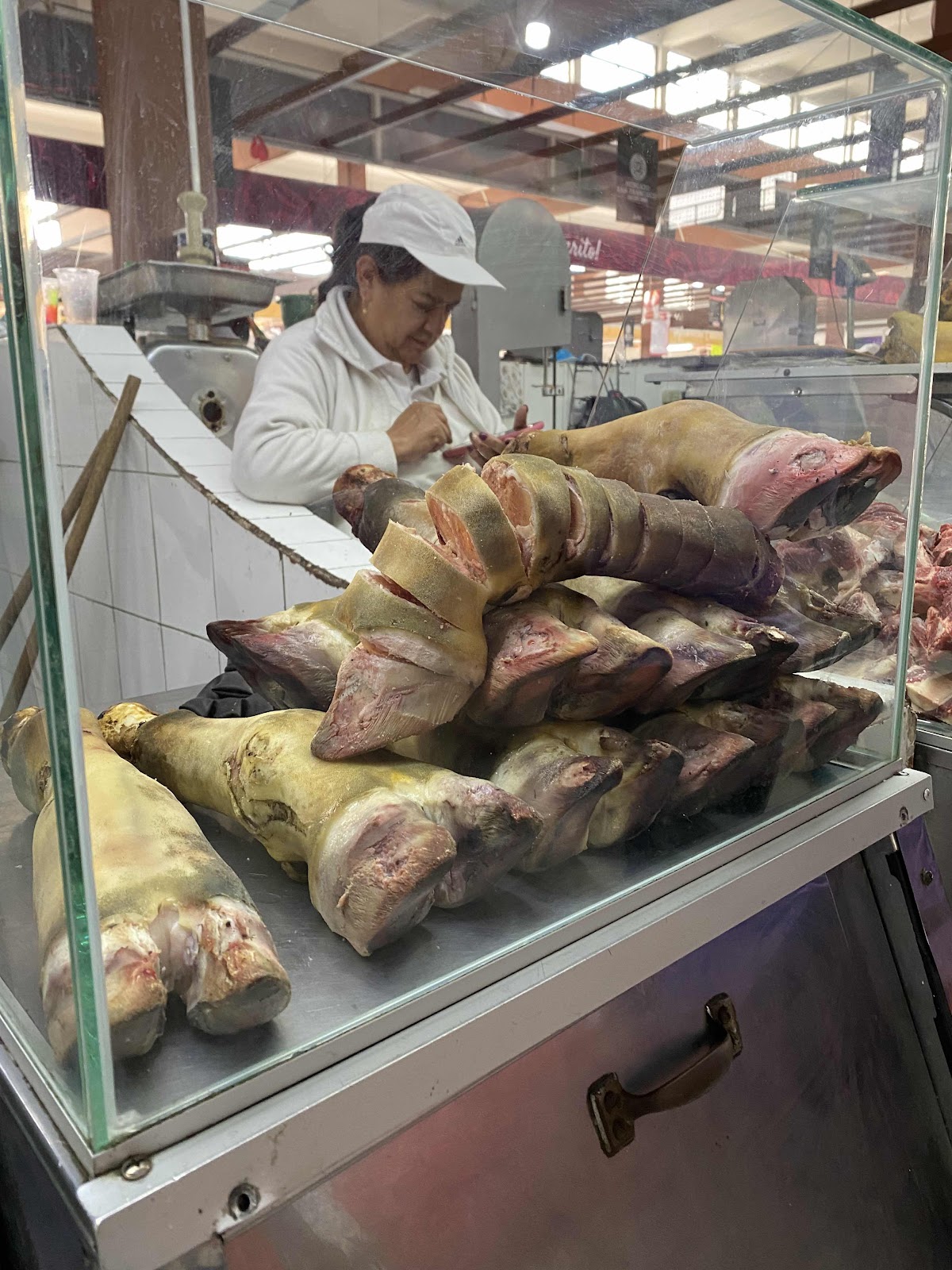
The meat vendors use every part of the animal: stomach, tongue, liver and other organs. 


Cow legs are available full on the hoof, or sliced into tenderloin shaped chunks. (Despite appearances, I don’t think the vendor is giving a pedicure.)


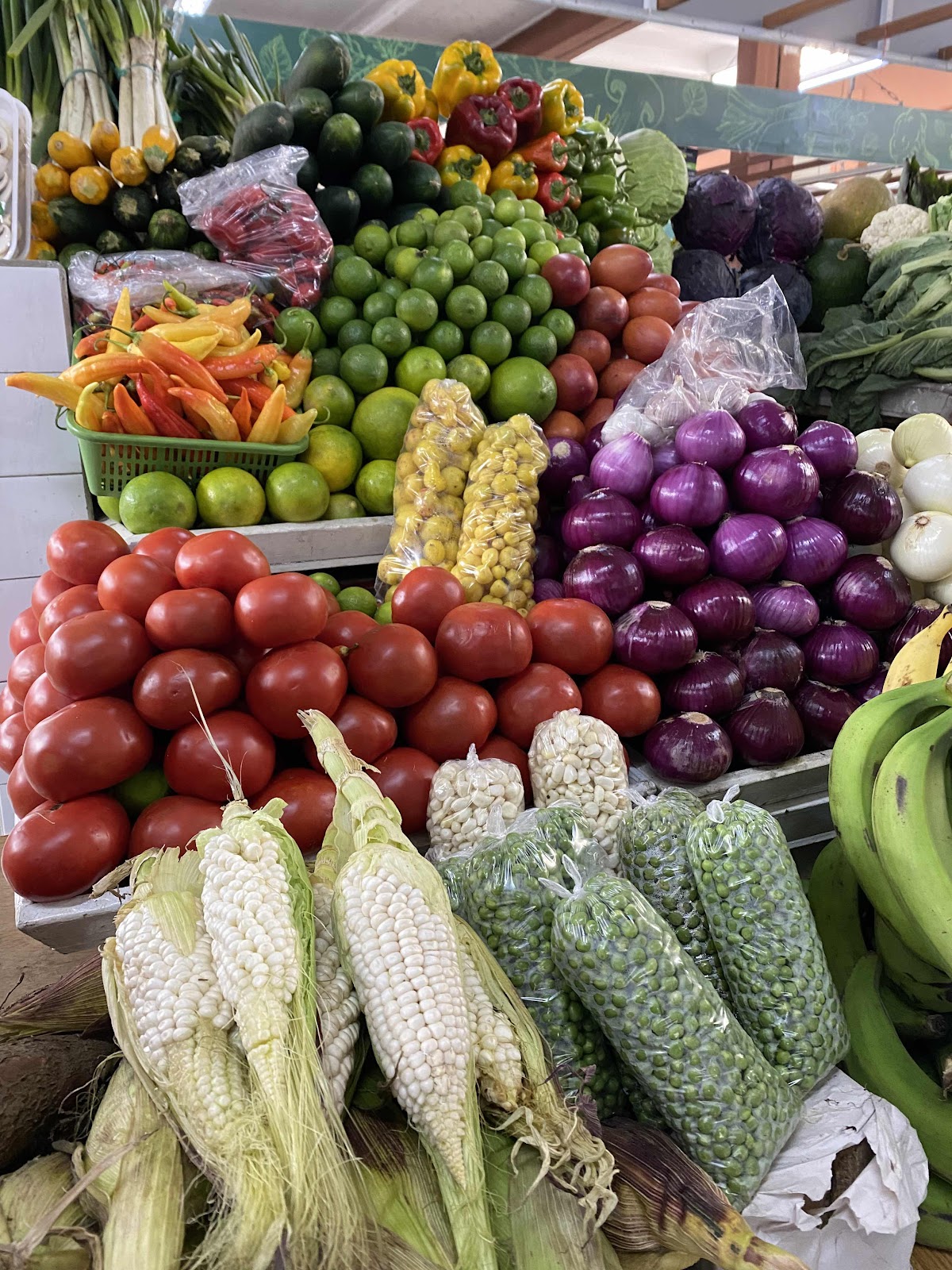
So many beautifully displayed vegetables. Most, but not all, were familiar.

  
The prices were crazy cheap - these are the prices for 1/2 kilo (1.1 lb). Florenza explained that because the climate is constant year round, most things are always in season. Nothing needs to be imported. Meanwhile, we, of course, get our fruits and vegetables from South America during our winter months. 


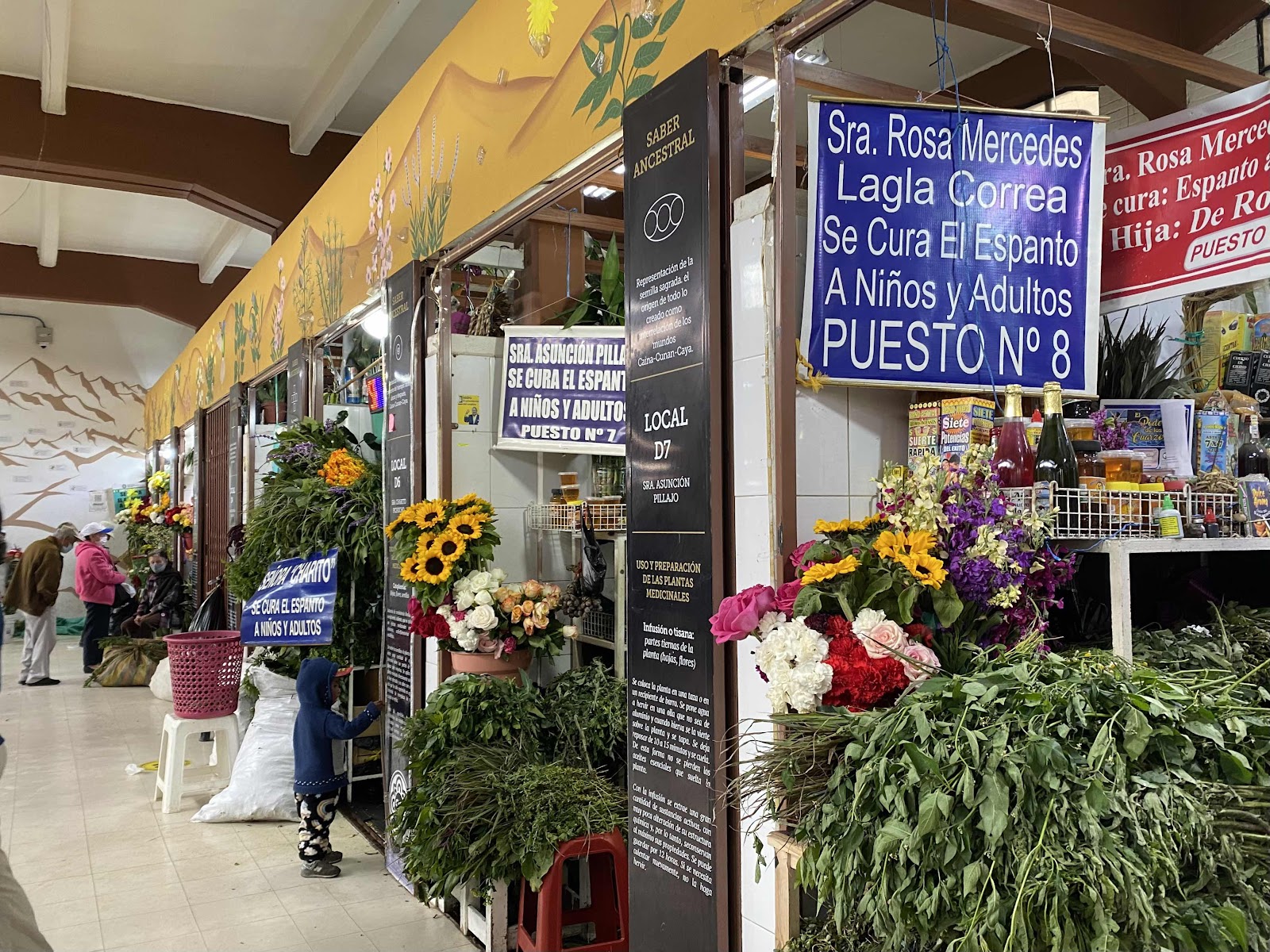
A row of herbal clinics lined one alcove. After one’s kitchen garden home remedies, this is the next stop on the medical treatment path. (Further steps include a local shaman, or as a last resort, a contemporary doctor.) Patients sat on benches across from the stalls waiting their turn for a consultation. The women listen to the symptoms, prepare herbal remedies to steep or ingest, and rub bunches of herbs on the ailing body part. 


There was a food court of sorts, with people enjoying everything from custom fruit juices to breakfast to soups. This delightful gentleman squeezed a lemon into his soup and offered to pose for a toothy smile. 


 Back in the van…


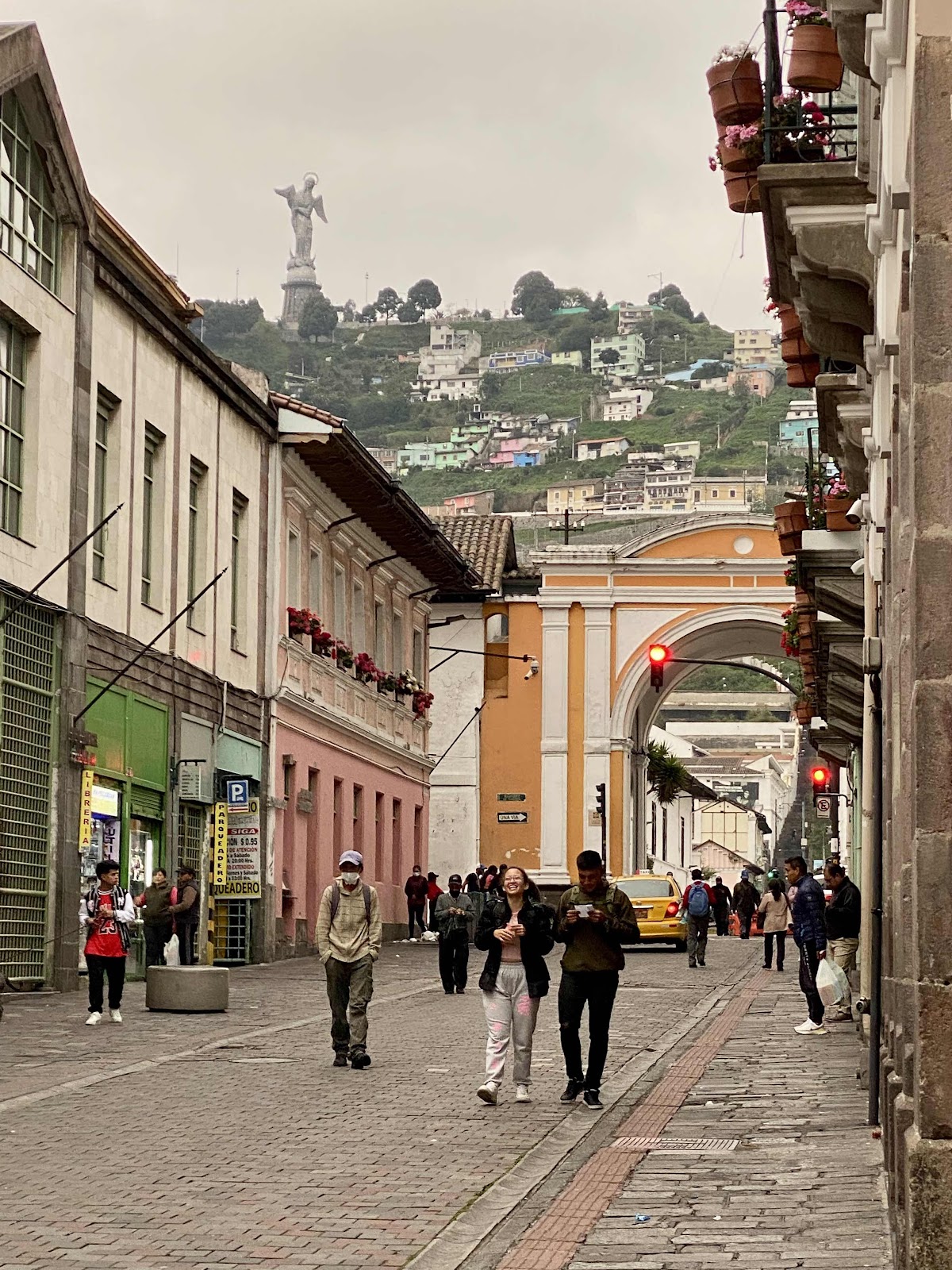
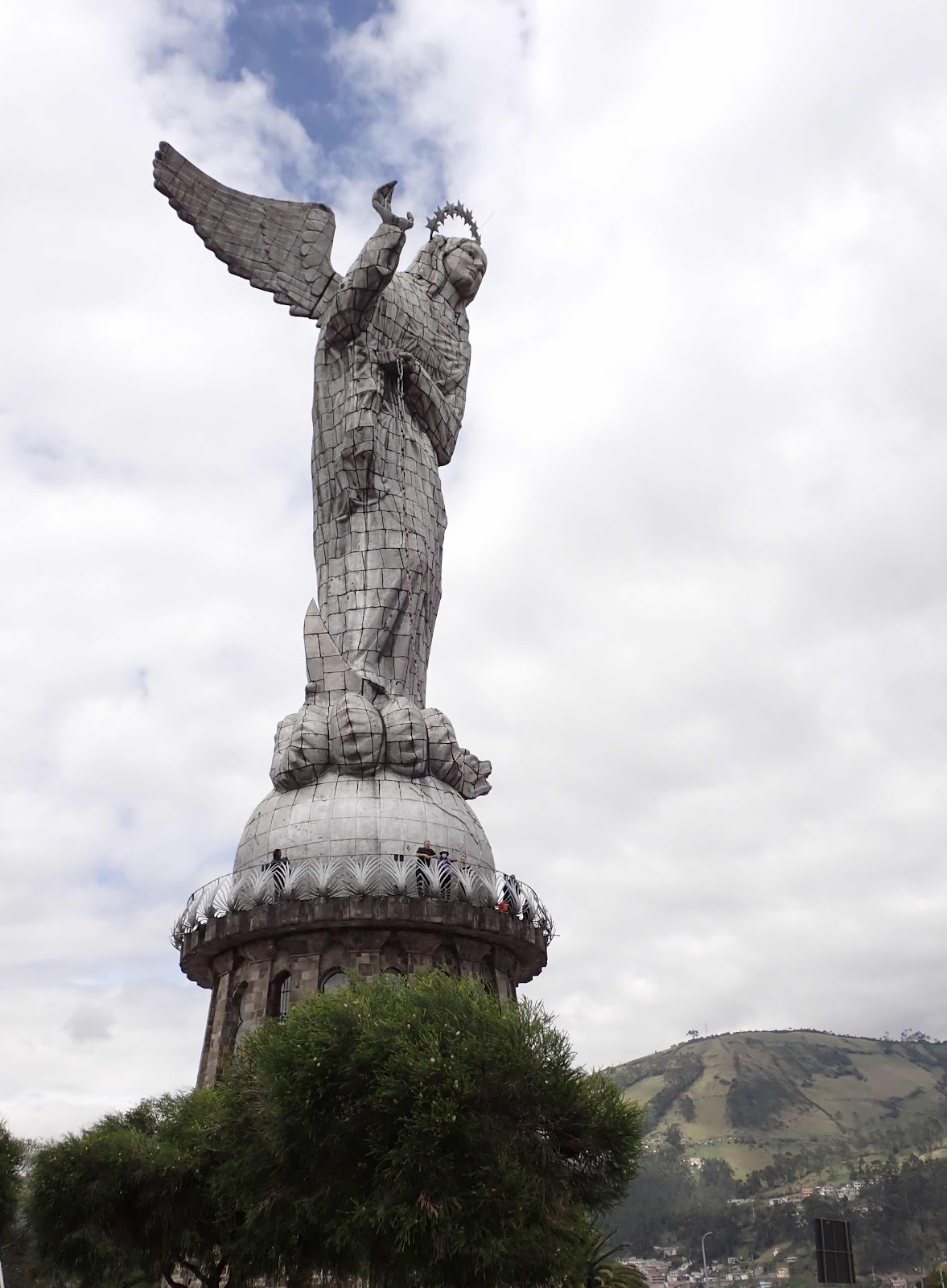
Watching over the city of Quito is the Virgin Mary of Quito (also known as the Virgin of the Apocalypse), a 98 foot tall aluminum statue. With a total height of 135 including the base. It is the highest statue in Ecuador and one of the highest in South America. It’s taller even than Christ the Redeemer in Rio de Janiero, Brazil. Assembled from 7,400 pieces of aluminum, this is the tallest aluminum statue in the world. 

The big news here is that the base holds the only geocache possibility for Greg in Quito. And he found it!


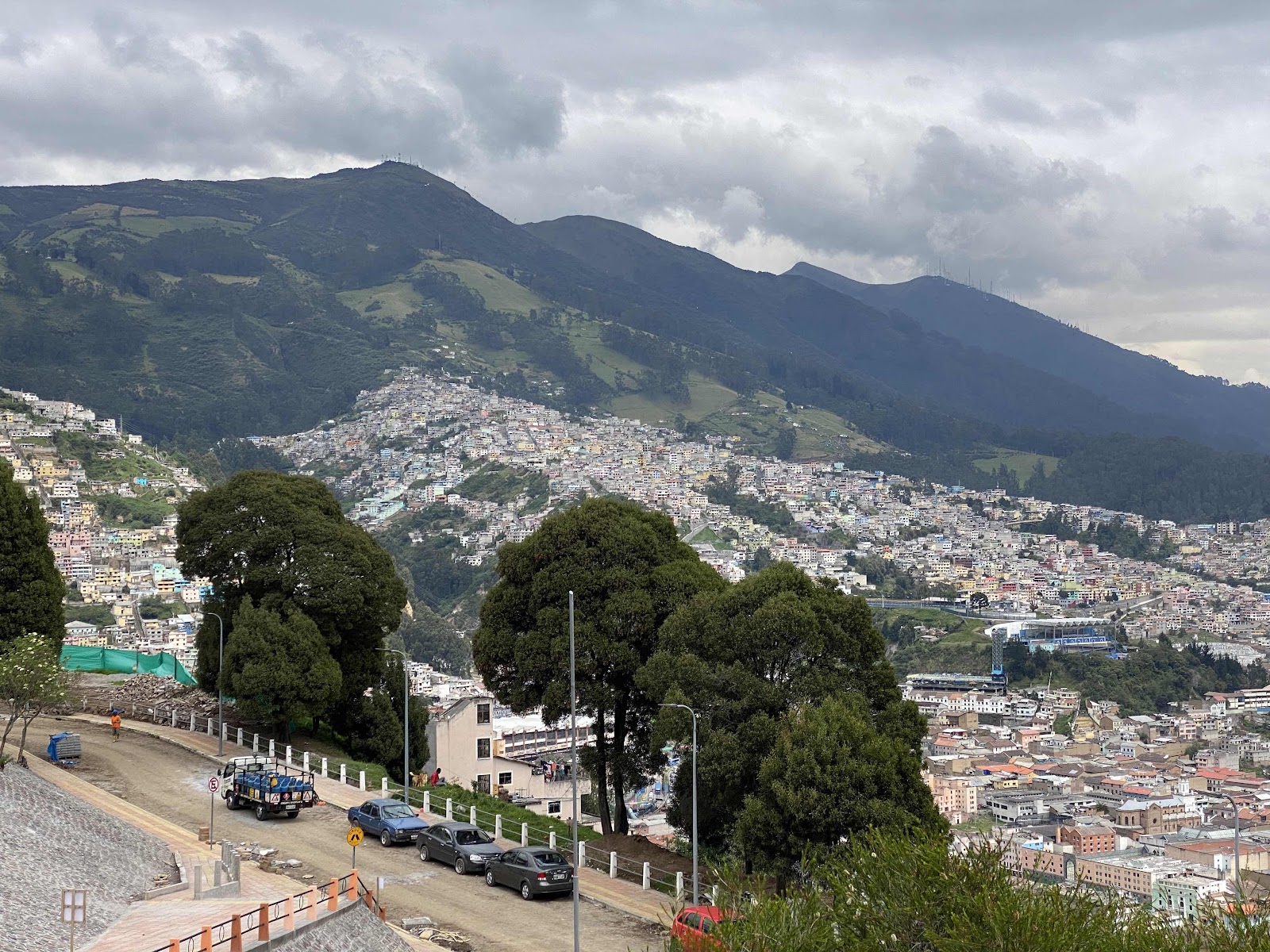
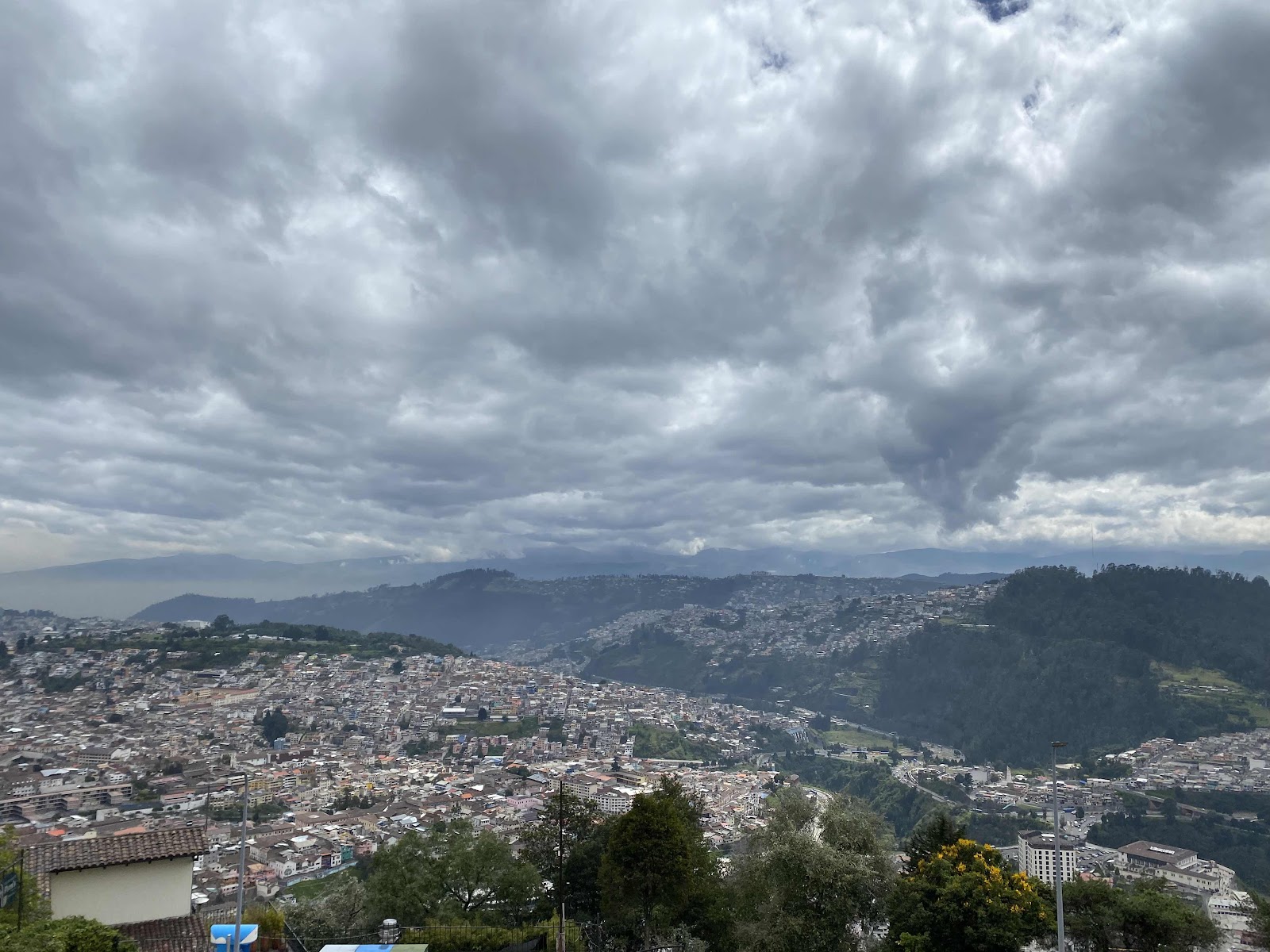
The statue stands atop a 656 foot high hill, offering a 360 degree view over the city. To the west is the west range of the Andes. From the far side of the mountains, Ecuador flattens down to the Pacific coast. On the eastern side (where we were), Quito tumbles down the slopes of the Pichincha volcano (last erupted in 1999). There are 70 active volcanoes in Ecuador. One, visible from Quito on clear days, is erupting now. 


To the east, visible in the hazy distance, are more of the Andes. The Amazon lies on the far side. 


Back in the van…we headed back to an area walkable from our hotel. Traffic was congested, frequently blocked and often at a standstill. We finally decided to get out and walk to our next destination: a restored home of a wealthy colonial family. We had a snack before starting the walking part of our tour. But, not to bury the lede, the best part was the chocolate tasting counter that one of us discovered on the way to the restroom.  We all ended up buying bars of rich Ecuadorian chocolate. 

We walked back towards our hotel, making several stops to learn about buildings of interest and to visit the interiors of two 16th century churches. 


We learned about the education of privileged girls during colonial times. At age 7 they would be sent to a convent to be educated. They would remain there until they turned 14, at which point they would either stay to join the order, or return home to prepare for their debut into society (i.e. enter the marriage market) at age 15. If all went well, a suitable match was quickly sanctioned and preparations began for the wedding at age 16.  We passed one convent, however, that was designated as the place for rebellious (bad? wayward? stubborn?) girls. Young girls sent to the Concepcion nuns did not come home at all. Today, a few nuns still lead a cloistered life in the Concepcion convent. They left the convent twice in the last few decades, each time to walk to the cathedral down the street during a papal visit.

In typical Colonial architecture, shops occupied the street level while the family lived above. This can be seen even in the Presidential Palace, which was created by joining several large homes and creating a contiguous façade. The little shops remain tucked on the ground floor, but instead of a family living above, of course there are offices and guards and official residence and meeting rooms. One can see that the rough stonework on the ground floor incorporated Inca building stones. They can be identified from their irregular shape.


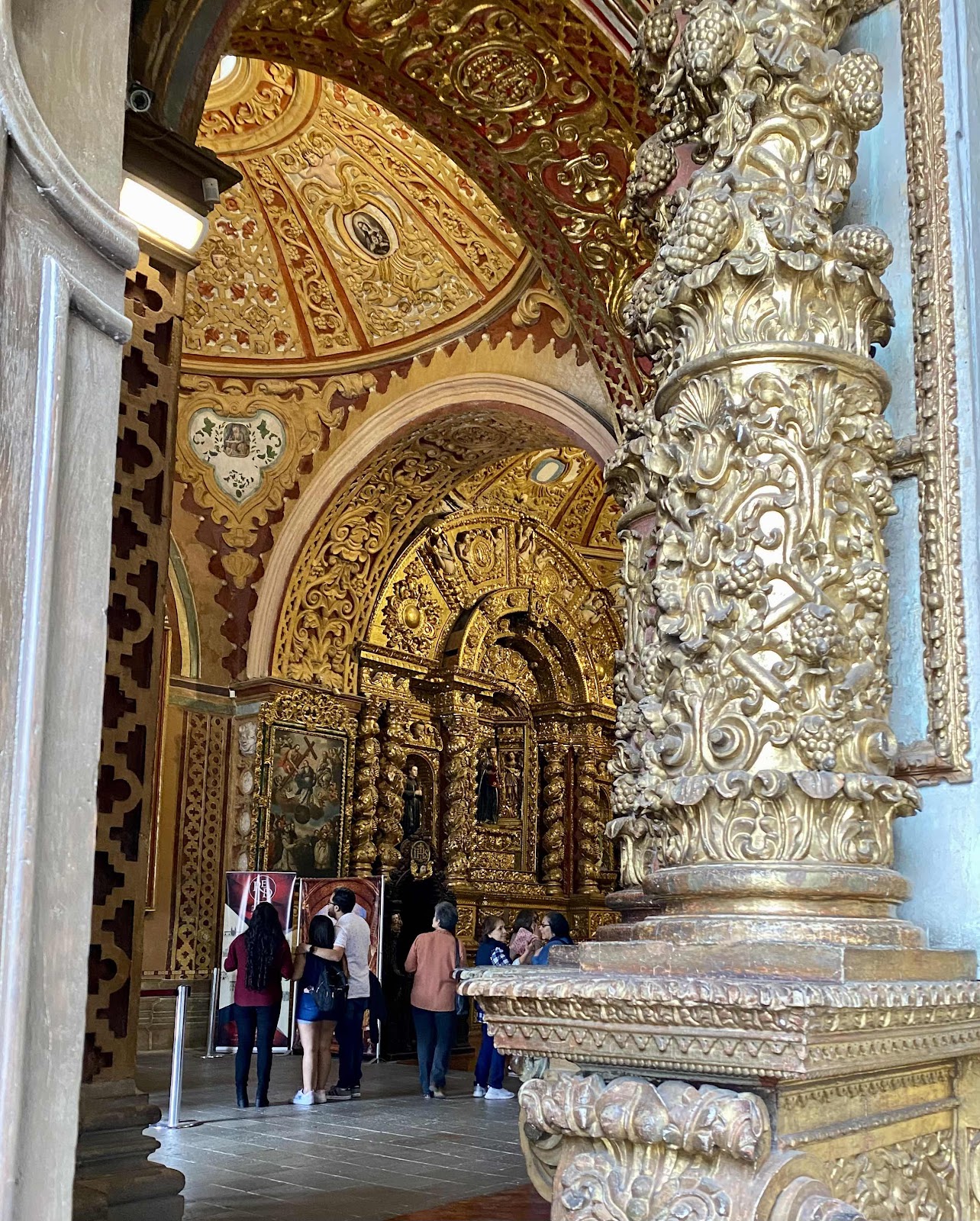
The Church of the Society of Jesus (Jesuits) was built in 1605 in the baroque style. It’s known, for self-evident reasons, as the golden church of Quito. The Jesuits, known then as now for education, had a rather exclusive entry process in Quito. The order generated a good income from what were essentially entrance fees to the old boys’ club. Only people deemed respectable enough could use the church or attend services there. 


The ceiling above the doors.

The church projects opulence from the moment one approaches the golden doors. It’s constructed in the shape of a Latin cross, with a central nave and two side aisles. The supporting columns are decorated in Moorish geometric patterns, reflecting designs popular in southern Spain at the time. The barrel vault ceiling was built, in a stroke of genius, of pumice stone. The stone is light weight, repels water, and has proved earthquake resistant for over 4 centuries. 


Taken from outside the entry


Ditto


Today, this church has the longest wait list in Quito for weddings. The only decorations allowed are flowers on the altar. But clearly, the church itself is ornate enough to dazzle all.  

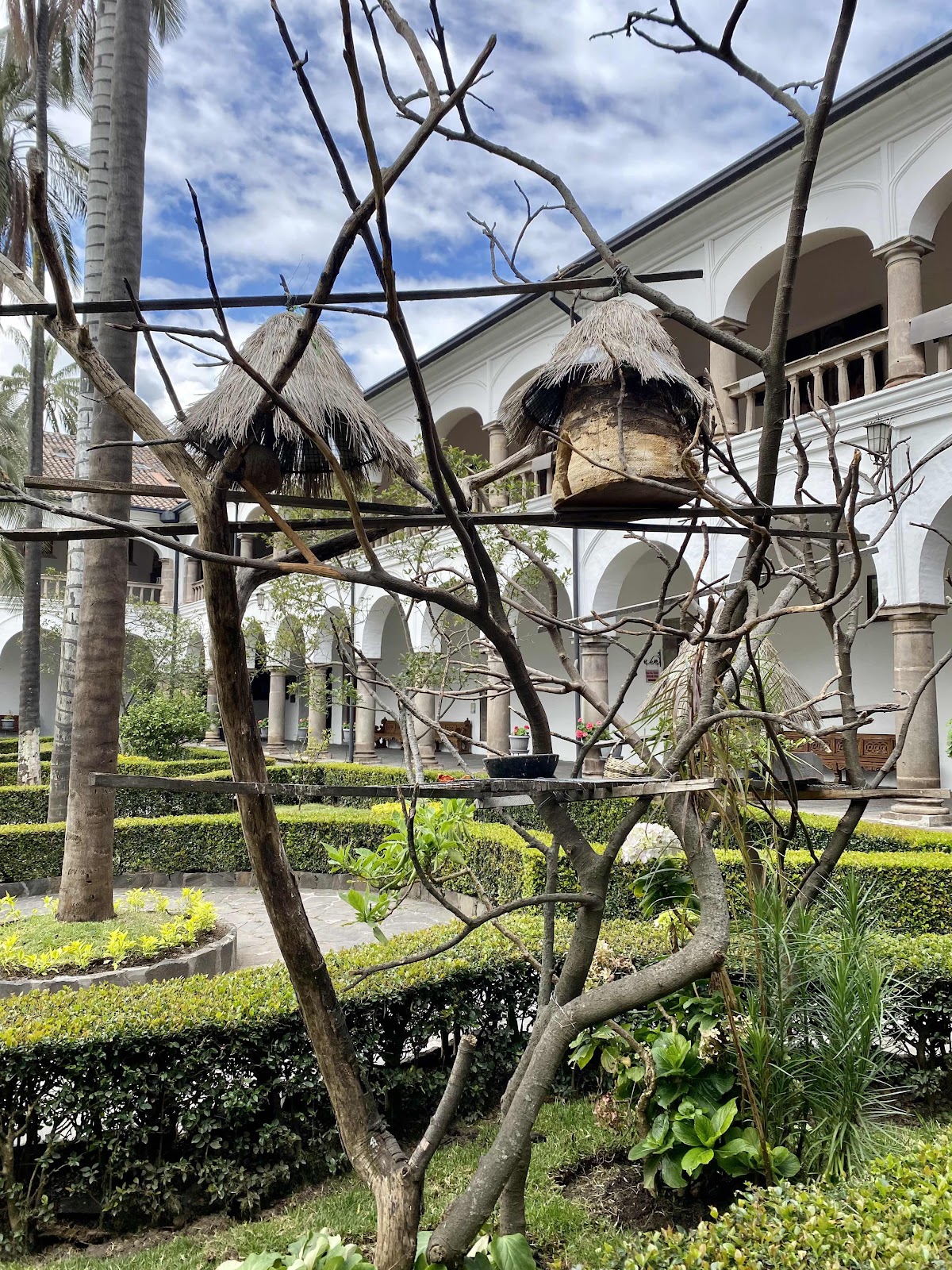
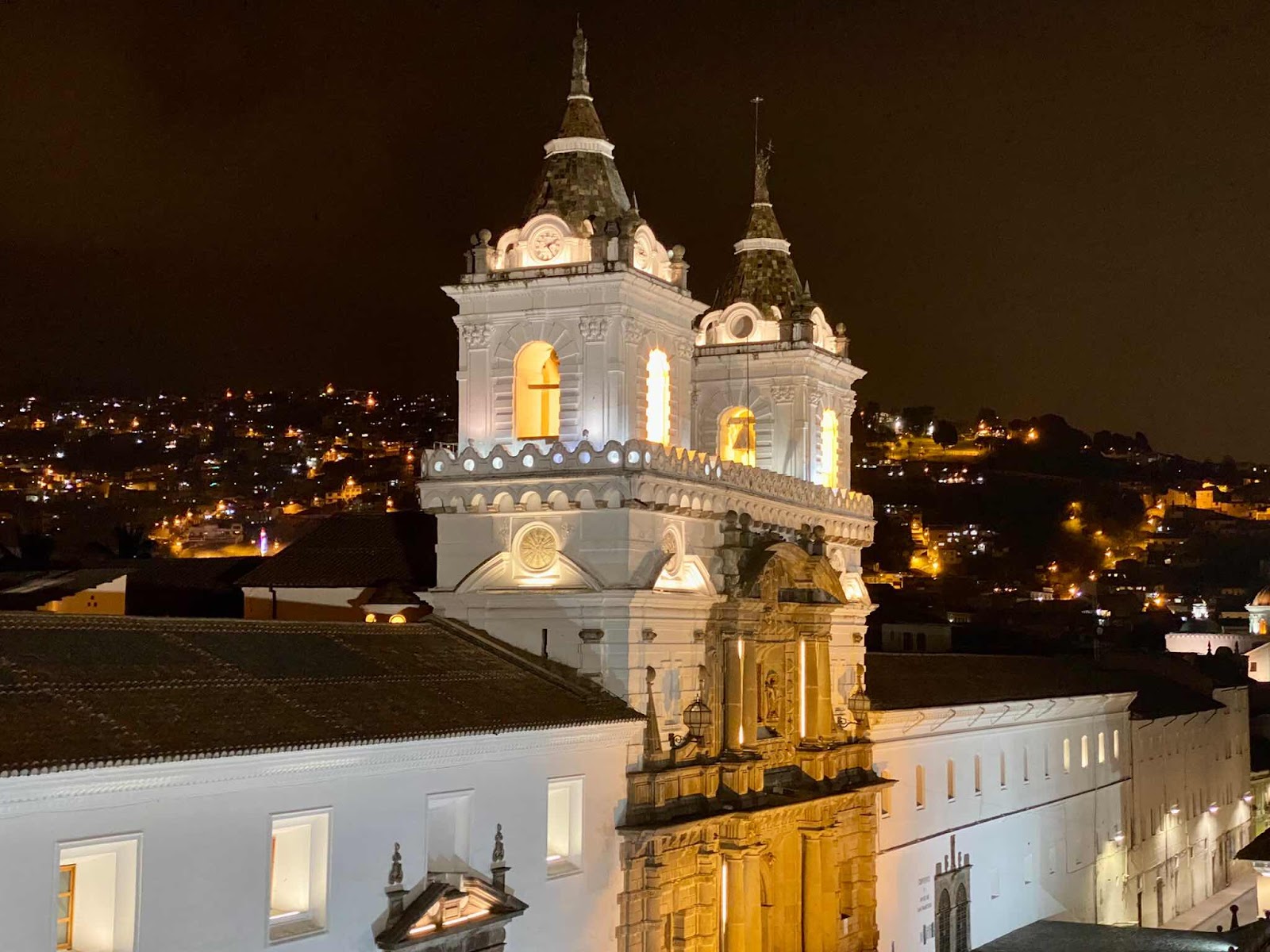
Our final stop was at the monastery and church of San Francisco, which is next to our hotel. The complex was started in 1535, and included the first public drinking fountain. The cloisters still reflect values of St. Francis, with little thatched-roofed bird feeders placed around the courtyard. 


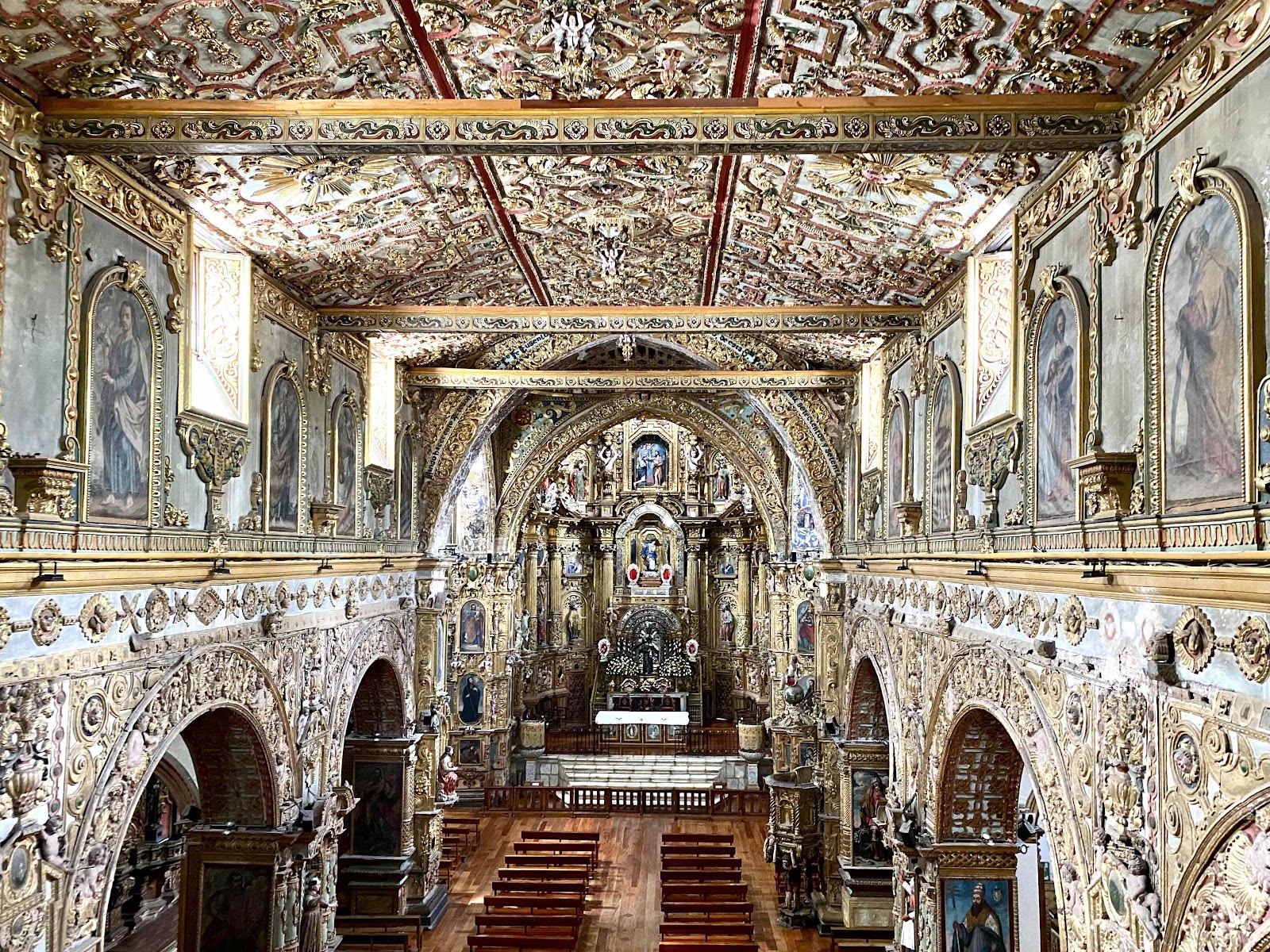
The church itself is another explosion of gilt and gold. We were allowed only in the organ loft, which offered a good overlook of the nave. 


We had dinner at the hotel with our group of 7. Greg and I went up to the terrace afterwards for a last look at the city lights before turning in. 


Sent from my iPhone

Tuesday, November 15, 2022

2022 Ecuador Day 1 - Toucans, Tortoises and Boobies - Oh My!

We set off early this morning, excited to begin our Ecuador adventure with National Geographic Expeditions. We’ve never traveled with them before, but I grew up with National Geographic Magazine in the house and give them credit for much of my wanderlust. We couldn’t imaging a better company to guide us through visits to some of the world’s most pristine nature sanctuaries. The draw for this trip was a week on an expedition ship exploring the wildlife and ecology of several Galápagos Islands. We tacked on an optional extension in a cloud forest nature preserve. We’re excited mostly about the ecology and wildlife we’ll be seeing, but also looking forward to a couple of days in Quito to learn about Ecuadorian culture and history. 

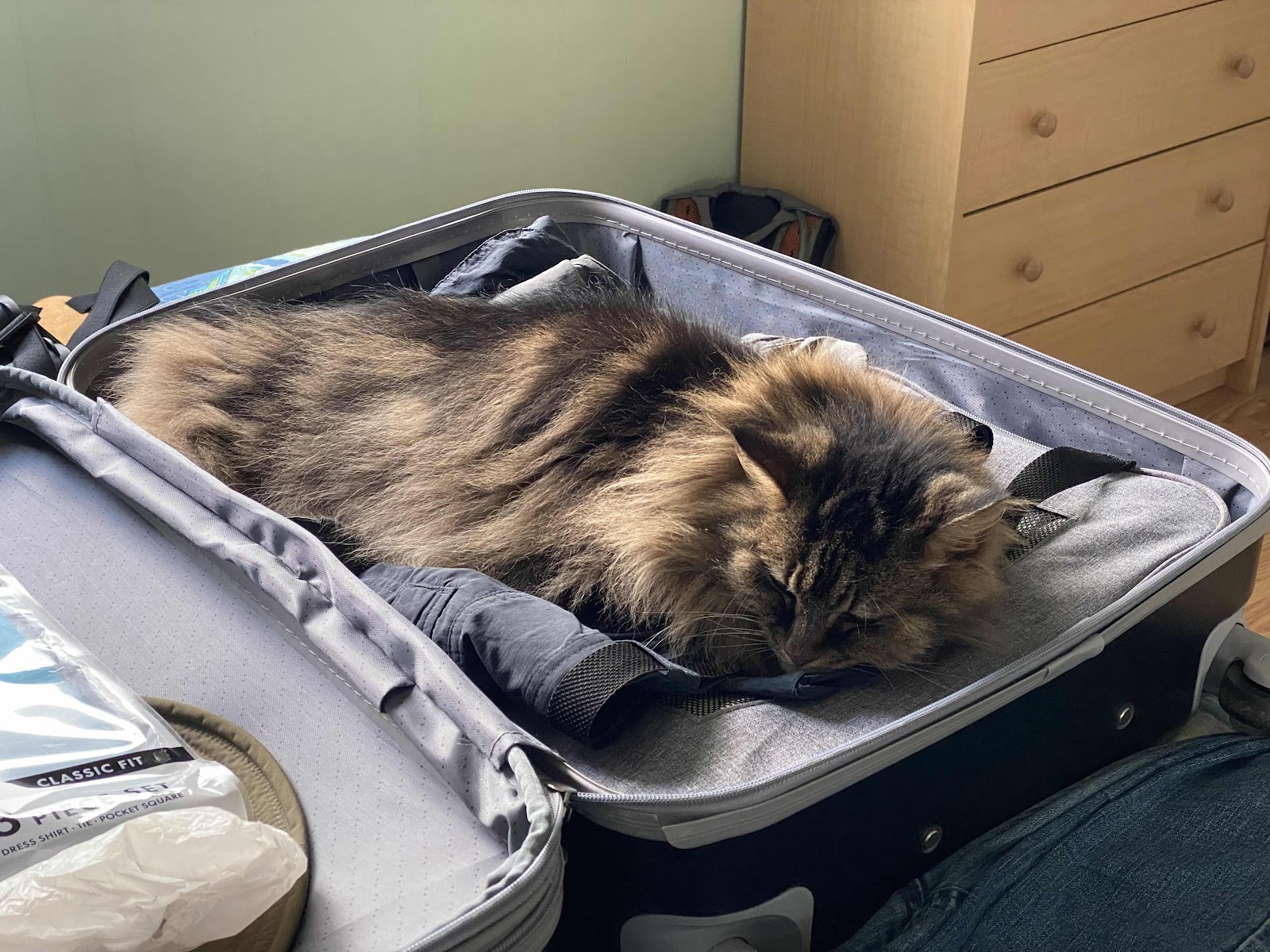
Maggie, as usual, showed some interest in sneaking along on the adventure. But after our recent drive to Florida for the winter, we think both cats were secretly relieved to realize that packed suitcases and backpacks did not necessarily mean another 1,100 miles in the car. 


We flew from Tampa to Quito, by way of Miami. 

Ecuador, located in northwestern South America, is about the size of Colorado. It’s bordered by the Pacific Ocean to the west, Columbia to the north, and Peru to the east and south. Its full name in Spanish translates to “Republic of the Equator”.

Archeological evidence suggests that early hunter-gatherers arrived in Ecuador 16,500 - 13,000 years. They arrived either overland via North and Central America, or by boat, coming south along the Pacific coast. The area was incorporated into the Inca empire during the 15th century, about 100 years before the Spaniards arrived. Along with Spanish colonization and forced labor, the Europeans brought new infectious diseases which decimated the native population, much as in North America.  

In 1820, after three centuries of Spanish rule, Ecuador joined Simon Bolivar’s Republic of Gran Columbia (a region that included what is now Venezuela, Columbia, Ecuador and Panama). It became a sovereign state in 1830. Two years later, it annexed the Galápagos Islands. 

Reflecting its history, the population of Ecuador is ethnically diverse. Over 70% of the 18 million people are mestizo (mixed Indigenous and White). There are also around 7% each of Native American, African (slavery was abolished in 1851) and European descent. In addition to the official language (Spanish), 13 native languages are recognized. 

Ecuador is one of the world’s 17 megadiverse countries. It values and is protective of its unique ecological diversity. Climate zones vary from Andes peaks to mountain cloud forests to Amazon jungles to Pacific coastlines. And of course, 620 miles west of the mainland, are Ecuador’s Crown Jewels: the Galápagos Islands. Ecuador’s 2008 constitution was the first in the world to recognize legally enforceable Rights of Nature (ecosystem rights).

We were surprised to learn that the US Dollar has been Ecuador’s official currency since 2000. After a period of economic instability, the country abolished the Ecuadorian sucre and adopted the dollar. It makes purchases super easy for us here. Use of the dollar coin is much more common here that at home in the US. 

Quito is the capital and largest city of Ecuador. Its name comes from Quechua (“Kito”), the language from the Incas, which is also spoken by many native peoples in Peru. Quito sprawls down the eastern slopes of an active Andes volcano. The area is seismically active, with both tremors and earthquakes (as they call anything 5 and up on the Richter scale.) 

Although the Equator is only about 1/2 mile out of the city boundaries, the climate is temperate due to its altitude. At 9,350 ft, Quito is the second-highest capital city in the world. It’s also the oldest capital in South America, with the largest and best-preserved historic center in the Americas. The historic center was recognized as one of the inaugural dozen UNESCO World Heritage Sites in 1978.  

We were met at the airport by a representative from a local tour company. On our 45 minute drive to the old city, she pointed out places of interest (an upscale neighborhood called Kumbayah) and gave us some local info. 

Quito is experiencing a period of rapid growth, largely due to the influx of immigrants from struggling Venezuela. Over 1 million Venezuelans arrived in Ecuador last year. Over half stayed here, and half of those have received visas so far. Quito is working hard to integrate the new arrivals into schools, reasonable housing and jobs. 

Our hotel, Casa Gangotena, is situated on the plaza de San Francisco in the historic district. The structure that became the hotel was built in 1600 on the largest square in Quito, on a corner abutting the San Francisco church and monastery. (Fun fact for Mark: the original family sold the house to a wealthy cacao impresario during the era of independence.)


Casa Gangotena is on the left. 

The building suffered catastrophic damage in a 1914 fire and was rebuilt in a palazzo style in 1926. Decades passed and the house fell into slow decline until the last two resident sisters died in the 1990s. The house sat quietly empty until 2007 when the former Quito mayor Roque Sevilla (of whom we’ll hear more in a a day or two) bought the house and began renovations. Casa Gangotena opened 3 years later. 

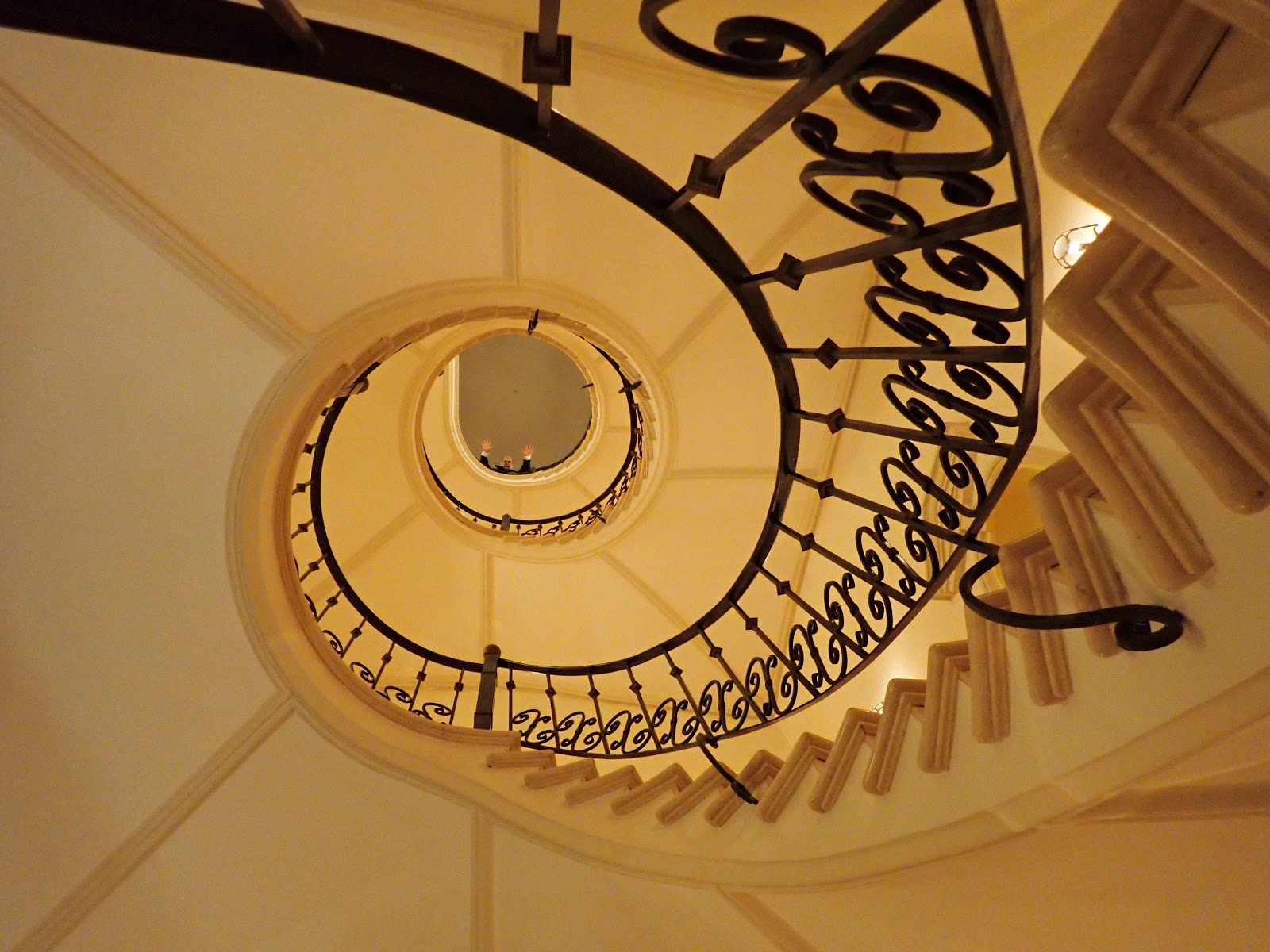
The hotel is lovely, with courtyards and rooms full of light. We’re on a busy little shopping street, but hear nothing from outdoors when our french door windows are closed. 


That’s Greg at the top


The view from our bedroom

We set out to walk around the immediate area. We found the Tourist Office closed, so we crossed to the Plaza de la Indepedencia to look at the surrounding buildings. The Quito Metropolitan Cathedral looked interesting. We learned we needed tickets to go inside and speculated whether admission would be included in our walking tour tomorrow. Then we discovered that tickets were all of $2.00, and decided to splurge.

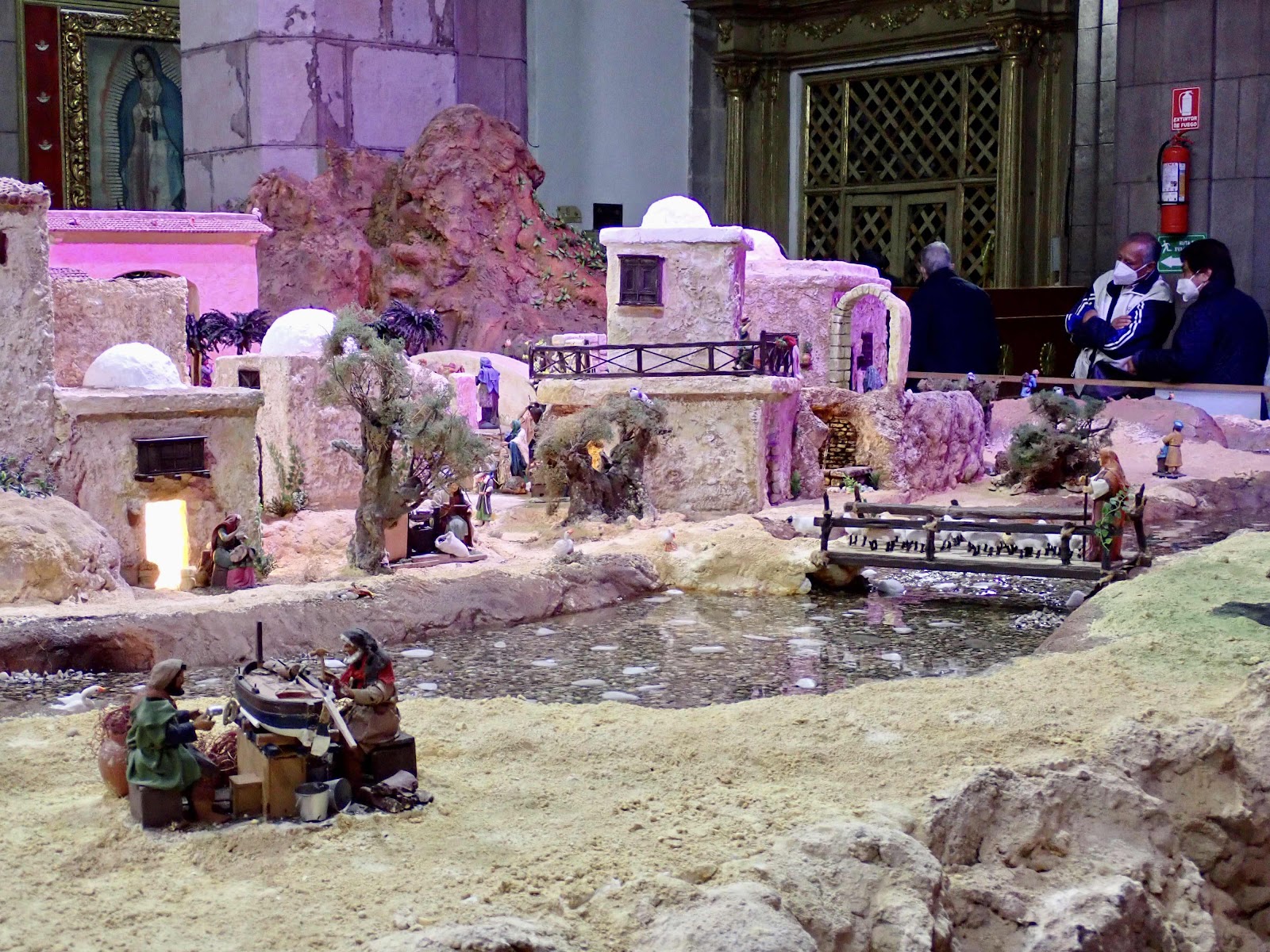
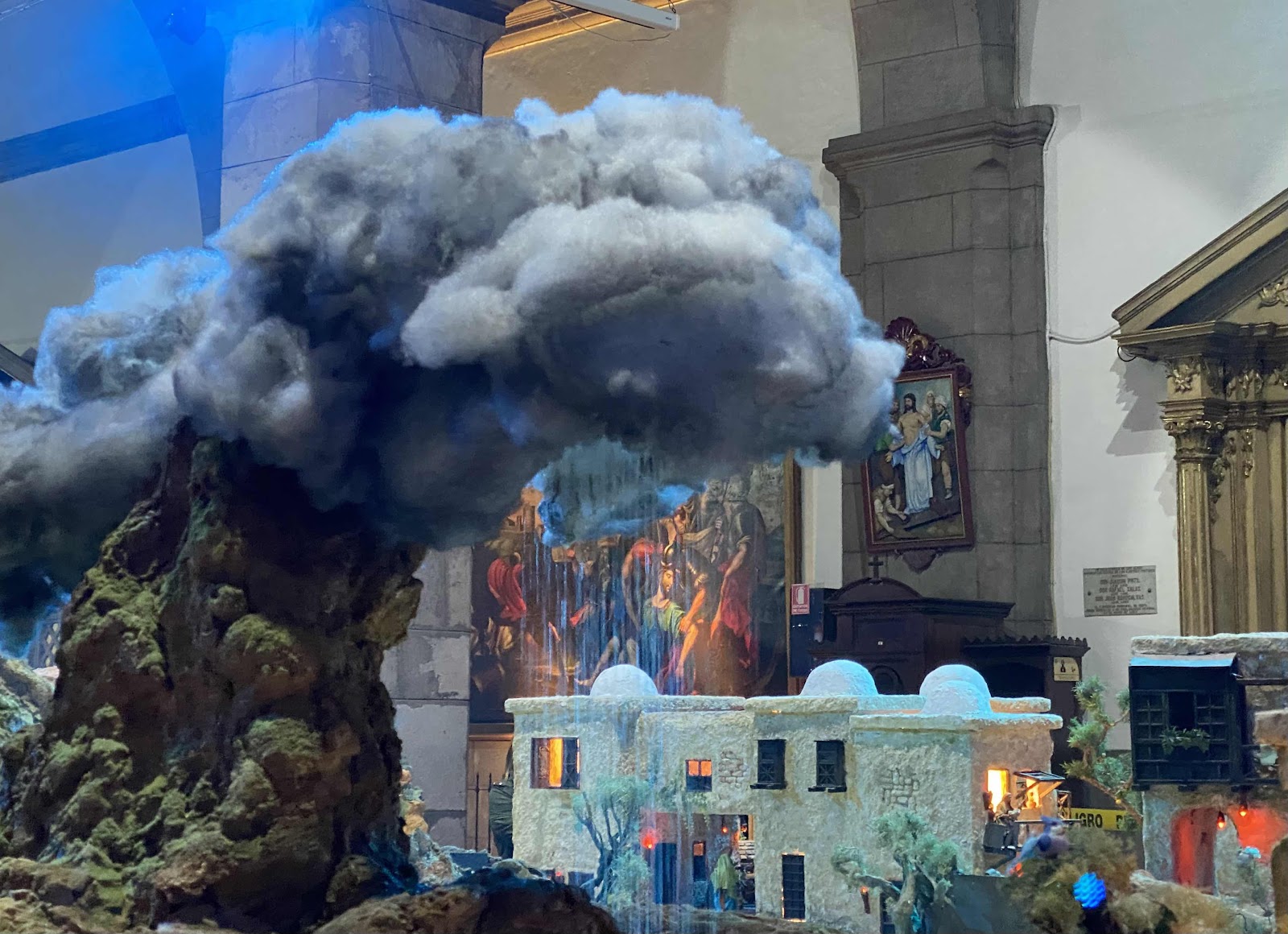
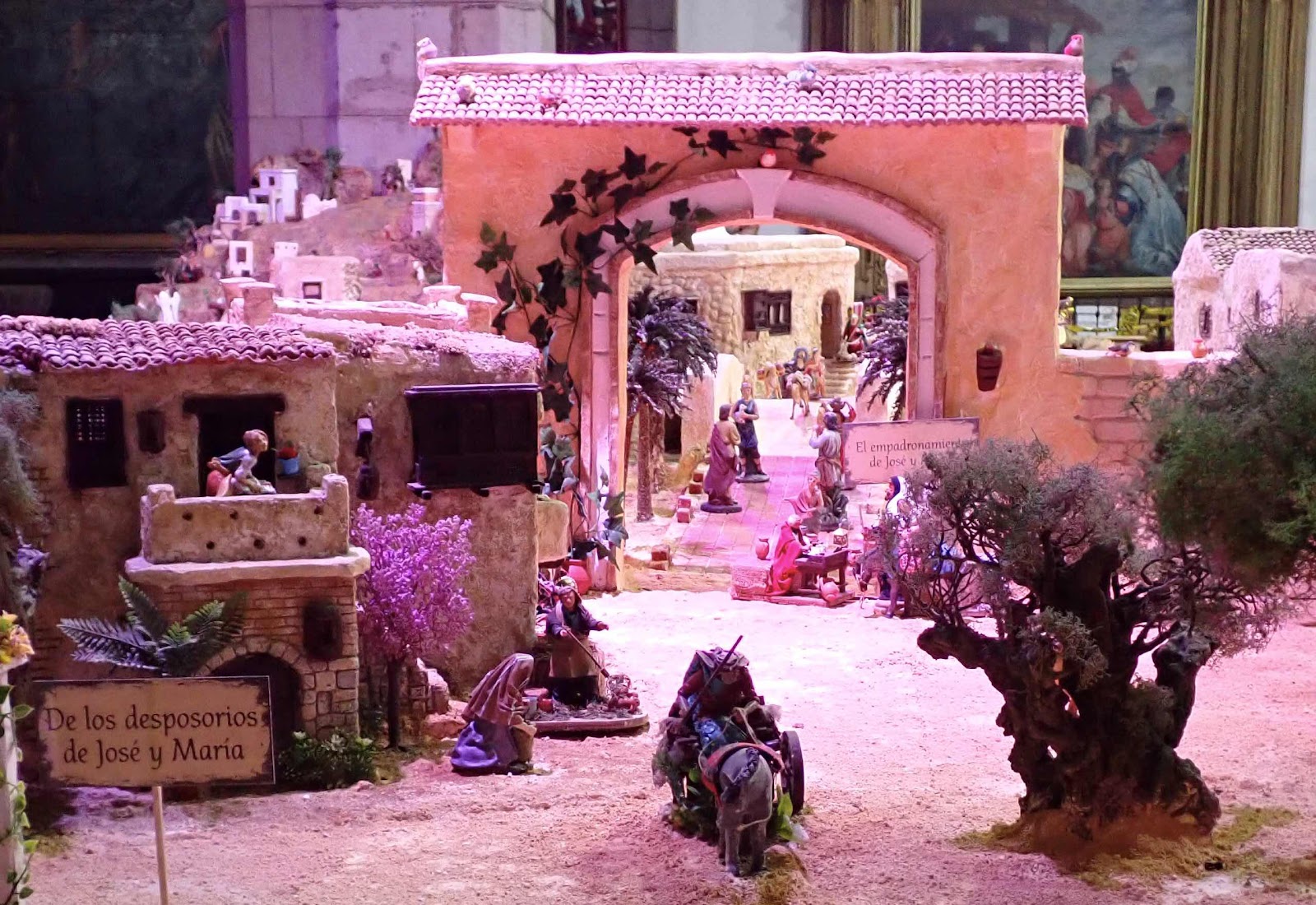
We expected to tour the interior of a magnificent church. Instead, we found the incredibly expansive, detailed and delightful Pesebre Monumental (monumental manger). The project spans nearly 3,000 square feet - or twice the area of our Florida home! 


It includes over 1,600 pieces, 600 of which move. It took 7 technicians 50 days to assemble. The display includes pyramids, a running river, a thunderstorm, Herod’s palace, biblical scenes, the temple in Jerusalem, and hundreds of figures doing everything from stirring a pot to rocking a baby to playing on a swing. The lighting cycles from day to twilight to night to dawn, and the moving figures are active only during their appropriate times. Cattle low, birds chirp, thunder cracks. We were both rather captivated; the details are amazing. Originally created in Loja, the manger was designed to teach children their catechism. It’s in Quito for 2 1/2 months, so it’s just happenstance that we stumbled upon it. 


We had dinner at an Ecuadorian restaurant in a renovated 16th century bishop’s palace.


 I had potato soup with avocado and cheese, and a chicken, olive and potato tamale. Greg had a chicken and mushroom sauce dinner. Inexpensive by US standards, and very good. Then we wandered back to our hotel through the early darkness. (Being at the Equator, the sun rises year-round around at 6 AM and sets 12 hours later.)


Quito Cathedral, which houses the monumental manger. 


Sent from my iPhone